Photo Essay

Night Kicks on Route 66: In Honor of the Mother Road's Centennial

A very happy 100th birthday to Route 66—all 2,448 miles of it!

What a long, strange trip the Mother Road has taken since its birth on paper on November 11, 1926, leading right up to its current centennial renaissance. Over the past century, millions of travellers have driven this legendary corridor: Dust Bowl refugees on the “road of flight,” military troops, classic car enthusiasts, families on cross-country road trips, roadside entrepreneurs, motorcyclists and countless international guests. Get your kicks—the open road is calling, and it offers something for everyone, especially night photographers.

Many of us on the National Parks at Night team have been exploring Route 66 for the last 30 years, and in 2024, we hosted our very first workshop along this iconic byway. We can happily report that the Mother Road is alive and well. Considerable funding has fueled a true centennial revival, bringing new historic markers, restored vintage gas stations and fresh roadside attractions. Even more inspiring is the next generation of “roadies” you will meet at almost every stop, working tirelessly to preserve and celebrate their local heritage.

Route 66 also shares deep ties with the National Park Service, which helps protect the corridor through its preservation programs and oversees more than 250 buildings, bridges and road alignments listed on the National Register of Historic Places. While Petrified Forest is the only official national park that Route 66 runs through, dozens of other national parks, monuments and historic sites sit along the corridor or within an easy detour.

To celebrate the centennial, we chose to share 12 of our favorite night photographs from Route 66. These images showcase the endless variety and after-dark inspiration waiting along the Mother Road after the sun goes down.

Chicago Sign. Chicago signifies the start (or reverse end) of Route 66. While the road isn’t as defined in Chicago, one of its most noteworthy locations is the Chicago Theater and its brilliant six-story electric sign. It is a designated Chicago Landmark and listed on the National Register of Historic Places, serving as an unofficial symbol of the city and a great place to kick off your night adventure along Route 66.

Nikon Z8 with a Nikon Z 24-70mm f/2.8 lens. 2.5 seconds, f/18, ISO 64. © 2024 Gabriel Biderman.

Neon Park. Re-creations and restorations of neon signs for long-defunct Route 66 businesses light up the night at the Route 66 Legends Neon Park in Springfield, Illinois, part of the Route 66 Experience at the Illinois State Fairgrounds.

Nikon D780 with a Nikon 24-120mm f/4 lens. 2 seconds, f/20, ISO 50. © 2024 Lance Keimig.

Historic Spencer Station. A preserved gas station and general store in Miller, Missouri, was one of our favorite stops on the first leg of our first Route 66 road-trip workshop in 2024.

Nikon D780 with an Irix 45mm f/1.4 lens. 8 seconds, f/8, ISO 100. © 2024 Lance Keimig.

The Gateway Arch. The lighting for the magnificent Gateway Arch in St. Louis was updated to LED fixtures in December 2023. The new system reduces energy consumption by 60 percent, and the bulbs last 30 times longer. They also make for some dramatic photo ops!

Nikon D780 with an Irix 45mm f/1.4G lens. 80 stacked frames shot at 20 seconds, f/2.8, ISO 100. © 2024 Lance Keimig.

The Blue Whale of Catoosa, Oklahoma. The Blue Whale of Catoosa is one of the most famous roadside attractions on the Mother Road. Ironically it has been there only since 1972, and it is difficult to shoot at night due to newly installed LED lights. However, it remains a place for people to gather and picnic, fish and enjoy the stars just outside Tulsa.

Nikon Z 8 with a Nikon Z 24-70mm f/2.8 lens at 38mm. 184 stacked images shot at 10 seconds, f/2.8, ISO 100. © 2026 Gabriel Biderman.

The Teetering Tower of Texas. More officially known as the Leaning Tower of Britten, this water tower has stood (barely) at a 10-degree angle since being installed in the 1980s. It was originally part of a truck stop—all but the tower burned to the ground in 1988.

Nikon D5 with a Laowa 20mm f/4 Shift lens. 45 stacked frames shot at 2 minutes, f/5.6, ISO 800. © 2026 Chris Nicholson.

Cadillac Ranch. One of the most popular art installations and photography stops on all of Route 66. Artists come and go, adding and taking: Bypassers stop during all hours of the day to (legally) add spray paint to the cars, and then photographers come to capture the ever-changing display. At night the painted cars are light painted by the glow of distant, passing headlights.

Nikon D5 with a Laowa 20mm f/4 Shift lens. Three stitched frames shot at 15 seconds, f/4, ISO 3200. © 2026 Chris Nicholson.

Blue Swallow Motel. One of the most iconic roadside motels on Route 66. Rooms are flanked by inset car garages, contain rotary-dial phones and have lawn chairs for lounging outside. Atop the office sits one of the most well-known neon signs along the route, advertising the much-sought-after “refrigerated air.”

DJI Mavic Air 2. 1/20, f/2.8, ISO 400. © 2026 Chris Nicholson.

Route Milky Way, Arizona. New Mexico and Arizona offer some of the best dark skies along Route 66. This image was created right outside Petrified Forest National Park and is a focus stack of the light-painted Route 66 road sign blended with the Milky Way with minimal light pollution and no moonlight.

Nikon Z 8 with a Nikon Z 14-24mm f/2.8 lens at 17mm. 8 seconds, f/2.8, ISO 12,800. © 2026 Gabriel Biderman.

Petrified Forest National Park, Arizona. The only national park that Route 66 runs through is a dark sky gem. However, to prevent the theft of petrified wood, most of the park is closed to the general public at night. Gabe applied for a permit and was able to capture this 1-hour, and 17-minute star trail stack over the Painted Desert Inn.

Nikon Z f and Nikon Z 14-24mm f/2.8 lens. 77 stacked images shot at 60 seconds, f/2.8, ISO 1600. © 2026 Gabriel Biderman.

Roy’s Cafe, California. Roy’s Cafe in Amboy, California, is one of the most classic road signs along Route 66. The neon looks fantastic during twilight, but can be tricky to balance in an exposure at night. Luckily, Gabe made new friends at Roy’s and they were able to turn off the neon for this well-balanced 14-minute star trail.          

Nikon Z 8 with a Nikon Z 24-70mm f/2.8 lens at 52mm. 55 stacked images shot at 15 seconds, f/4, ISO 400. © 2026 Gabriel Biderman.

Santa Monica Pier, California. The Santa Monica Pier marks the official end of the line of Route 66. It’s a thing of beauty to see, and you can dip your toes in the Pacific Ocean after many miles of dry deserts and Los Angeles traffic. You will be greeted by hundreds of other tourists while you are there, but Gabe always finds solace in ripping long exposures of the solar-powered Ferris wheel as the waves crash against the pier.

Nikon Z 8 with a Nikon Z 24-70mm f/2.8 lens. 2 seconds, f/16, ISO 64. © 2026 Gabriel Biderman.

Your Turn

Let’s enjoy this journey together. Have you photographed Route 66 in the dark? If so, what was your favorite creation?

Share in the comments below, or on our Facebook page, or on Instagram (tag us @nationalparksatnight #nationalparksatnight #seizethenight). Be sure to tell a story too—the technical aspects, the challenge overcome, or a tale of the experience.
Gabriel Biderman is a partner and workshop leader with National Parks at Night. He is a Brooklyn-based fine art and travel photographer, and author of Night Photography: From Snapshots to Great Shots (Peachpit, 2014). During the daytime hours you'll often find Gabe at one of many photo events around the world working for B&H Photo’s road marketing team. See his portfolio and workshop lineup at www.ruinism.com.

UPCOMING WORKSHOPS FROM NATIONAL PARKS AT NIGHT

Tribute in Light: Years of Remembering and Honoring Through Photography

It’s hard to believe that it’s been 25 years since the fateful day that rocked and devastated not just New York City, but the world.

However, several incredibly positive things happened because of this tragedy:

  • People came together like no other time.

  • We supported each other, we were kind to each other, and we helped each other out.

  • We were one united world.

Another positive was the creation of the Tribute in Light. It first shined its blue beams to the heavens six months after 9/11, on March 11, 2002, and it has been lit every year since on the anniversary of the attacks.

It is a perfect tribute: A twin beacon comprising 88 high-power beams of luminous presence that symbolizes hope, loss and resilience, and that of course fills the empty space in our skyline and our hearts.

I feel blessed each time I experience the Tribute. For the first 10 years, my wife Nancy and I would walk along the Brooklyn Promenade or somewhere in Dumbo, to honor the memories of those lost and to feel the quiet but powerful energy of the light and its effect on the city.

In the early 2000s there were not the mobs of people going out to photograph the Tribute. Digital photography was still in its infancy, plus I think the idea was more about being with your loved ones and feeling the light. It wasn’t until the 11th year that I felt a need to photograph it. I decided to walk over my favorite bridge in the world, the Brooklyn Bridge, and I captured an image that is still one of my top five I’ve ever created (Figure 1).

Shooting from the upper deck, I wanted to get the car trails zooming toward me, and I was careful to align the Tribute lights through the cabling of the bridge. I was able to create this image with a 15-second exposure, which was perfect for the car trails of the oncoming traffic. I’ve known many people who have tried to replicate this image and for some reason the bridge shakes more at this spot and they can barely get sharp images at fractions of a second. I guess the stars aligned for me.

Figure 1. Tribute from Brooklyn. Nikon D700 with a Zeiss 21mm f/2.8 lens. 15 seconds, f/14, ISO 200.

The next year, 2012, I was invited by a good friend who works on the Tribute in Light to photograph from the inside of the setup during a test night. You see, setting up the lights is a huge endeavor. The team works for weeks in advance. About one week prior they start setting up each of the 88 7,000-watt Xenon rocket-ship-like fixtures, and they start shooting beams into the sky so they can focus the lights.

Figure 2. Fisheye shot of the actual Tribute in Light source. Fujifilm X-T1 with a Lensbaby 8mm fisheye lens. 5 seconds, f/11, ISO 200.

Figure 3. The Beacon. Fujifilm X-Pro1 with a Fujifilm 18mm f/2 lens. 2.5 seconds, f/8, ISO 200.

This was an experience that is still hard to explain to this day. I was there with Nancy and a few other dear friends who experienced 9/11. We were able to walk within the lights and to see the source of the pure blue light that had inspired and cured us of some of the heartache of the decade prior. It was spiritual, cleansing and inspiring all in one. I saw the Tribute from a whole new point of view and tried to capture it in a way that still beckoned me like a beacon (Figures 2 and 3).

It was now becoming a project. I was looking for all the different vantage points I could capture the Tribute from. Nancy’s office had an amazing rooftop view of downtown Manhattan that included the warm lights of car traffic leading to the colorful Freedom Tower just being built (Figure 4).

Figure 4. The Scoop. Fujifilm X-Pro1 with a Fujifilm 18mm f/2 lens. 15 seconds, f/11, ISO 200.

Figure 5. Tribute to Vega. Fujifilm X-T1 with a Fujifilm 10-24mm f/4 lens. 8 seconds, f/8, ISO 400.

In 2014 an interesting alignment happened. We don’t get to see many stars in the sky in NYC, but on this night and by shooting super wide I was able to include one of the brightest stars in our sky, Vega. (Fun Fact: Vega was our North Star around 12,000 BCE and because of Earth’s axis wobble, it will replace Polaris as our North Star again in the year 13,700.)

Typically, on a clear night, the beams can reach up to 4 miles high and are visible from a 60-mile radius. By photographing this way, with a 15mm lens, it created a rare example of seeing the light not extend infinitely into the sky (Figure 5).

The next year I was invited back to ground zero and was able to bring a few close friends, including National Parks at Night’s Matt Hill. We went on one of the practice nights when the Tribute team worked on focusing the lights. It was incredibly special to share this with them, and I shot this fisheye “usie” standing within the lights (Figure 6).

Figure 6. Usie. Fujifilm X-T1 with a Lensbaby 8mm fisheye lens. 1/2, f/11, ISO 1600.

Figure 7. Tribute with Rain. Fujifilm X-H1 with a Fujifilm 18mm f/2 lens. 1/30, f/2.8, ISO 800.

Getting access to inside the lights is a tricky thing. There is no set schedule. I was fortunate to have a good friend on the inside, and he would give me about 24 to 48 hours’ notice about which night they would be focusing the lights. Only people who have lost family and loved ones are allowed into this space on September 11.

When I got the call in 2018 that they would be working on the lights, the forecast was for rain. Well, I’d never experienced the Tribute in the rain, so why not? I packed my gear accordingly and went with a few friends to experience one of the most unique Tribute in Light events to date. By using slowish shutter speeds such as 1/30 of a second, I was able to create the beautiful linear rain drop texture within the beams (Figure 7).

In 2020 Nancy and I ventured back to Dumbo and met with several friends to see and photograph the Tribute. We didn’t know what to expect—would there be the return of thousands of people lining up in Brooklyn Bridge Park? We went to the most popular spot to photograph downtown Manhattan as a backdrop to the iconic pilings. There were a few people, but we got there early enough to stake out our spot. It’s a classic angle for a reason, and I gave the image the black-and-white treatment (Figure 8).

Figure 8. Pilings and Lights. Nikon Z6 with a Nikon 24-70mm f/4 lens. 10 seconds, f/11, ISO 400.

Figure 9. From Manhattan Bridge. Fujifilm X-Pro3 with a Fujifilm 18-135mm f/3.5-5.6 lens. 10 seconds, f/11, ISO 800.

It did end up getting crowded a little later and we decided to try another vantage point, this time from several hundred feet above sea level: the Manhattan Bridge. From there you get an amazing view of Dumbo and lower Manhattan, but photographing through the wire fence can be tricky. You need to use a small lens or use one of the unofficial cut windows, which is what I needed to do to get this shot (Figure 9). 

Last year I was invited back again as the spotlights were focused on their search for the heavens. I was there on their first night of testing and only a few lights were on. I pushed myself to capture them as creatively as I could, and I pulled out all the tools and tricks from previous years: the Insta360, Lensbaby and intentional camera movement keep me clicking long into the night (Figure 10).

Figure 10. Lensbaby Lights. Nikon Z8 with a Lensbaby Sweet 22. 6 seconds, f/3.5, ISO 640.

Figure 11. Tribute and Harvest Moon. Nikon Z8 with a Nikkor Z 24-70mm f/4 lens. 1/15, f/10, ISO 640.

Then something magical happened. Only eight of the 88 beams were lit that night, yet I was able to align one of them with the rising harvest moon (Figure 11).

I stepped inside the lights one more time, amid a flood of memories and so many emotions: loss, honor, war, chaos, hope. We need to remember that light is always a beacon and it should inspire us to search for beauty in the darkness.

Gabriel Biderman is a partner and workshop leader with National Parks at Night. He is a Brooklyn-based fine art and travel photographer, and author of Night Photography: From Snapshots to Great Shots (Peachpit, 2014). During the daytime hours you'll often find Gabe at one of many photo events around the world working for B&H Photo’s road marketing team. See his portfolio and workshop lineup at www.ruinism.com.

UPCOMING Workshops FROM NATIONAL PARKS AT NIGHT

Forever Chasing The Night: Our Favorite Photos of 2025

The end of another year is upon us! A time to celebrate with friends, family and loved ones. It’s also a time for reflection, appreciation and gratitude. Like so many others, we at National Parks at Night have an abundance to celebrate, appreciate and be thankful for.

First and foremost, we want to celebrate our alumni. We appreciate you. You’ve enabled us to spend the last ten years meeting new people, traveling to and photographing some of the most beautiful parts of the world. You’ve trusted us to help you on your journey to become better photographers. This has encouraged us to become better photographers too. Because of you, we’ve had the opportunity to make many new friends, and many new memories. We can’t possibly say thank you enough. Thank you!

This time of year is also a time for reflection. The cooler weather, shorter days and longer nights find us spending more time indoors, thinking over the past year and looking back at where we’ve been and what we’ve accomplished. We spend a little less time out in the field and a little more time with our Lightroom catalogs. Spending this time with our images allows us to magically re-experience all of those wonderful places we visited and to recall the magical time spent there.

This common experience has led to a tradition here at National Parks at Night: sharing our favorite images of the past year. Below you will find two images from each of us. These may not be our best photos (how can one judge the best?), but for myriad reasons they are our favorites.

Chris Nicholson

Sturgeon Bay Ship Canal Pierhead Front Lighthouse, Wisconsin

Nikon D5 with a Nikon 14-24mm f/2.8 lens. 27 minutes, f/5.6, ISO 800.

Frequently photographing lighthouses invites a problem not uncommon to any narrow niche: If you’re not careful, many of the photos tend to look the same. In this particular niche, it’s easy to end up with a portfolio full of what I call “lighthouse portraits”—just picture after picture of a tower dominating the composition, and the only thing different from one image to the next is the aesthetics of the structure.

One way to avoid that is relatively simple: Every time I photograph a new lighthouse, I identify whatever about the immediate environment is unique, and I then I try to structure a composition around that unique aspect. For the Sturgeon Bay Ship Canal Pierhead Front Lighthouse (a mouthful of a name, for sure!) in Wisconsin, that was easy: It has a rustic and rusty metal walkway that stands over the entire length of the quarter-mile pier that leads to the light. Moreover, another lighthouse (the rear beacon) on land flashes a red beam, washing the entire scene with a subtle warm cast.

I walked out to the end of the pier and saw that I could frame the lighthouse with the arch of the walkway, and I quickly knew that was something I wanted to build a composition around. I shot a few star-point exposures, and then decided to rip a longer shot. I suspected I was going to like the photograph, but when I saw the final version on the back of the camera, I knew I’d created something that I loved. I rarely get that excited about photo, but this one energized me for days.

Port Washington Breakwater Light, Wisconsin

Nikon D5 with a Laowa 20mm f/4 Zero-D Shift lens. 15 seconds, f/5.6, ISO 800.

About a month ago I was in Milwaukee with my daughter, Maggie, doing some random things, including stopping at the city’s three lighthouses—the first three she’d ever seen. She asked if there were more, so we drove half an hour to the Port Washington Breakwater Light and sat in the warm car peering at it standing over the waters of Lake Michigan. She looked at me and smiled, and asked if we could walk out to it. Half a mile. In 32 degrees F.

Yes, of course. We bundled ourselves in jackets and beanies and walked to the light, where we sheltered under the tower between its legs, and looked down at the frigid water, and talked with a friendly local fisherman. We took selfies, some with smiles, some with goofy expressions. Then we briskly walked back to land and got some hot chocolate.

Later I returned alone and created this photo of this unique lighthouse, along with the beacon across the channel, with nice rocks flanking the leading lines of the breakwater, with ice and snow creeping across the walkway. The exposure was pretty straightforward (moonlight, keep the stars sharp), as was the focus (infinity, with a 20mm lens)—the only thing “special” about executing the image was using a shift lens to prevent perspective distortion.

Still, this is perhaps my most cherished photo from 2025. It’s not about a lighthouse. It’s a “reminder” photo. It’s about how blessed I am to have a daughter who, at almost 13 years old, is still amused by curiosity, and who still wants to do things with me like walk half a mile to a lighthouse in a freezing breeze, and smile all the way there and all the way back. This photo will always be about Maggie.

Gabriel Biderman

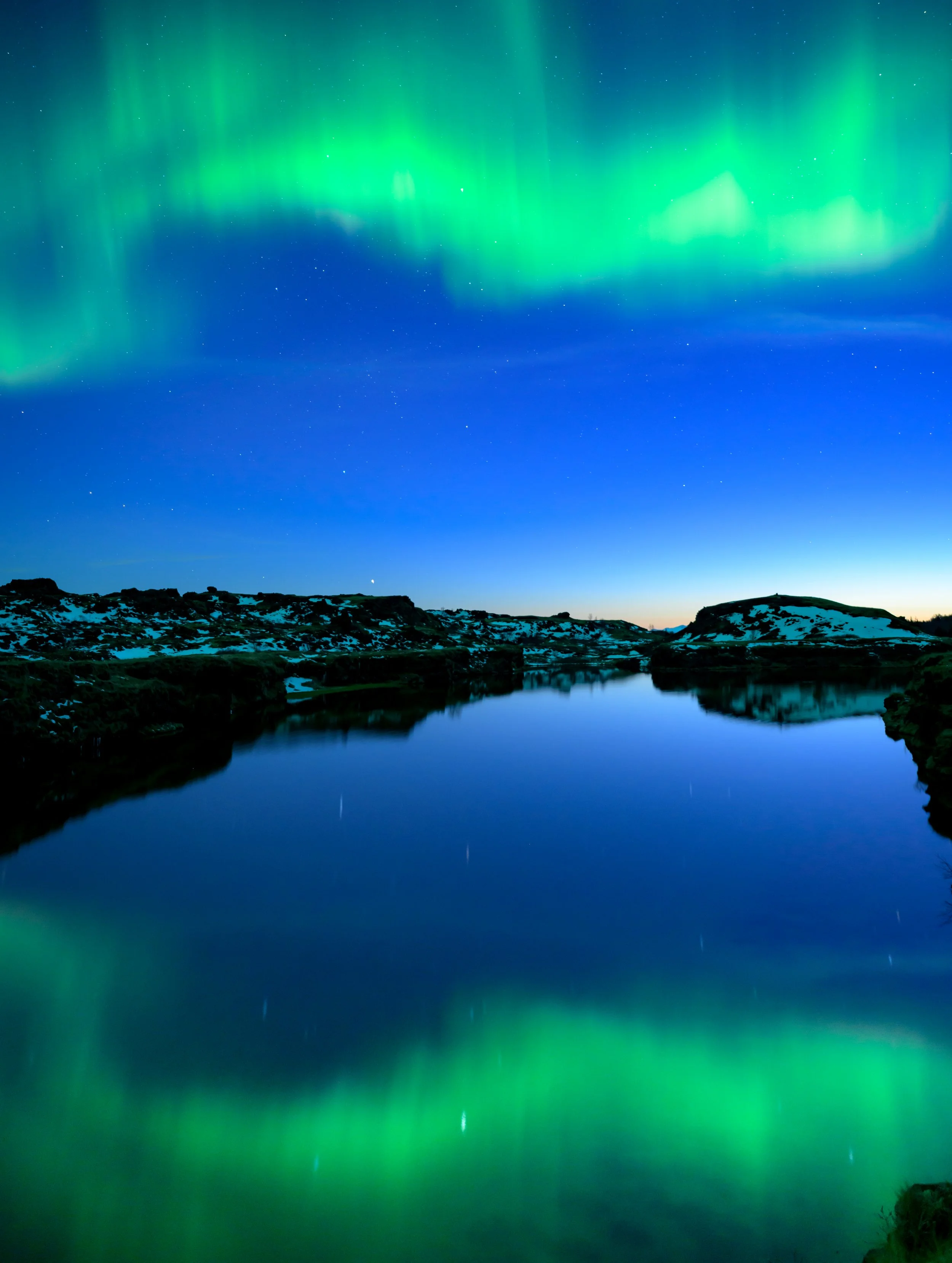
Lake Myvatn Aurora Explosion, Iceland

Nikon Z 8 with a Nikon Z 24-70 f/2.8 lens. 10 seconds, f/2.8, ISO 1600.

It was another amazing year of adventures under the stars, and my two favorite images bookended an absolutely stellar 2025!

My first trip of the year was with a small tight-knit group of explorers to Northern Iceland. April in the Arctic Circle can be challenging, as darkness lasts only 4 to 6 hours, the weather is frequently inclement, and solar activity anytime is sporadic enough to add to the struggle for good aurora viewing.

From the beginning of the trip we saw that our best time for clear skies would be the last night. We spent the week experiencing otherworldly vistas and tons of activities during the days, yet, true to the forecast, our nights remained socked in. We became more and more anxious for that last night’s weather prediction to prove true.

Our prayers to the geomagnetic gods were answered with an explosive light show unlike any we had ever witnessed prior. We chose to photograph around the volcanic landscape of Lake Myvatn, which offered wonderful compositions and reflections for the northern lights that were dancing in all directions. We shot for hours.

As morning twilight was beginning to break through the darkness, one last aurora eruption happened to the east. I quickly framed this image of blue and green light enveloping the approaching dawn. It lasted a few fleeting moments before it danced away.

It was one insanely epic night of auroras that made a grand finale to our trip and a night we’ll remember forever. With perma-grins on our faces, we left Iceland the next day completely satisfied.

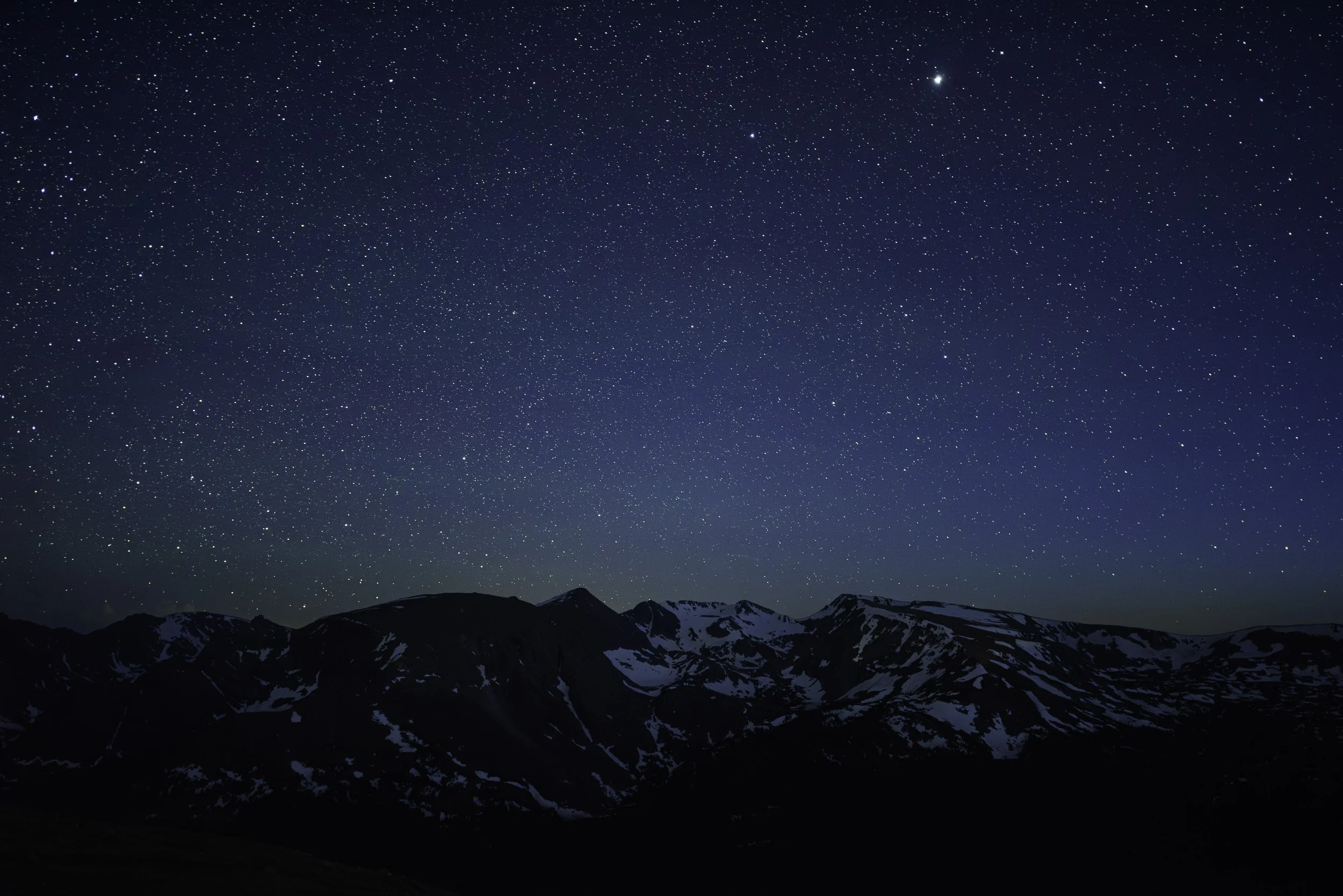
Totem Pole during the Geminid Meteor Shower, Monument Valley

Nikon Z 8 with Nikon Z 14-24 f/2.8 lens. Foreground: 1 minute, f/2.8, ISO 1600. Sky/meteors: 43 stacked frames shot at 8 seconds, f/2.8, ISO 12,800.

We were chasing a different sort of celestial phenomenon on our last workshop of the year—the Geminids Meteor Shower in the wild landscapes of Monument Valley.

Our group spent hours of classroom time learning how to identify, capture and composite a single image filled with shooting stars. We scouted our spots and worked out the radiant alignment with the constellation Gemini and its two bright stars, Castor and Pollux. Our cold night started at 8 p.m. as we set up to collect on-camera as many meteors as we could until the moon rose at 3 a.m.

At our first location, instead of including Castor and Pollux in my frame, I decided to compose to the landscape. I knew I wanted a tighter shot of the iconic Totem Pole rock formation, and I also wanted additional foreground to lead the viewer into the scene. I focused on this Mojave yucca and lit it with a low-level light from overhead. I then focused on the stars and let the camera capture 687 shots with the radiant out of frame to the right.

The result was 43 frames containing long meteor streaks that I later blended together in Photoshop. Because the radiant was not in the frame, I didn’t have a visual reference to align the meteors, so I used a mixture of science and art to get everything in the right spots. The end result was all the meteors shooing past the Totem Pole in a dramatic way.

Just like with the aurora experience, tons of hoots and hollers greeted each magical moment that played out in our precious night skies.

Lance Keimig

Bisti Badlands Mushroom

Nikon D780 with a Tamron VR 15-30mm f/2.8G lens at 18mm. 20 seconds, f/4.5, ISO 6400.

Our Bisti Badlands trip in November resulted in my favorite domestic workshop of the past several years. Matt did such a great job planning and researching the area, and we had a wonderful Navajo guide with our great group. It was so much fun to explore these alien landscapes together, and to collaborate with about seven other people to light and photograph several mushroom-like structures in the desert.

For this photo, we spent about an hour refining the lighting, which involved four Luxli Fiddles and a Luxli Viola. As a bonus, we had some subtle auroras in the background (after experiencing a massive display the night before at Ship Rock).

This was one of those nights when everything clicked: a great location with a strong group of photographers, perfect weather, and a wonderful combination of clouds and light pollution augmented by a magenta aurora all adding interest to the sky and the overall composition. The mushrooms—or hoodoos, as they are properly called—were a source of endless fascination as well. Harder, more durable caps of sandstone rest on pillars or pedestals of shale and mudstone, which erodes more quickly and creates the iconic formations.

I made only three images that night, but each is a banger that I plan to hang on the wall in my home. I can’t wait to go back and further explore the area next May during the Nightscaper Conference!

Aurora off of Monhegan Island

Nikon D780 with an Irix 45mm f/1.4 lens. 5 minutes, f/2, ISO 100.

2025 was a big year for aurora borealis. Many people who had never experienced it before got to see it, as big solar storms in May and November lit up the skies much further south than usual. I was fortunate to see and photograph auroras in Norway, Maine and New Mexico—all in one year.

We weren’t expecting auroras on Monhegan Island in Maine in late August, but as luck would have it, we were treated to a gorgeous display. Matt has been christened the “Aurora Fairy,” and for good reason––all three of my sightings this year were in his presence.

In this image I love the intense magenta color without a trace of green. Magenta generally appears at much higher altitudes than the more familiar green colors we experience in the far north. When there is a particularly strong solar storm, those with clear skies in more temperate latitudes have a viewing angle that allows us to see the top layer of auroral activity, even if the phenomenon doesn’t extend as far south as our location.

Our group had gathered on the ferry pier to see if we could glimpse the colors after the Aurora Fairy announced that we might get lucky. At one point, I turned around and looked behind us to the south, and I saw a picture-perfect scene of several lobster boats sitting very still in the dead calm waters between Monhegan and Manana islands, which resulted in another of my favorite images of the year. Two favorites in one night—not bad for an unexpected delight.

Matt Hill

Ship rock Aurora and Star Trails

Nikon Z 6II with a Nikon Z 24-70mm f/2.8 lens. 10 stacked frames shot at 8 minutes, f/2.8, ISO 100.

While visiting the Bisti Badlands, we also asked our Navajo guides to take us to Ship Rock. That night we also were witness to a spectacular G4 geomagnetic storm. It took us by surprise, as seeing auroras that far south is unlikely. But with permission from tribal authorities, we drove up near the base of the rock formation and set about making long exposures, short exposures and everything in between.

I was working on two compositions: first, this star trail option, and second, a wider-field panorama alongside two pano-friendly workshop attendees. I wasn’t convinced that I would get a good-looking star trail because of the volatility of the auroras. But I “rolled the dice” by choosing the best settings I could and moved on to making a panorama.

Carefully placing my tripod to put Polaris just off the right corner of the formation, I was envisioning some color in the star field and more stars. I had no idea that we would get such a massive substorm and tons of stable auroral red (SAR). Apparently we were seeing the very bottom edge/top layer of a very beautiful aurora storm. We were quite happy with the results.

The monument was lit on the right by light pollution from the nearby town and on the left by a single Luxli Fiddle at 40 percent power.

Badlands National Park Milky Way Panorama

Foreground: Nikon Z 8 with a Laowa Argus 28mm f/1.2 lens. 12 stitched frames shot at 120 seconds, f/2.8, ISO 1600. Sky: Astro-modified Nikon Z 6 with a Laowa Argus 28mm f/1.2 lens. 12 stitched frames shot at 8 seconds, f/2.8, ISO 6400.

During our 2025 Panorama Intensive in Badlands National Park, we had a peak opportunity: ideal dark skies, a low Milky Way arch and a surprise visit from Aurora Borealis!

I love all our tours, adventures and workshops. But the Pano Intensive holds a special place in my heart. A smaller group, a massive growth experience and room for everyone to spread their metaphorical wings (and rotate those pano rigs side to side, tilt up and down!).

We set up for a north (left) to south (right) pano sweep and were rewarded with a special night under dark skies. We had gorgeous layers of airglow, a clear and visible Galactic Core, a very identifiably Badlands landscape, and auroral pillars and glow. All in all, a deeply magical night with a stellar group of people.

I made this panorama in two sweeps, and (perhaps you, dear reader, will be surprised) with two different cameras! I captured the sky with a 25-megapixel astro-modified Nikon Z 6 for star points using the NPF rule and a high ISO of 6400, and later I applied AI Denoise in Lightroom. I captured the landscape with a 46-megapixel Nikon Z 8 for 2 minutes per frame at ISO 1600, and also applied AI Denoise to these frames. Within PTGui I aligned and stitched the two different camera resolutions and then blended them in Photoshop.

Tim Cooper

Live Oak, Garden, Savannah, Georgia

Nikon Z6III with a Nikon Z 14-24mm f/2.8 lens. 8 seconds, f/8, ISO 400.

One of the great things about night photography is the wide variety of styles and techniques used in its creation. It’s also a photographic discipline that can encompass a wide array of subject matter and scenery. For many, night photography means skies and what they contain. The Milky Way, the moon, or a clear, brilliant field of endless stars. While I love these skies as much as the next photographer, I also love architecture, urban and the intimate. These subjects are not typically conducive to pairing with a dramatic night sky.

Case in point is this scene from the historic district in Savannah, Georgia. Very little sky, but rich in texture. The near-perfect symmetry caught my eye, but it was the Live Oak branch descending into the garden that hooked me. This area of Savannah is known for its beautiful, well-kept antebellum homes, and this composition certainly fit that narrative. I find this area to be a photographic playground—day or night.

Due to the extreme contrast of deep shadow and bright lights, a single exposure would never capture the range of tones. Instead, I made six exposures ranging from 1 second to 30 seconds to ensure detail in everything except the actual light sources. In post, I merged the brightest three exposures into an HDR image, and did the same with the darkest three. I then exported the resulting two HDR images into Photoshop and manually blended them together to reveal rich blacks, highlights with detail and, hopefully, an appealing range of grays.

Headstone, Catholic Cemetery, Savannah, Georgia

Nikon Z 6II with a Nikon Z 24-70mm f/2.8 lens. 30 seconds f/8, ISO 800.

As it turns out, both of my favorite images this year came from the same workshop: Savannah in Black & White. Savannah is my favorite town in the United States to photograph. History interweaves with beauty, and the human-made is encompassed by nature. The city’s aesthetic is simultaneously primal and regal. Savannah is famous for many things, not least of which is their gorgeous cemeteries. I made this image during our workshop in the Catholic Cemetery near downtown.

Cemeteries are curious places to photograph. Sometimes I can feel as if I am intruding or disrespecting someone’s private space, while other times I feel I’m simply capturing the natural flow of life. For me, the latter is the most familiar feeling.

I am also drawn to the process of nature reclaiming the human-made—it’s endlessly fascinating and beautiful. The headstones in many Savannah cemeteries reflect that process well; I feel surrounded by nature reclaiming its rightful place.

With the use of camera placement, exposure and lighting, that feeling can be heightened and intensified. For this image, I used a combination of Low-Level Lighting (with a Luxli fiddle) and a handheld flashlight (Coast HP7R) to highlight both the headstone and the encroaching trees and vines. Creating one frame with perfect lighting eluded me, so I shot several frames at different shutter speeds with varying levels of light painting. In the end I blended three of those frames to create a final image that best represented how I saw the scene.

Your Turn

What was your favorite night photograph of 2025? We’d love to see it! Share in the comments below, or on our Facebook page, or on Instagram (tag us @nationalparksatnight #nationalparksatnight #seizethenight). Be sure to tell a story too—the technical aspects, the challenge overcome, or a tale of the experience.
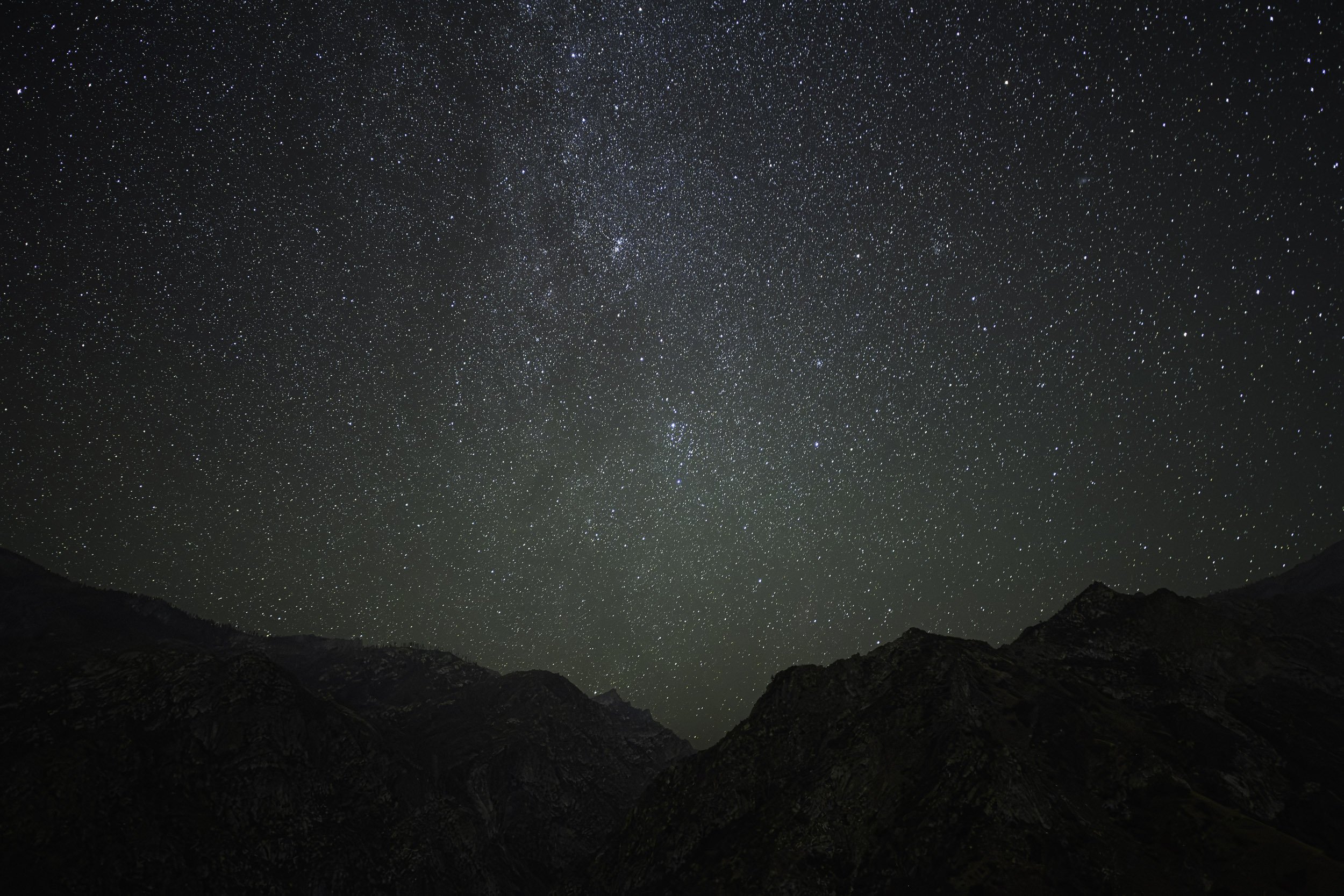
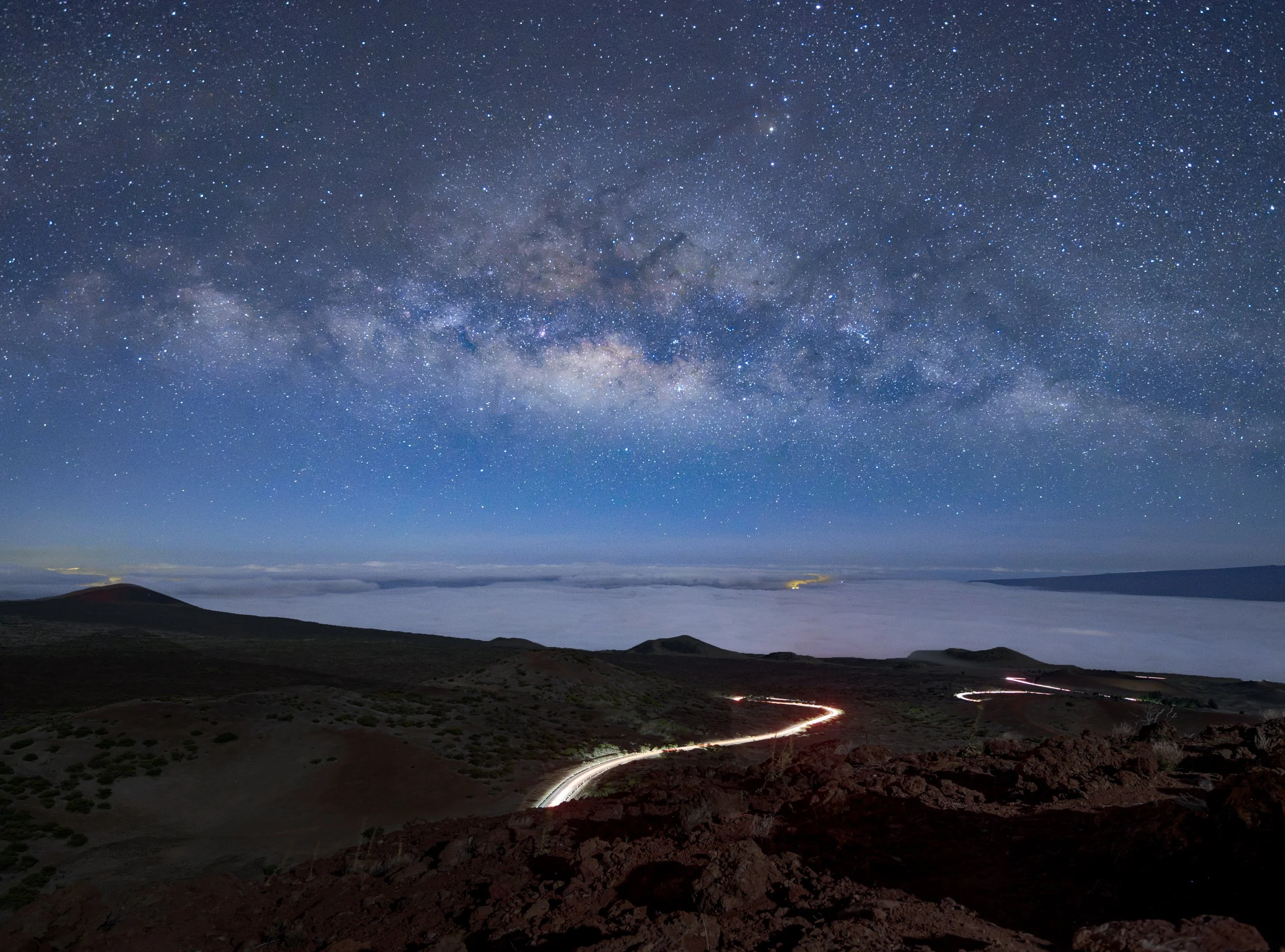
Then … enjoy the final nights of 2025 and all the nights of 2026. There are a lot more favorite photos waiting to be crafted.

Tim Cooper is a partner and workshop leader with National Parks at Night. Learn more techniques from his book HDR Photography: From Snapshots to Great Shots.

UPCOMING Workshops FROM NATIONAL PARKS AT NIGHT

Dark Matters: Our Favorite Photos of 2024

Was 2024 the best year ever for night photography? It sure seemed like it!

In April millions of people prepared and traveled for the Great American Eclipse, which did not disappoint. Over the course of 2024 the sun released more than 50 X-class solar flares, resulting in solar-maximum aurora displays worldwide, some of which dipped well below the Mason-Dixon Line. And Comet C/2023 A3 (Tsuchinshan-ATLAS) delighted many of us in early autumn.

The year 2025 will also be big for us, not only with more stellar celestial events, but also because it marks our 10th year of sharing and celebrating and educating about night photography and all the adventures that go with it. We’re looking forward to a full schedule of both new and favorite destinations to keep us all seizing the night.

Until then, we reflect on 2024. We were fortunate to lead 21 workshops and tours, for which we visited nine national parks, seven islands and five international destinations. Now, in these last few days of this year, we honor the tradition of sharing our ten favorite night images with you. Will comets, eclipses and auroras be included in our top 10? Will they make yours?


Chris Nicholson

Yellowstone National Park. Nikon D5 with a Nikon 14-24mm f/2.8 lens. 15 seconds, f/2.8, ISO 12,800.

In September I photographed in Yellowstone National Park’s Norris Geyser Basin at night for the third time ever. The first time was way back, at a point in my career when I wasn’t yet good enough at night photography to create an image I’d care to show anyone. The second time, clouds rolled in and obscured every star in the sky. This third time, however, was … wow!

The atmosphere was dry and the sky was clear, revealing countless stars twinkling overhead. The air was a perfect temperature—cool enough so that the steam from fumaroles and hot springs was apparent yet not overwhelming. The lack of any breeze kept the steam from blowing away and prevented ripples from disrupting the perfect star reflections in the water.

Beautiful random patterns of runoff offered plenty of possible compositions, but I waited most of the night for the Milky Way to drift over this spot, aligned with this little pond and little stream. I loved how all the elements of this inspiring landscape came together into exactly how I wanted to remember the moment.

Martha’s Vineyard. Nikon D5 with a Laowa 20mm f/4 shift lens. 15 seconds, f/11, ISO 6400.

In spring we brought a workshop group out to Martha’s Vineyard to photograph lighthouses. On the first night we visited Gay Head Lighthouse, and fogged rolled in. Not a problem! Lighthouses were built for weather, so weathery nights can be a great time to photograph them.

After the group left for the hotel, Gabe and I stayed out to shoot more. Gabe in particular had an idea he was chasing, and he needed some time to execute it. That left me wandering around looking for images to create. While lighthouses are fun to photograph, after working a few angles, finding more compositions can become challenging. In those moments I search for anything in the area that I can juxtapose with the tower—a rocky shoreline, the keeper’s quarters, an oil house, etc. Here, I found these wonderful branches.

The way the bare branches crept into the scene, combined with the fog and the moody light bouncing around in it, made for a palpably eerie aesthetic. After one look at the LCD, I knew this would be one of my favorite lighthouse photographs.

Gabriel Biderman

Chicago, Chicago. Nikon Z 8 with a Nikon Z 24-70mm f/2.8 lens. 2.5 seconds, f/18, ISO 64.

There were plenty of images that I worked really hard to create this year. I used specialized gear, plotted exposures, and figured out where the sun and moon would be, but it was this accident of a shot that skyrocketed to the top.

Our Gateway Arch & Northern Route 66 workshop was probably the most underrated trip we offered this year. It was full of architecture tours, boat rides, skyscrapers, arches and plenty of Roadside Americana.

We always try to creatively capture the iconic symbols of the city or park we visit, and this Chicago Theater sign is definitely one. First I set up in the median strip of the street and composed several images capturing car trails. Then I accidentally triggered a 2.5-second exposure while I picked up the camera and tripod to adjust the composition. My finger went to the delete button but the image that appeared on the rear LCD gave me pause. Wow. That was a happy accident indeed.

I went on to try eight more intentional camera movement (ICM) shots but it was the “unintentional camera movement” that proved to be the most unique interpretation of the Chicago Theater for me that night.

Three Hours Outside the Ohio State Reformatory. Nikon Z f with a Nikon 19mm f/4 tilt-shift lens. Foreground: Four blended frames shot at 30, 15, 8 and 4 seconds, f/5.6, ISO 400. Background: 348 stacked exposures shot at 30 seconds, f/5.6, ISO 400.

Looks like it was urban night photography for the win for me in 2024! Our Rust & Ruinism tour was a dream come true, as we got night access to the Ohio State Reformatory (ORS), the Trans-Allegheny Lunatic Asylum and Carrie Furnaces. ORS is the famous Shawshank Redemption prison, and while most of us spent the night ghost hunting and lighting the peeling-paint-walled cells, a few of us adventured outside to create a star-trail establishing shot of the front of this 138-year-old edifice.

This was a tricky shot, but my trusty Nikon 19mm tilt-shift lens was huge in helping me keep all the lines straight. I first exposed the highlights in a controlled manner so that nothing would be blown out. Then I figured out the proper sky exposure and let it rip for 3 hours while I went back inside the prison. I was absolutely thrilled with the blend and stack, and then I finished it with a black and white conversion in Nik Silver Efex.

Lance Keimig

Near the Wreck of the Steel Ship Gardar BA 64, Paterksfjordur, Iceland. Nikon D780 with a Tamron VR 15-30mm f/2.8G lens at 20mm. 13 seconds, f/4, ISO 6400.

Despite 2024 being an amazing year for viewing and photographing auroras, it was a frustrating one for me. During the massive G5 storm in May, I was leading a tour in the Faroe Islands, a place that could have been an incredible location to experience the northern lights. Unfortunately the sky was completely cloudy during the entirety of the auroral activity. Then, during the coronal mass ejection of October 10-11, I was home in Northern Vermont, which had 100 percent cloud cover. Again, nothing, nada, not one trace of green or pink. Just gray.

However, I finally received my just desserts with a couple of “full spectrum” aurora experiences in Iceland in September.

One night our group was photographing the wreck of an old steel ship, which has long been grounded at the end of a fjord outside the town of Paterksfjordur, when a pretty decent aurora developed. With a good-sized crowd working three sides of the ship, it was becoming difficult to make an image without other photographers in the shot. If you know Matt, you know that wouldn’t bother him, but I decided to wander off.

I walked about 100 yards away from the boat where I found a little spit of land that made for a great foreground, with the town in the background. It made for a strong composition with a great mix of green, blotchy clouds, and a vibrant splash of magenta thrown in for good measure.

Lawrence the Sheep, Djupavik. Nikon D780 with a Tamron VR 15-30mm f/2.8G lens at 15mm. 30 seconds, f/3.5, ISO 3200.

I don’t think this is one of the best images I made this year, but it certainly is one of my favorites, and for a very funny reason.

During the same Westfjords trip we were all busily photographing auroras outside the old herring factory at Djupavik. I was up on the hill behind the hotel, and one photographer in our group was in the small field below me, wearing a very bright orange puffy coat. I wasn’t about to ask him to move, so I figured I’d just clone him out later if he lingered in the spot. (He did.)

When I was processing the image in Lightroom, I selected Lawrence in his orange coat and used the Generative Remove tool, did not enter any AI prompts, and hit return, expecting Lawrence to be replaced with grass. Nope. Lightroom took it upon itself to replace him with a beautifully rendered sheep, complete with backlighting and a shadow, which was totally appropriate to the scene.

I still laugh every time I look at this image. What a happy accident.

Matt Hill

Ibex Dunes in Death Valley National Park. Nikon Z 8 with a Nikon Z 24-70mm f/2.8 lens at 67mm. Six stacked exposures shot at 5 minutes, f/5.6, ISO 800.

In December 2024 we brought a workshop group to Ibex Dunes in Death Valley National Park. This was my second time to this off-the-beaten-tracks location, and I had a dream of photographing a moonset over the dunes with star trails and a long lens.

The weather was perfect—mild enough so the flat-ish hike across the valley floor from the parking area was uneventful—and when I approached the north end of the dunes, I spotted the mini dune I wanted to ascend to get some elevation for the foreground of the composition.

Using a 24-70mm zoom lens, I carefully chimped my way to the right balance of rippled dunes and starry skies. I made six 5-minute exposures to combine into a massive star trail image. In post, I chose the one foreground frame with the shadow lines that best revealed the sharp edges of the dunes. I then layered and blended in Photoshop and finished in Silver Efex.

Hands down my favorite image from 2025.

Great Basin National Park. Nikon Z 8 with a Nikon Z 24-70mm f/2.8 lens at 24mm. Foreground: 4 minutes, f/2.8, ISO 800. Sky/meteors: 8 seconds, f/2.8, ISO 6400.

I am a sucker for meteor showers. And no meteor shower thrills me more than a no-moon scenario with a dark sky for the Perseids. Add to that a G3 magnetic storm with massive auroras, and you have an incredible night for everyone and memories to last a lifetime.

Working on meteor shower composites with the camera not facing toward the radiant—in this case the constellation Perseus—allows for capturing much longer meteor streaks. And when aligned properly, they all point back to Perseus (which in this case was very, very out of frame).

But wow, don’t they look pretty? This composite includes one base image shot at a lower ISO for better image fidelity (mainly shadow details and lower noise). I ran all the images through Lightroom’s AI-based Denoise. Finally, I layered the 66 frames that I identified with meteors (out of hundreds) in Photoshop and then aligned the layers.

You cannot see auroras in this photo, but the gentle red on the clouds is from an aurora reflected from the opposite sky. It was a magical, breathtaking night.

Tim Cooper

Moyne Abbey, Courtyard Perimeter. Nikon Z 6II with a Laowa 9mm f/5.6 lens. 4 minutes, f/5.6, ISO 800.

This year two of my favorite images are black and white, and both came from our time in Ireland.

Western Ireland is such a great place for castles, friaries, abbeys and all sorts of old stone structures that lie about in various stages of decay. I’ve always been fascinated with these types of structures, and I can spend hours in them while imagining my past life of 1,000 years ago.

Like many of my images, I light painted this with a mix of stationary low-level LCD lights (Luxli Fiddles, in particular) and my Coast flashlights. The symmetry of this area captivates me, and I made a similar image 2 years ago without the lighting. I knew then that when I came back that I wanted another shot at this location.

While waiting to return, I imagined how I would create the lighting. I placed the Fiddles on stands behind the front-most pillar, each tuned away from the center of the courtyard. This supplied the main light. During the exposure I walked around with flashlights, filling in shadows and creating highlights on the back walls, to accentuate the difference between the two sides.

Entrance, Rosserk Friary. Z 6II with a Nikon 14mm f/2.8 lens. 60 seconds, f/4, ISO 200.

Sometimes the idea behind an image comes to me very slowly. Other times it hits like a lightning bolt. The idea for light painting the entrance at Rosserk Friary hit me immediately. On this trip, anyway. During my first visit I hadn’t even noticed this lovely architectural detail.

That is the main reason I love revisiting locations that really resonate with me—I always see the scene differently and often find something more interesting the second or third time around. I think the first time we visit a location, we can be overwhelmed by the obvious. We become engrossed in those images and find it difficult to think past them. Subsequent visits allow us to relax, to see past the obvious and to perhaps take more chances.

This image of the entrance was a bit risky. I could see in my mind’s eye what I wanted, but I didn’t know if I had enough time to complete all of the lighting. I shot multiple frames lit with a Coast HP7 flashlight, as well as one frame that I underexposed at blue hour to ensure that any areas I couldn’t light wouldn’t be featureless black. I light painted the remaining six images from different angles and with different brightness levels to move the viewer through the frame while highlighting the varied details seen from this viewpoint.


Your Turn

What was your favorite night photograph of 2024? We’d love to see it! Share in the comments below, or on our Facebook page, or on Instagram (tag us @nationalparksatnight #nationalparksatnight #seizethenight). Be sure to tell a story too—the technical aspects, the challenge overcome, or a tale of the experience.
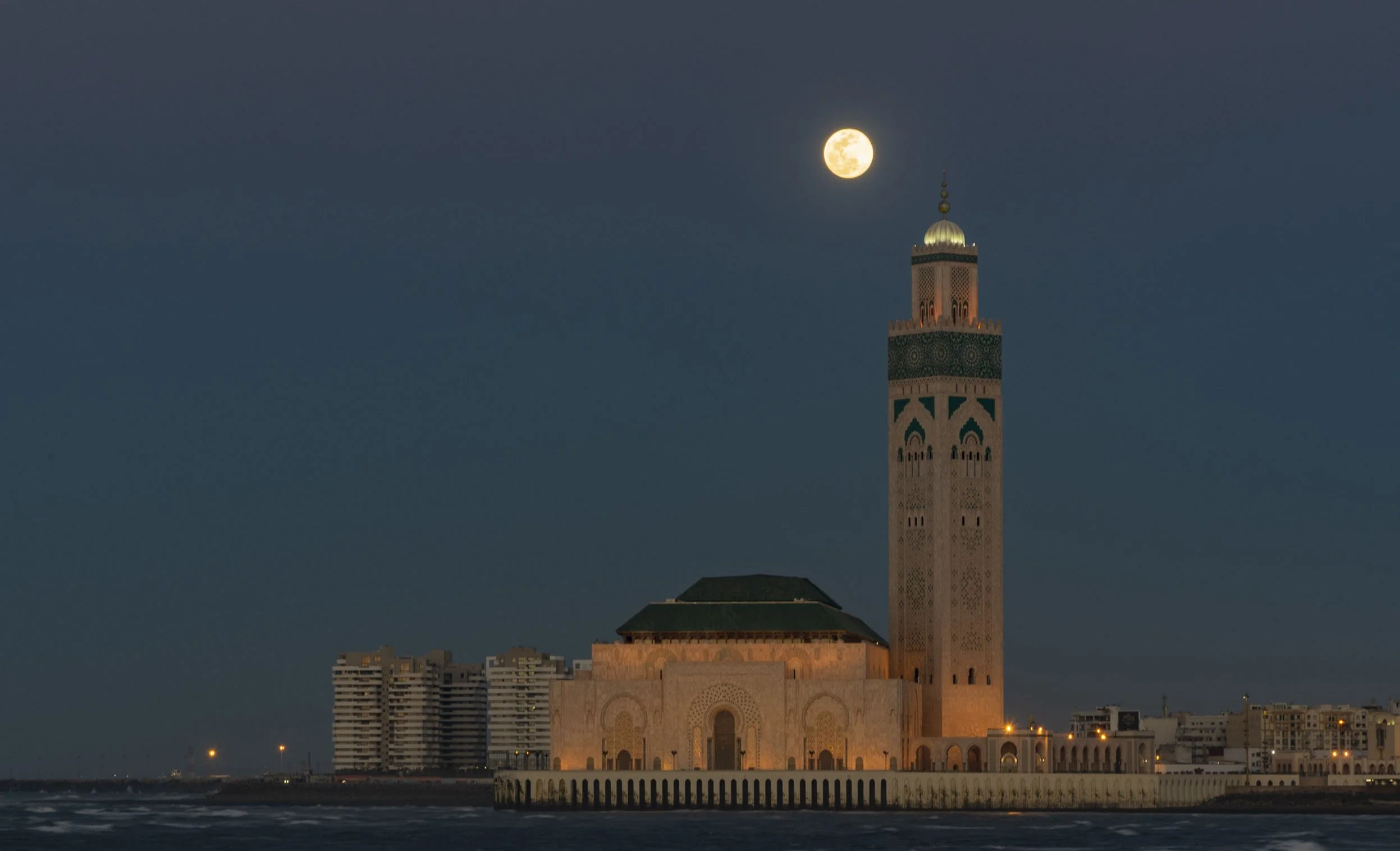
Then … enjoy the final nights of 2024 and all the nights of 2025. There are a lot more favorite photos waiting to be made.

Gabriel Biderman is a partner and workshop leader with National Parks at Night. He is a Brooklyn-based fine art and travel photographer, and author of Night Photography: From Snapshots to Great Shots (Peachpit, 2014). During the daytime hours you'll often find Gabe at one of many photo events around the world working for B&H Photo’s road marketing team. See his portfolio and workshop lineup at www.ruinism.com.

UPCOMING WORKSHOPS FROM NATIONAL PARKS AT NIGHT

Eleven Eclipses: Following Our Friends in the Path of Totality

Here we are. After waiting for it to come for years, the week of the Great North American Eclipse is now over.

Four of the five of us at National Parks at Night enjoyed the few minutes of darkness. I was with my daughter Maggie on an eclipse-chasing road trip to eastern Kentucky. Lance was with his wife Katherine in their backyard in Vermont. Matt and Gabe were leading our workshop in Arkansas’ Hot Springs National Park.

In the days that followed, we looked around social media and saw so many wonderful and creative images made during that 4 minutes of magic, set in so many inspiring places along the path of totality. And we noticed that many of those photographs were made by former attendees of our workshops and conferences. Really—the work we’ve seen has blown us away.

So we decided that instead of celebrating our own eclipse images, we want to celebrate theirs.

Below you’ve find eclipse photographs and eclipse stories from 11 of the amazing night photographers we’ve had the pleasure of working alongside over the past decade. We hope you enjoy their art.

Of course, these aren’t all the photographs created by our alums, nor by the uncountable number of night photographers around the globe. So many images are still showing up on social media, and we applaud them all.

If we missed you in the celebration below, please add your photo and your story to the comments section, or on our social media. We’d love to see what you did!


Charles Barker

cbarkerphoto.com • Instagram

Nikon Z 9 with a Nikon Z 100-400mm f/4.5-5.6 lens at 400mm. Composite of exposures from 1/800, f/8, ISO 800 (phases) to 1/60, f/22, ISO 800 (totality).

I went to Cuyahoga National Park in Ohio. I approached this without full awareness of just how special this experience would be. I planned for this event, spent lots of time listening to others describe it, I’d seen pictures and thought I knew what I was about to see. Yet, as the moment of totality arrived, I was still astonished, startled and in awe. Staring at the dark sphere where the sun should be, I realized I’d taken the sun for granted my entire life. The collective gasp and applause of other park-goers nearby reminded me that we were all sharing this amazing moment, and it was one none of us would ever forget.

Ed Finn

Instagram

Fujifilm X-T5 with a Fujifilm XF 8-16mm f/2.8 lens at 15 mm. Composite of 35 frames shot at 1/40, f/5.6, ISO 400.

I shot this in Lake Placid, New York. We drove there Friday through a snowstorm, and it snowed all day Saturday as well, with solid thick clouds. We scouted the area for the best shot on Sunday. The eclipse was high in the sky Monday, which made finding an interesting foreground a challenge. At the back of the hotel we were staying in I could frame the shot through some trees, with mountains behind. The area filled with people from the hotel and the neighborhood to see the eclipse, and we were pleased that the snow stopped and the clouds lightened by showtime for the eclipse tailgate parties.

Holly Looney

ourworldinphotos.com

Canon R3 with a Canon RF 100-500mm f/4.5-7.1 lens at 400 mm. Composite images shot at 1/500, f/8, ISO 1600.

I shot this in Ouachita National Forest in Hot Springs, Arkansas, as part of National Parks at Night’s Hot Springs and the Total Eclipse workshop. I did this composite because I was struck by the number of onlookers who left the area following the end of totality. That was definitely not the end of the eclipse and this is a visual of that fact.

James Embrescia

Sony a1 with a Sony 200-600mm f/5.6-6.3 lens.1/500, f/8, ISO 800, shot at intervals of 1 minute, 20 seconds intervals.

I just took the online black and white workshop with by Tim and Lance, so I wanted to try a black and white picture of the eclipse. I like photos that capture abstract patterns and the motion of natural things, so this was a natural for me. I picked an interval I thought would work based on something I read about speed of motion during an eclipse, and I was lucky.

Jurgen Lobert

Linktree

Sun images: Nikon Z 6II with a Nikon Z 180-600mm f/5.6-6.3 at 600 mm. 1/180, f/8, ISO 100. Foreground: Nikon Z 6II with a Sony 14mm f/1.8 lens at 1/2, f/11, ISO 200.

After planning for Texas because of less chance for clouds, I cancelled my trip on short notice to escape the tornado warnings and rain forecast, and I ended up near Pittsburg, New Hampshire, on a perfectly clear day with a bunch of friends. I decided to stress myself out and operate three cameras, one for closeups, one for landscape and another for a 360-degree view with a circular fisheye to capture that awesome moment with darkness above and sunset all around.

Klaus-Peter Statz

Instagram

Totality: Nikon D780 with Nikon 200-500mm f/5.6 lens at 400mm. 1/160, f/8, ISO 400. Foreground: Sony RX100V at 24mm (built-in lens). 1/30, f/1.8, ISO 500.

After shooting the 2017 eclipse (also during a National Parks at Night workshop, in Idaho) and missing most of the spectacle as I was busy operating two cameras, I vowed that this time I would shoot only the corona and would spend the remaining time watching the eclipse with my own eyes. When totality happened I had my Nikon shoot bracketed close-up exposures, triggered with a remote release. Watching the eclipse I was so impressed by what I saw that I spontaneously snapped a few frames with my trusted Sony point-and-shoot, one of which serves as the foreground for this composite. The sun/moon at totality is one of the frames shot with the Nikon at 400mm. The two together are the perfect representation of what I saw and experienced.

Lawrence Lee

Instagram

Pentax K-1 Mark II with a Pentax 150-450mm f/4.5-5.6 lens at 410mm. 1/2500, f/8, ISO 800.

This was my first total solar eclipse experience and it was truly amazing. Shot in Lake Placid, New York, at the Olympic Ski Jumping Complex. We had spent the weekend scouting locations and chose this spot for its easily identifiable ski jumping towers. I shot the eclipse with two cameras using the 150-450mm telephoto lens and a 15-30mm lens.

Patricia Blake

Instagram

Sun images: Canon 5D Mark IV with a 200mm lens. 1/800, f/6.3, ISO 1600 during totality, plus bracketed exposures with a NiSi Solar Filter Pro Nano UV/IR Cut ND during the other phases. Foreground: Canon 60D with a 14mm fisheye lens. 1/6, f/8, ISO 1600.

The 2024 eclipse happened to go right over my hometown in New Castle, Indiana. I just knew that I wanted to get a shot of the eclipse phases over a historic Indiana barn. This beautiful barn was built in 1860 and happens to be owned by an astrophysicist who was thrilled to have a night sky nerd like me ask if I could sit in his empty cornfield during the eclipse. I made some wonderful new friends and truly enjoyed photographing. Getting muddy in a cornfield was absolutely worth it!

Shari Hunt

sharihuntphotography.com • Instagram

Sony a7R III with a Sigma 150-600mm f/5-6.3 lens. 1/250, f/6.3, ISO 100.

I was initially going to chase clear skies, but decided the day before the eclipse to stay in Dallas. With heavy low clouds most of the morning (even just an hour before totality), I thought it would be a total bust. However, I met fellow National Parks at Night alum Beth Kochur at our nearby lake and set up, with fingers crossed. Everything turned out perfect just in time and the eclipse was insane. Now I understand the addiction (kinda like night photography).

Sudhir Mehta

Instagram

Sony a7R III with Sony 100-400mm f/4.5-5.6 lens at 400mm. Composite of totality pictures shot at shutter speeds ranging from 1/200 to 2 seconds, f/11, ISO 200.

I shot the eclipse while on the National Parks at Night workshop to Hot Springs National Park. This was shot in Charlton, near Hot Springs, Arkansas.

Terry Kahler

tkahler.com • Instagram

Sony a7 IV with a Sony 200-600mm f/5.6-6.3 lens. 1/160, f/6.3, ISO 800.

I shot in Austin, Texas. I wasn’t too excited about this event as photographing the solar eclipse is not part of my bucket list. As a result, I was not prepared. My camera gear sat on the shelf as it has for months. At about 1:13 p.m. local time, even though we had very cloudy skies and I had only minutes to prepare, I decided that I should get myself in gear and prepare to photograph the event just in case conditions improved. So I got up from my desk and retrieved my camera gear only to note that the batteries were depleted. However, I found one battery with a 47 percent charge. I inserted the battery in the camera, mounted my lens and headed out to photograph this astronomical event. Right place, right time.

Your Turn

Did you shoot the eclipse too? We’d love to see your images! Share in the comments below, or on our Facebook page, or on Instagram (tag us @nationalparksatnight #nationalparksatnight #seizethenight). Be sure to tell a story too—the technical aspects, the challenge overcome, or a tale of the experience.

Chris Nicholson is a partner and director of content with National Parks at Night, and author of Photographing National Parks (Sidelight Books, 2015) and Photographing Lighthouses (Sidelight Books, 2024). Learn more about national parks as photography destinations, subscribe to Chris' free e-newsletter, and more at www.PhotographingNationalParks.com.

UPCOMING WORKSHOPS FROM NATIONAL PARKS AT NIGHT

/*Disables table links opening in new tab on S11 page*/