Photo Essay

Forever Chasing The Night: Our Favorite Photos of 2025

The end of another year is upon us! A time to celebrate with friends, family and loved ones. It’s also a time for reflection, appreciation and gratitude. Like so many others, we at National Parks at Night have an abundance to celebrate, appreciate and be thankful for.

First and foremost, we want to celebrate our alumni. We appreciate you. You’ve enabled us to spend the last ten years meeting new people, traveling to and photographing some of the most beautiful parts of the world. You’ve trusted us to help you on your journey to become better photographers. This has encouraged us to become better photographers too. Because of you, we’ve had the opportunity to make many new friends, and many new memories. We can’t possibly say thank you enough. Thank you!

This time of year is also a time for reflection. The cooler weather, shorter days and longer nights find us spending more time indoors, thinking over the past year and looking back at where we’ve been and what we’ve accomplished. We spend a little less time out in the field and a little more time with our Lightroom catalogs. Spending this time with our images allows us to magically re-experience all of those wonderful places we visited and to recall the magical time spent there.

This common experience has led to a tradition here at National Parks at Night: sharing our favorite images of the past year. Below you will find two images from each of us. These may not be our best photos (how can one judge the best?), but for myriad reasons they are our favorites.

Chris Nicholson

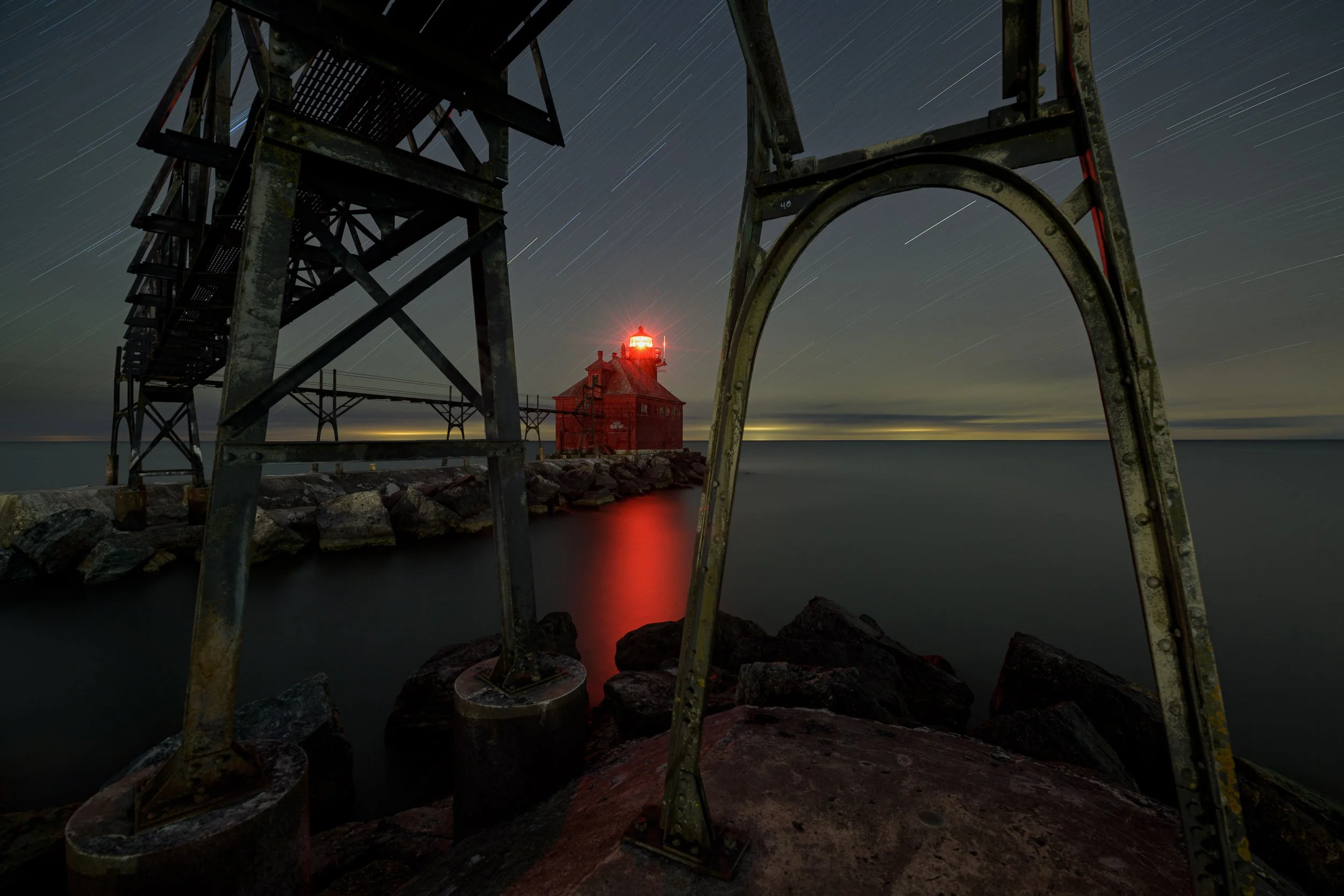
Sturgeon Bay Ship Canal Pierhead Front Lighthouse, Wisconsin

Nikon D5 with a Nikon 14-24mm f/2.8 lens. 27 minutes, f/5.6, ISO 800.

Frequently photographing lighthouses invites a problem not uncommon to any narrow niche: If you’re not careful, many of the photos tend to look the same. In this particular niche, it’s easy to end up with a portfolio full of what I call β€œlighthouse portraits”—just picture after picture of a tower dominating the composition, and the only thing different from one image to the next is the aesthetics of the structure.

One way to avoid that is relatively simple: Every time I photograph a new lighthouse, I identify whatever about the immediate environment is unique, and I then I try to structure a composition around that unique aspect. For the Sturgeon Bay Ship Canal Pierhead Front Lighthouse (a mouthful of a name, for sure!) in Wisconsin, that was easy: It has a rustic and rusty metal walkway that stands over the entire length of the quarter-mile pier that leads to the light. Moreover, another lighthouse (the rear beacon) on land flashes a red beam, washing the entire scene with a subtle warm cast.

I walked out to the end of the pier and saw that I could frame the lighthouse with the arch of the walkway, and I quickly knew that was something I wanted to build a composition around. I shot a few star-point exposures, and then decided to rip a longer shot. I suspected I was going to like the photograph, but when I saw the final version on the back of the camera, I knew I’d created something that I loved. I rarely get that excited about photo, but this one energized me for days.

Port Washington Breakwater Light, Wisconsin

Nikon D5 with a Laowa 20mm f/4 Zero-D Shift lens. 15 seconds, f/5.6, ISO 800.

About a month ago I was in Milwaukee with my daughter, Maggie, doing some random things, including stopping at the city’s three lighthousesβ€”the first three she’d ever seen. She asked if there were more, so we drove half an hour to the Port Washington Breakwater Light and sat in the warm car peering at it standing over the waters of Lake Michigan. She looked at me and smiled, and asked if we could walk out to it. Half a mile. In 32 degrees F.

Yes, of course. We bundled ourselves in jackets and beanies and walked to the light, where we sheltered under the tower between its legs, and looked down at the frigid water, and talked with a friendly local fisherman. We took selfies, some with smiles, some with goofy expressions. Then we briskly walked back to land and got some hot chocolate.

Later I returned alone and created this photo of this unique lighthouse, along with the beacon across the channel, with nice rocks flanking the leading lines of the breakwater, with ice and snow creeping across the walkway. The exposure was pretty straightforward (moonlight, keep the stars sharp), as was the focus (infinity, with a 20mm lens)β€”the only thing β€œspecial” about executing the image was using a shift lens to prevent perspective distortion.

Still, this is perhaps my most cherished photo from 2025. It’s not about a lighthouse. It’s a β€œreminder” photo. It’s about how blessed I am to have a daughter who, at almost 13 years old, is still amused by curiosity, and who still wants to do things with me like walk half a mile to a lighthouse in a freezing breeze, and smile all the way there and all the way back. This photo will always be about Maggie.

Gabriel Biderman

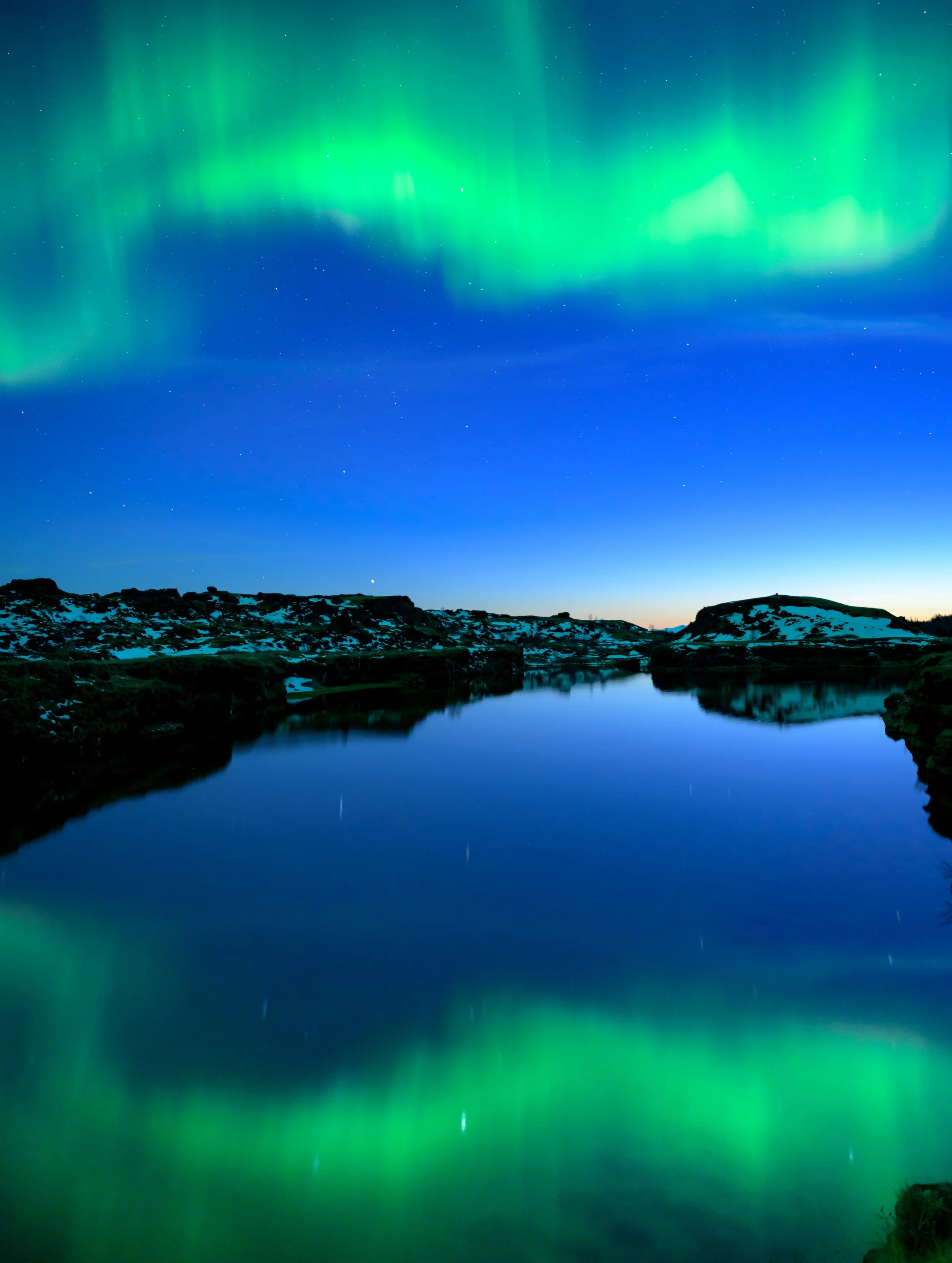
Lake Myvatn Aurora Explosion, Iceland

Nikon Z 8 with a Nikon Z 24-70 f/2.8 lens. 10 seconds, f/2.8, ISO 1600.

It was another amazing year of adventures under the stars, and my two favorite images bookended an absolutely stellar 2025!

My first trip of the year was with a small tight-knit group of explorers to Northern Iceland. April in the Arctic Circle can be challenging, as darkness lasts only 4 to 6 hours, the weather is frequently inclement, and solar activity anytime is sporadic enough to add to the struggle for good aurora viewing.

From the beginning of the trip we saw that our best time for clear skies would be the last night. We spent the week experiencing otherworldly vistas and tons of activities during the days, yet, true to the forecast, our nights remained socked in. We became more and more anxious for that last night’s weather prediction to prove true.

Our prayers to the geomagnetic gods were answered with an explosive light show unlike any we had ever witnessed prior. We chose to photograph around the volcanic landscape of Lake Myvatn, which offered wonderful compositions and reflections for the northern lights that were dancing in all directions. We shot for hours.

As morning twilight was beginning to break through the darkness, one last aurora eruption happened to the east. I quickly framed this image of blue and green light enveloping the approaching dawn. It lasted a few fleeting moments before it danced away.

It was one insanely epic night of auroras that made a grand finale to our trip and a night we’ll remember forever. With perma-grins on our faces, we left Iceland the next day completely satisfied.

Totem Pole during the Geminid Meteor Shower, Monument Valley

Nikon Z 8 with Nikon Z 14-24 f/2.8 lens. Foreground: 1 minute, f/2.8, ISO 1600. Sky/meteors: 43 stacked frames shot at 8 seconds, f/2.8, ISO 12,800.

We were chasing a different sort of celestial phenomenon on our last workshop of the yearβ€”the Geminids Meteor Shower in the wild landscapes of Monument Valley.

Our group spent hours of classroom time learning how to identify, capture and composite a single image filled with shooting stars. We scouted our spots and worked out the radiant alignment with the constellation Gemini and its two bright stars, Castor and Pollux. Our cold night started at 8 p.m. as we set up to collect on-camera as many meteors as we could until the moon rose at 3 a.m.

At our first location, instead of including Castor and Pollux in my frame, I decided to compose to the landscape. I knew I wanted a tighter shot of the iconic Totem Pole rock formation, and I also wanted additional foreground to lead the viewer into the scene. I focused on this Mojave yucca and lit it with a low-level light from overhead. I then focused on the stars and let the camera capture 687 shots with the radiant out of frame to the right.

The result was 43 frames containing long meteor streaks that I later blended together in Photoshop. Because the radiant was not in the frame, I didn’t have a visual reference to align the meteors, so I used a mixture of science and art to get everything in the right spots. The end result was all the meteors shooing past the Totem Pole in a dramatic way.

Just like with the aurora experience, tons of hoots and hollers greeted each magical moment that played out in our precious night skies.

Lance Keimig

Bisti Badlands Mushroom

Nikon D780 with a Tamron VR 15-30mm f/2.8G lens at 18mm. 20 seconds, f/4.5, ISO 6400.

Our Bisti Badlands trip in November resulted in my favorite domestic workshop of the past several years. Matt did such a great job planning and researching the area, and we had a wonderful Navajo guide with our great group. It was so much fun to explore these alien landscapes together, and to collaborate with about seven other people to light and photograph several mushroom-like structures in the desert.

For this photo, we spent about an hour refining the lighting, which involved four Luxli Fiddles and a Luxli Viola. As a bonus, we had some subtle auroras in the background (after experiencing a massive display the night before at Ship Rock).

This was one of those nights when everything clicked: a great location with a strong group of photographers, perfect weather, and a wonderful combination of clouds and light pollution augmented by a magenta aurora all adding interest to the sky and the overall composition. The mushroomsβ€”or hoodoos, as they are properly calledβ€”were a source of endless fascination as well. Harder, more durable caps of sandstone rest on pillars or pedestals of shale and mudstone, which erodes more quickly and creates the iconic formations.

I made only three images that night, but each is a banger that I plan to hang on the wall in my home. I can’t wait to go back and further explore the area next May during the Nightscaper Conference!

Aurora off of Monhegan Island

Nikon D780 with an Irix 45mm f/1.4 lens. 5 minutes, f/2, ISO 100.

2025 was a big year for aurora borealis. Many people who had never experienced it before got to see it, as big solar storms in May and November lit up the skies much further south than usual. I was fortunate to see and photograph auroras in Norway, Maine and New Mexicoβ€”all in one year.

We weren’t expecting auroras on Monhegan Island in Maine in late August, but as luck would have it, we were treated to a gorgeous display. Matt has been christened the β€œAurora Fairy,” and for good reason––all three of my sightings this year were in his presence.

In this image I love the intense magenta color without a trace of green. Magenta generally appears at much higher altitudes than the more familiar green colors we experience in the far north. When there is a particularly strong solar storm, those with clear skies in more temperate latitudes have a viewing angle that allows us to see the top layer of auroral activity, even if the phenomenon doesn’t extend as far south as our location.

Our group had gathered on the ferry pier to see if we could glimpse the colors after the Aurora Fairy announced that we might get lucky. At one point, I turned around and looked behind us to the south, and I saw a picture-perfect scene of several lobster boats sitting very still in the dead calm waters between Monhegan and Manana islands, which resulted in another of my favorite images of the year. Two favorites in one nightβ€”not bad for an unexpected delight.

Matt Hill

Ship rock Aurora and Star Trails

Nikon Z 6II with a Nikon Z 24-70mm f/2.8 lens. 10 stacked frames shot at 8 minutes, f/2.8, ISO 100.

While visiting the Bisti Badlands, we also asked our Navajo guides to take us to Ship Rock. That night we also were witness to a spectacular G4 geomagnetic storm. It took us by surprise, as seeing auroras that far south is unlikely. But with permission from tribal authorities, we drove up near the base of the rock formation and set about making long exposures, short exposures and everything in between.

I was working on two compositions: first, this star trail option, and second, a wider-field panorama alongside two pano-friendly workshop attendees. I wasn’t convinced that I would get a good-looking star trail because of the volatility of the auroras. But I β€œrolled the dice” by choosing the best settings I could and moved on to making a panorama.

Carefully placing my tripod to put Polaris just off the right corner of the formation, I was envisioning some color in the star field and more stars. I had no idea that we would get such a massive substorm and tons of stable auroral red (SAR). Apparently we were seeing the very bottom edge/top layer of a very beautiful aurora storm. We were quite happy with the results.

The monument was lit on the right by light pollution from the nearby town and on the left by a single Luxli Fiddle at 40 percent power.

Badlands National Park Milky Way Panorama

Foreground: Nikon Z 8 with a Laowa Argus 28mm f/1.2 lens. 12 stitched frames shot at 120 seconds, f/2.8, ISO 1600. Sky: Astro-modified Nikon Z 6 with a Laowa Argus 28mm f/1.2 lens. 12 stitched frames shot at 8 seconds, f/2.8, ISO 6400.

During our 2025 Panorama Intensive in Badlands National Park, we had a peak opportunity: ideal dark skies, a low Milky Way arch and a surprise visit from Aurora Borealis!

I love all our tours, adventures and workshops. But the Pano Intensive holds a special place in my heart. A smaller group, a massive growth experience and room for everyone to spread their metaphorical wings (and rotate those pano rigs side to side, tilt up and down!).

We set up for a north (left) to south (right) pano sweep and were rewarded with a special night under dark skies. We had gorgeous layers of airglow, a clear and visible Galactic Core, a very identifiably Badlands landscape, and auroral pillars and glow. All in all, a deeply magical night with a stellar group of people.

I made this panorama in two sweeps, and (perhaps you, dear reader, will be surprised) with two different cameras! I captured the sky with a 25-megapixel astro-modified Nikon Z 6 for star points using the NPF rule and a high ISO of 6400, and later I applied AI Denoise in Lightroom. I captured the landscape with a 46-megapixel Nikon Z 8 for 2 minutes per frame at ISO 1600, and also applied AI Denoise to these frames. Within PTGui I aligned and stitched the two different camera resolutions and then blended them in Photoshop.

Tim Cooper

Live Oak, Garden, Savannah, Georgia

Nikon Z6III with a Nikon Z 14-24mm f/2.8 lens. 8 seconds, f/8, ISO 400.

One of the great things about night photography is the wide variety of styles and techniques used in its creation. It’s also a photographic discipline that can encompass a wide array of subject matter and scenery. For many, night photography means skies and what they contain. The Milky Way, the moon, or a clear, brilliant field of endless stars. While I love these skies as much as the next photographer, I also love architecture, urban and the intimate. These subjects are not typically conducive to pairing with a dramatic night sky.

Case in point is this scene from the historic district in Savannah, Georgia. Very little sky, but rich in texture. The near-perfect symmetry caught my eye, but it was the Live Oak branch descending into the garden that hooked me. This area of Savannah is known for its beautiful, well-kept antebellum homes, and this composition certainly fit that narrative. I find this area to be a photographic playgroundβ€”day or night.

Due to the extreme contrast of deep shadow and bright lights, a single exposure would never capture the range of tones. Instead, I made six exposures ranging from 1 second to 30 seconds to ensure detail in everything except the actual light sources. In post, I merged the brightest three exposures into an HDR image, and did the same with the darkest three. I then exported the resulting two HDR images into Photoshop and manually blended them together to reveal rich blacks, highlights with detail and, hopefully, an appealing range of grays.

Headstone, Catholic Cemetery, Savannah, Georgia

Nikon Z 6II with a Nikon Z 24-70mm f/2.8 lens. 30 seconds f/8, ISO 800.

As it turns out, both of my favorite images this year came from the same workshop: Savannah in Black & White. Savannah is my favorite town in the United States to photograph. History interweaves with beauty, and the human-made is encompassed by nature. The city’s aesthetic is simultaneously primal and regal. Savannah is famous for many things, not least of which is their gorgeous cemeteries. I made this image during our workshop in the Catholic Cemetery near downtown.

Cemeteries are curious places to photograph. Sometimes I can feel as if I am intruding or disrespecting someone’s private space, while other times I feel I’m simply capturing the natural flow of life. For me, the latter is the most familiar feeling.

I am also drawn to the process of nature reclaiming the human-madeβ€”it’s endlessly fascinating and beautiful. The headstones in many Savannah cemeteries reflect that process well; I feel surrounded by nature reclaiming its rightful place.

With the use of camera placement, exposure and lighting, that feeling can be heightened and intensified. For this image, I used a combination of Low-Level Lighting (with a Luxli fiddle) and a handheld flashlight (Coast HP7R) to highlight both the headstone and the encroaching trees and vines. Creating one frame with perfect lighting eluded me, so I shot several frames at different shutter speeds with varying levels of light painting. In the end I blended three of those frames to create a final image that best represented how I saw the scene.

Your Turn

What was your favorite night photograph of 2025? We’d love to see it! Share in the comments below, or on our Facebook page, or on Instagram (tag us @nationalparksatnight #nationalparksatnight #seizethenight). Be sure to tell a story tooβ€”the technical aspects, the challenge overcome, or a tale of the experience.

Then … enjoy the final nights of 2025 and all the nights of 2026. There are a lot more favorite photos waiting to be crafted.

Tim Cooper is a partner and workshop leader with National Parks at Night. Learn more techniques from his book HDR Photography: From Snapshots to Great Shots.

UPCOMING Workshops FROM NATIONAL PARKS AT NIGHT

Dark Matters: Our Favorite Photos of 2024

Was 2024 the best year ever for night photography? It sure seemed like it!

In April millions of people prepared and traveled for the Great American Eclipse, which did not disappoint. Over the course of 2024 the sun released more than 50 X-class solar flares, resulting in solar-maximum aurora displays worldwide, some of which dipped well below the Mason-Dixon Line. And Comet C/2023 A3 (Tsuchinshan-ATLAS) delighted many of us in early autumn.

The year 2025 will also be big for us, not only with more stellar celestial events, but also because it marks our 10th year of sharing and celebrating and educating about night photography and all the adventures that go with it. We’re looking forward to a full schedule of both new and favorite destinations to keep us all seizing the night.

Until then, we reflect on 2024. We were fortunate to lead 21 workshops and tours, for which we visited nine national parks, seven islands and five international destinations. Now, in these last few days of this year, we honor the tradition of sharing our ten favorite night images with you. Will comets, eclipses and auroras be included in our top 10? Will they make yours?


Chris Nicholson

Yellowstone National Park. Nikon D5 with a Nikon 14-24mm f/2.8 lens. 15 seconds, f/2.8, ISO 12,800.

In September I photographed in Yellowstone National Park’s Norris Geyser Basin at night for the third time ever. The first time was way back, at a point in my career when I wasn’t yet good enough at night photography to create an image I’d care to show anyone. The second time, clouds rolled in and obscured every star in the sky. This third time, however, was … wow!

The atmosphere was dry and the sky was clear, revealing countless stars twinkling overhead. The air was a perfect temperatureβ€”cool enough so that the steam from fumaroles and hot springs was apparent yet not overwhelming. The lack of any breeze kept the steam from blowing away and prevented ripples from disrupting the perfect star reflections in the water.

Beautiful random patterns of runoff offered plenty of possible compositions, but I waited most of the night for the Milky Way to drift over this spot, aligned with this little pond and little stream. I loved how all the elements of this inspiring landscape came together into exactly how I wanted to remember the moment.

Martha’s Vineyard. Nikon D5 with a Laowa 20mm f/4 shift lens. 15 seconds, f/11, ISO 6400.

In spring we brought a workshop group out to Martha’s Vineyard to photograph lighthouses. On the first night we visited Gay Head Lighthouse, and fogged rolled in. Not a problem! Lighthouses were built for weather, so weathery nights can be a great time to photograph them.

After the group left for the hotel, Gabe and I stayed out to shoot more. Gabe in particular had an idea he was chasing, and he needed some time to execute it. That left me wandering around looking for images to create. While lighthouses are fun to photograph, after working a few angles, finding more compositions can become challenging. In those moments I search for anything in the area that I can juxtapose with the towerβ€”a rocky shoreline, the keeper’s quarters, an oil house, etc. Here, I found these wonderful branches.

The way the bare branches crept into the scene, combined with the fog and the moody light bouncing around in it, made for a palpably eerie aesthetic. After one look at the LCD, I knew this would be one of my favorite lighthouse photographs.

Gabriel Biderman

Chicago, Chicago. Nikon Z 8 with a Nikon Z 24-70mm f/2.8 lens. 2.5 seconds, f/18, ISO 64.

There were plenty of images that I worked really hard to create this year. I used specialized gear, plotted exposures, and figured out where the sun and moon would be, but it was this accident of a shot that skyrocketed to the top.

Our Gateway Arch & Northern Route 66 workshop was probably the most underrated trip we offered this year. It was full of architecture tours, boat rides, skyscrapers, arches and plenty of Roadside Americana.

We always try to creatively capture the iconic symbols of the city or park we visit, and this Chicago Theater sign is definitely one. First I set up in the median strip of the street and composed several images capturing car trails. Then I accidentally triggered a 2.5-second exposure while I picked up the camera and tripod to adjust the composition. My finger went to the delete button but the image that appeared on the rear LCD gave me pause. Wow. That was a happy accident indeed.

I went on to try eight more intentional camera movement (ICM) shots but it was the β€œunintentional camera movement” that proved to be the most unique interpretation of the Chicago Theater for me that night.

Three Hours Outside the Ohio State Reformatory. Nikon Z f with a Nikon 19mm f/4 tilt-shift lens. Foreground: Four blended frames shot at 30, 15, 8 and 4 seconds, f/5.6, ISO 400. Background: 348 stacked exposures shot at 30 seconds, f/5.6, ISO 400.

Looks like it was urban night photography for the win for me in 2024! Our Rust & Ruinism tour was a dream come true, as we got night access to the Ohio State Reformatory (ORS), the Trans-Allegheny Lunatic Asylum and Carrie Furnaces. ORS is the famous Shawshank Redemption prison, and while most of us spent the night ghost hunting and lighting the peeling-paint-walled cells, a few of us adventured outside to create a star-trail establishing shot of the front of this 138-year-old edifice.

This was a tricky shot, but my trusty Nikon 19mm tilt-shift lens was huge in helping me keep all the lines straight. I first exposed the highlights in a controlled manner so that nothing would be blown out. Then I figured out the proper sky exposure and let it rip for 3 hours while I went back inside the prison. I was absolutely thrilled with the blend and stack, and then I finished it with a black and white conversion in Nik Silver Efex.

Lance Keimig

Near the Wreck of the Steel Ship Gardar BA 64, Paterksfjordur, Iceland. Nikon D780 with a Tamron VR 15-30mm f/2.8G lens at 20mm. 13 seconds, f/4, ISO 6400.

Despite 2024 being an amazing year for viewing and photographing auroras, it was a frustrating one for me. During the massive G5 storm in May, I was leading a tour in the Faroe Islands, a place that could have been an incredible location to experience the northern lights. Unfortunately the sky was completely cloudy during the entirety of the auroral activity. Then, during the coronal mass ejection of October 10-11, I was home in Northern Vermont, which had 100 percent cloud cover. Again, nothing, nada, not one trace of green or pink. Just gray.

However, I finally received my just desserts with a couple of β€œfull spectrum” aurora experiences in Iceland in September.

One night our group was photographing the wreck of an old steel ship, which has long been grounded at the end of a fjord outside the town of Paterksfjordur, when a pretty decent aurora developed. With a good-sized crowd working three sides of the ship, it was becoming difficult to make an image without other photographers in the shot. If you know Matt, you know that wouldn’t bother him, but I decided to wander off.

I walked about 100 yards away from the boat where I found a little spit of land that made for a great foreground, with the town in the background. It made for a strong composition with a great mix of green, blotchy clouds, and a vibrant splash of magenta thrown in for good measure.

Lawrence the Sheep, Djupavik. Nikon D780 with a Tamron VR 15-30mm f/2.8G lens at 15mm. 30 seconds, f/3.5, ISO 3200.

I don’t think this is one of the best images I made this year, but it certainly is one of my favorites, and for a very funny reason.

During the same Westfjords trip we were all busily photographing auroras outside the old herring factory at Djupavik. I was up on the hill behind the hotel, and one photographer in our group was in the small field below me, wearing a very bright orange puffy coat. I wasn’t about to ask him to move, so I figured I’d just clone him out later if he lingered in the spot. (He did.)

When I was processing the image in Lightroom, I selected Lawrence in his orange coat and used the Generative Remove tool, did not enter any AI prompts, and hit return, expecting Lawrence to be replaced with grass. Nope. Lightroom took it upon itself to replace him with a beautifully rendered sheep, complete with backlighting and a shadow, which was totally appropriate to the scene.

I still laugh every time I look at this image. What a happy accident.

Matt Hill

Ibex Dunes in Death Valley National Park. Nikon Z 8 with a Nikon Z 24-70mm f/2.8 lens at 67mm. Six stacked exposures shot at 5 minutes, f/5.6, ISO 800.

In December 2024 we brought a workshop group to Ibex Dunes in Death Valley National Park. This was my second time to this off-the-beaten-tracks location, and I had a dream of photographing a moonset over the dunes with star trails and a long lens.

The weather was perfectβ€”mild enough so the flat-ish hike across the valley floor from the parking area was uneventfulβ€”and when I approached the north end of the dunes, I spotted the mini dune I wanted to ascend to get some elevation for the foreground of the composition.

Using a 24-70mm zoom lens, I carefully chimped my way to the right balance of rippled dunes and starry skies. I made six 5-minute exposures to combine into a massive star trail image. In post, I chose the one foreground frame with the shadow lines that best revealed the sharp edges of the dunes. I then layered and blended in Photoshop and finished in Silver Efex.

Hands down my favorite image from 2025.

Great Basin National Park. Nikon Z 8 with a Nikon Z 24-70mm f/2.8 lens at 24mm. Foreground: 4 minutes, f/2.8, ISO 800. Sky/meteors: 8 seconds, f/2.8, ISO 6400.

I am a sucker for meteor showers. And no meteor shower thrills me more than a no-moon scenario with a dark sky for the Perseids. Add to that a G3 magnetic storm with massive auroras, and you have an incredible night for everyone and memories to last a lifetime.

Working on meteor shower composites with the camera not facing toward the radiantβ€”in this case the constellation Perseusβ€”allows for capturing much longer meteor streaks. And when aligned properly, they all point back to Perseus (which in this case was very, very out of frame).

But wow, don’t they look pretty? This composite includes one base image shot at a lower ISO for better image fidelity (mainly shadow details and lower noise). I ran all the images through Lightroom’s AI-based Denoise. Finally, I layered the 66 frames that I identified with meteors (out of hundreds) in Photoshop and then aligned the layers.

You cannot see auroras in this photo, but the gentle red on the clouds is from an aurora reflected from the opposite sky. It was a magical, breathtaking night.

Tim Cooper

Moyne Abbey, Courtyard Perimeter. Nikon Z 6II with a Laowa 9mm f/5.6 lens. 4 minutes, f/5.6, ISO 800.

This year two of my favorite images are black and white, and both came from our time in Ireland.

Western Ireland is such a great place for castles, friaries, abbeys and all sorts of old stone structures that lie about in various stages of decay. I’ve always been fascinated with these types of structures, and I can spend hours in them while imagining my past life of 1,000 years ago.

Like many of my images, I light painted this with a mix of stationary low-level LCD lights (Luxli Fiddles, in particular) and my Coast flashlights. The symmetry of this area captivates me, and I made a similar image 2 years ago without the lighting. I knew then that when I came back that I wanted another shot at this location.

While waiting to return, I imagined how I would create the lighting. I placed the Fiddles on stands behind the front-most pillar, each tuned away from the center of the courtyard. This supplied the main light. During the exposure I walked around with flashlights, filling in shadows and creating highlights on the back walls, to accentuate the difference between the two sides.

Entrance, Rosserk Friary. Z 6II with a Nikon 14mm f/2.8 lens. 60 seconds, f/4, ISO 200.

Sometimes the idea behind an image comes to me very slowly. Other times it hits like a lightning bolt. The idea for light painting the entrance at Rosserk Friary hit me immediately. On this trip, anyway. During my first visit I hadn’t even noticed this lovely architectural detail.

That is the main reason I love revisiting locations that really resonate with meβ€”I always see the scene differently and often find something more interesting the second or third time around. I think the first time we visit a location, we can be overwhelmed by the obvious. We become engrossed in those images and find it difficult to think past them. Subsequent visits allow us to relax, to see past the obvious and to perhaps take more chances.

This image of the entrance was a bit risky. I could see in my mind’s eye what I wanted, but I didn’t know if I had enough time to complete all of the lighting. I shot multiple frames lit with a Coast HP7 flashlight, as well as one frame that I underexposed at blue hour to ensure that any areas I couldn’t light wouldn’t be featureless black. I light painted the remaining six images from different angles and with different brightness levels to move the viewer through the frame while highlighting the varied details seen from this viewpoint.


Your Turn

What was your favorite night photograph of 2024? We’d love to see it! Share in the comments below, or on our Facebook page, or on Instagram (tag us @nationalparksatnight #nationalparksatnight #seizethenight). Be sure to tell a story tooβ€”the technical aspects, the challenge overcome, or a tale of the experience.

Then … enjoy the final nights of 2024 and all the nights of 2025. There are a lot more favorite photos waiting to be made.

Gabriel Biderman is a partner and workshop leader with National Parks at Night. He is a Brooklyn-based fine art and travel photographer, and author of Night Photography: From Snapshots to Great Shots (Peachpit, 2014). During the daytime hours you'll often find Gabe at one of many photo events around the world working for B&H Photo’s road marketing team. See his portfolio and workshop lineup at www.ruinism.com.

UPCOMING WORKSHOPS FROM NATIONAL PARKS AT NIGHT

Eleven Eclipses: Following Our Friends in the Path of Totality

Here we are. After waiting for it to come for years, the week of the Great North American Eclipse is now over.

Four of the five of us at National Parks at Night enjoyed the few minutes of darkness. I was with my daughter Maggie on an eclipse-chasing road trip to eastern Kentucky. Lance was with his wife Katherine in their backyard in Vermont. Matt and Gabe were leading our workshop in Arkansas’ Hot Springs National Park.

In the days that followed, we looked around social media and saw so many wonderful and creative images made during that 4 minutes of magic, set in so many inspiring places along the path of totality. And we noticed that many of those photographs were made by former attendees of our workshops and conferences. Reallyβ€”the work we’ve seen has blown us away.

So we decided that instead of celebrating our own eclipse images, we want to celebrate theirs.

Below you’ve find eclipse photographs and eclipse stories from 11 of the amazing night photographers we’ve had the pleasure of working alongside over the past decade. We hope you enjoy their art.

Of course, these aren’t all the photographs created by our alums, nor by the uncountable number of night photographers around the globe. So many images are still showing up on social media, and we applaud them all.

If we missed you in the celebration below, please add your photo and your story to the comments section, or on our social media. We’d love to see what you did!


Charles Barker

cbarkerphoto.com β€’ Instagram

Nikon Z 9 with a Nikon Z 100-400mm f/4.5-5.6 lens at 400mm. Composite of exposures from 1/800, f/8, ISO 800 (phases) to 1/60, f/22, ISO 800 (totality).

I went to Cuyahoga National Park in Ohio. I approached this without full awareness of just how special this experience would be. I planned for this event, spent lots of time listening to others describe it, I’d seen pictures and thought I knew what I was about to see. Yet, as the moment of totality arrived, I was still astonished, startled and in awe. Staring at the dark sphere where the sun should be, I realized I’d taken the sun for granted my entire life. The collective gasp and applause of other park-goers nearby reminded me that we were all sharing this amazing moment, and it was one none of us would ever forget.

Ed Finn

Instagram

Fujifilm X-T5 with a Fujifilm XF 8-16mm f/2.8 lens at 15 mm. Composite of 35 frames shot at 1/40, f/5.6, ISO 400.

I shot this in Lake Placid, New York. We drove there Friday through a snowstorm, and it snowed all day Saturday as well, with solid thick clouds. We scouted the area for the best shot on Sunday. The eclipse was high in the sky Monday, which made finding an interesting foreground a challenge. At the back of the hotel we were staying in I could frame the shot through some trees, with mountains behind. The area filled with people from the hotel and the neighborhood to see the eclipse, and we were pleased that the snow stopped and the clouds lightened by showtime for the eclipse tailgate parties.

Holly Looney

ourworldinphotos.com

Canon R3 with a Canon RF 100-500mm f/4.5-7.1 lens at 400 mm. Composite images shot at 1/500, f/8, ISO 1600.

I shot this in Ouachita National Forest in Hot Springs, Arkansas, as part of National Parks at Night’s Hot Springs and the Total Eclipse workshop. I did this composite because I was struck by the number of onlookers who left the area following the end of totality. That was definitely not the end of the eclipse and this is a visual of that fact.

James Embrescia

Sony a1 with a Sony 200-600mm f/5.6-6.3 lens.1/500, f/8, ISO 800, shot at intervals of 1 minute, 20 seconds intervals.

I just took the online black and white workshop with by Tim and Lance, so I wanted to try a black and white picture of the eclipse. I like photos that capture abstract patterns and the motion of natural things, so this was a natural for me. I picked an interval I thought would work based on something I read about speed of motion during an eclipse, and I was lucky.

Jurgen Lobert

Linktree

Sun images: Nikon Z 6II with a Nikon Z 180-600mm f/5.6-6.3 at 600 mm. 1/180, f/8, ISO 100. Foreground: Nikon Z 6II with a Sony 14mm f/1.8 lens at 1/2, f/11, ISO 200.

After planning for Texas because of less chance for clouds, I cancelled my trip on short notice to escape the tornado warnings and rain forecast, and I ended up near Pittsburg, New Hampshire, on a perfectly clear day with a bunch of friends. I decided to stress myself out and operate three cameras, one for closeups, one for landscape and another for a 360-degree view with a circular fisheye to capture that awesome moment with darkness above and sunset all around.

Klaus-Peter Statz

Instagram

Totality: Nikon D780 with Nikon 200-500mm f/5.6 lens at 400mm. 1/160, f/8, ISO 400. Foreground: Sony RX100V at 24mm (built-in lens). 1/30, f/1.8, ISO 500.

After shooting the 2017 eclipse (also during a National Parks at Night workshop, in Idaho) and missing most of the spectacle as I was busy operating two cameras, I vowed that this time I would shoot only the corona and would spend the remaining time watching the eclipse with my own eyes. When totality happened I had my Nikon shoot bracketed close-up exposures, triggered with a remote release. Watching the eclipse I was so impressed by what I saw that I spontaneously snapped a few frames with my trusted Sony point-and-shoot, one of which serves as the foreground for this composite. The sun/moon at totality is one of the frames shot with the Nikon at 400mm. The two together are the perfect representation of what I saw and experienced.

Lawrence Lee

Instagram

Pentax K-1 Mark II with a Pentax 150-450mm f/4.5-5.6 lens at 410mm. 1/2500, f/8, ISO 800.

This was my first total solar eclipse experience and it was truly amazing. Shot in Lake Placid, New York, at the Olympic Ski Jumping Complex. We had spent the weekend scouting locations and chose this spot for its easily identifiable ski jumping towers. I shot the eclipse with two cameras using the 150-450mm telephoto lens and a 15-30mm lens.

Patricia Blake

Instagram

Sun images: Canon 5D Mark IV with a 200mm lens. 1/800, f/6.3, ISO 1600 during totality, plus bracketed exposures with a NiSi Solar Filter Pro Nano UV/IR Cut ND during the other phases. Foreground: Canon 60D with a 14mm fisheye lens. 1/6, f/8, ISO 1600.

The 2024 eclipse happened to go right over my hometown in New Castle, Indiana. I just knew that I wanted to get a shot of the eclipse phases over a historic Indiana barn. This beautiful barn was built in 1860 and happens to be owned by an astrophysicist who was thrilled to have a night sky nerd like me ask if I could sit in his empty cornfield during the eclipse. I made some wonderful new friends and truly enjoyed photographing. Getting muddy in a cornfield was absolutely worth it!

Shari Hunt

sharihuntphotography.com β€’ Instagram

Sony a7R III with a Sigma 150-600mm f/5-6.3 lens. 1/250, f/6.3, ISO 100.

I was initially going to chase clear skies, but decided the day before the eclipse to stay in Dallas. With heavy low clouds most of the morning (even just an hour before totality), I thought it would be a total bust. However, I met fellow National Parks at Night alum Beth Kochur at our nearby lake and set up, with fingers crossed. Everything turned out perfect just in time and the eclipse was insane. Now I understand the addiction (kinda like night photography).

Sudhir Mehta

Instagram

Sony a7R III with Sony 100-400mm f/4.5-5.6 lens at 400mm. Composite of totality pictures shot at shutter speeds ranging from 1/200 to 2 seconds, f/11, ISO 200.

I shot the eclipse while on the National Parks at Night workshop to Hot Springs National Park. This was shot in Charlton, near Hot Springs, Arkansas.

Terry Kahler

tkahler.com β€’ Instagram

Sony a7 IV with a Sony 200-600mm f/5.6-6.3 lens. 1/160, f/6.3, ISO 800.

I shot in Austin, Texas. I wasn’t too excited about this event as photographing the solar eclipse is not part of my bucket list. As a result, I was not prepared. My camera gear sat on the shelf as it has for months. At about 1:13 p.m. local time, even though we had very cloudy skies and I had only minutes to prepare, I decided that I should get myself in gear and prepare to photograph the event just in case conditions improved. So I got up from my desk and retrieved my camera gear only to note that the batteries were depleted. However, I found one battery with a 47 percent charge. I inserted the battery in the camera, mounted my lens and headed out to photograph this astronomical event. Right place, right time.

Your Turn

Did you shoot the eclipse too? We’d love to see your images! Share in the comments below, or on our Facebook page, or on Instagram (tag us @nationalparksatnight #nationalparksatnight #seizethenight). Be sure to tell a story tooβ€”the technical aspects, the challenge overcome, or a tale of the experience.

Chris Nicholson is a partner and director of content with National Parks at Night, and author of Photographing National Parks (Sidelight Books, 2015) and Photographing Lighthouses (Sidelight Books, 2024). Learn more about national parks as photography destinations, subscribe to Chris' free e-newsletter, and more at www.PhotographingNationalParks.com.

UPCOMING WORKSHOPS FROM NATIONAL PARKS AT NIGHT

Night Grooves: Our Favorite Photos of 2023

It’s that time again. The year is winding down, wrapping up, and we look back on all of the things we did that we are proud of, and perhaps the things we didn’t do or places we didn’t go that are still on the bucket list. It’s a big world out there, with so many dark places to explore! Soon, as we turn the final calendar page, we’ll look ahead to the new year full of promise and opportunity, and of the many images waiting to be made.

Here at National Parks at Night, we have a tradition of looking back at a year’s worth of photos and picking our favorites to share. This also gives us a moment to reflect on how fortunate we are to be able to travel to such spectacular places with you, and to remember that the world is full of beauty and wonder.

We’ve had a banger for a year. We led 22 workshops and tours, explored nine U.S. national parks visited eight islands, led seven international photo expeditions, and planned a full schedule of both new and favorite destinations for 2024.

For now, as we wrap up and wind down the current year, we hope you’ll enjoy seeing our favorite images. And then we hope you’ll take a moment or two to find and share your own favorites from 2023 with us.


Chris Nicholson

Voyageurs National Park

Nikon D5 with a Nikon 24-70mm f/2.8 lens. Four stacked exposures shot at 4 minutes, f/4, ISO 800.

A favorite photo is not necessarily a best photo. This is a fact I run into annually, when I have to choose and write about my favorite two night photos of the year.

Artistically and technically, I think this photo is good, but it wouldn’t end up in my portfolio. I didn’t have an amazing foreground to work withβ€”just the shape of the tree line at the water’s edge, and the glass-surface reflection of pristine dark skies. I worked with what I had, most of which was technique.

But I once heard a photographer say, β€œA good photograph shouldn’t be of something, it should be about something.” With that in mind, I tell you that while this photo is of trees and water and stars, it’s about something else: It’s about time with my 10-year-old daughter.

This past summer Maggie and I ventured to Minnesota to explore Voyageurs National Park. I rented a houseboat called Northern Lite, and we spent five days cruising the lakes and four nights sleeping on the water. We saw eagles and loons, otters and fish, sunrises and sunsetsβ€”and yes, stars and darkness. On the first night, she walked off the boat and onto the sand, chatting as usual, when she looked up, paused mid-sentence and said, β€œWhoa! Is that the Milky Way?!” Her joy practically lit up the lake.

This photo is about all of those things. It’s also about our last evening of the trip. In late afternoon we secured the boat to the shore of Grassy Bay. We changed into our swimsuits and jumped off the stern to swim in the cool waters of the cove. We made a steak dinner, then built a fire on the beach for roasting marshmallows. We played a trivia game inside, and brought the flashlight outside to search the shallows for crayfish and frogs and leeches.

The next morning, as the sun rose and wicked the mist off the water, I captained us out of the park and back to the marina, smiling, feeling great, knowing I’d just finished one of the best weeks of my lifeβ€”and hoping that Maggie will someday look back and feel the same.

So when I look at this photo now, what I see is the tree line that sheltered our boat, the very water we swam in, the stars that shined while we sleptβ€”and the peace of knowing that Maggie and I shared a wonderful slice of our lives together. And that’s my favorite.

Joshua Tree National Park

Nikon D5 with a Nikon 14-24mm f/2.8 lens. Three focus-stacked, blended exposures shot at 5 minutes, f/5.6, ISO 6400 (foreground); 5 minutes, f/5.6, ISO 6400 (middleground); and 15 seconds, f/2.8, ISO 6400 (background).

I love Joshua Tree National Park. I love the trees, I love the rock formations. But after a week of shooting there this fallβ€”and after shooting there for about the fifth time in 5 yearsβ€”I was feeling done with yuccas and boulders. So on my last day of the trip I wandered off looking for something different. While scouting at the end of daylight, I found this desert wildflower (a datura, specifically) tucked in a narrow valley, blooming peacefully along the trail. I knew I needed to shoot it under the night sky.

I hung around the spot for a bit, thinking through what I wanted to do, then I ate my sandwich dinner while sitting on a stone next to the flower, waiting for conditions to be right.

To get the composition I desired, I needed to get the lens only about a foot from the bloom, which meant I wouldn’t have enough depth of field for sharp stars. I also knew that once twilight was over, the valley would be void of light, leaving nothing to illuminate the main subject.

To solve these problems, I combined two techniques: I shot for both a focus stack and a starlight blend. The raw materials involved three frames, with separate focus points and exposures for the foreground, the middleground and the background. Once home I ran them all through AI Denoise in Lightroom, then blended each in Photoshop to create the final image.

Gabriel Biderman

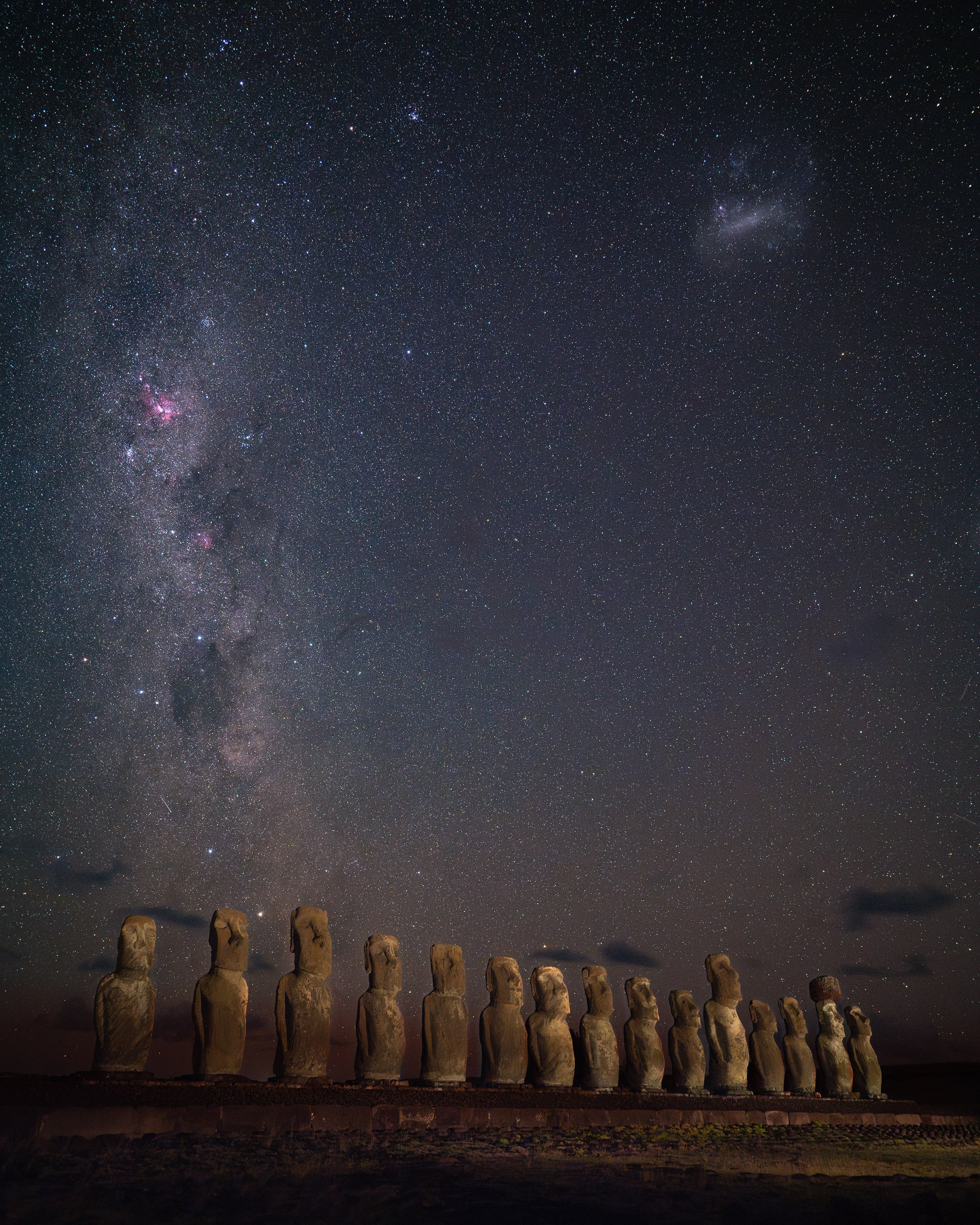
Tongariki Night Skies, Rapa Nui

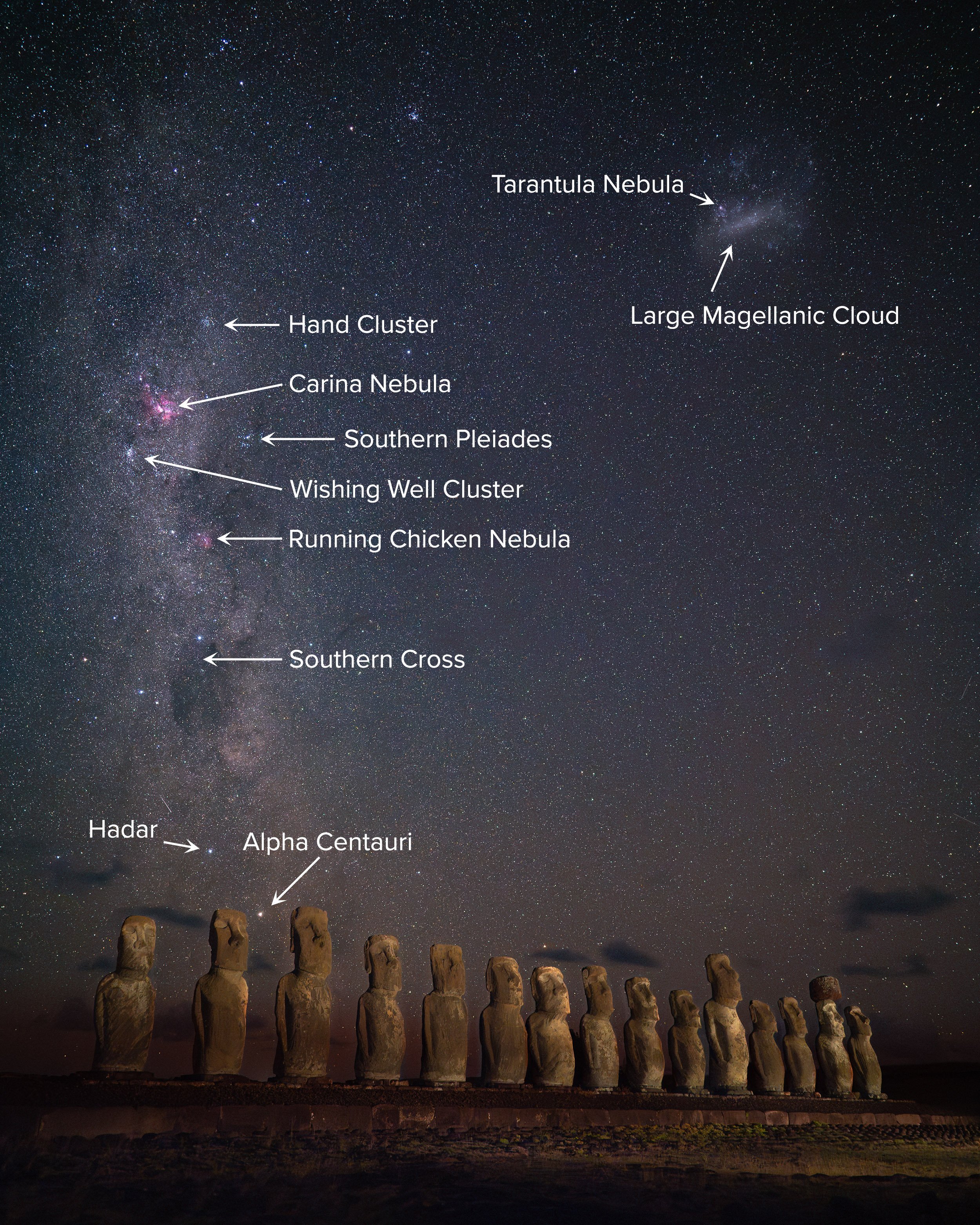
Astro-modified Nikon Z 6II with a Nikon Z 24-70mm f/2.8 lens. 8 seconds, f/2.8, ISO 6400. (Swipe to reveal the names of the celestial bodies in this image.)

Several dreams came true this year, with the most vivid being a visit to Rapa Nui (Easter Island).

I was once a young boy who loved mythology and ancient history, and that’s when I first saw the mysterious moai in a National Geographic magazine. I wanted to be an archaeologist and read as much as I could about moai, which unfortunately wasn’t much. But the seed was planted and the desire to one day stand among them never left me. When I found out we had access to the moai at night, under the southern stars, well, the trip couldn’t come quick enough!

We typically plan our Easter Island night photography tours for February, which gives us the clearest skies. However, at that time of year the core of the Milky Way isn’t visible until 1 or 2 hours before morning twilight. That’s not too much of an issue, as each night we get to see all the stars we never see in the Northern Hemisphereβ€”and to be honest, I feel lost in the sky. It’s absolutely amazing. I feel like a young explorer, literally connecting the dots and seeing vivid nebulas and the Magellanic Clouds with my naked eye.

But remember, we still need a good foreground to balance the story. To me, nothing beats the moai for the epic foreground to connect to the constellations.

I shot this image at one of the most visited sites, Tongariki. We arrived at 4 a.m. and had about 2 hours to photograph the southern tail and core of the Milky Way, the Southern Cross, the Carina Nebula and more.

I’m so addicted to the southern skies and can’t wait to dip south of the equator again and again!

Highland Point Lighthouse, Cape Cod

Nikon Z 6II with a Nikon Z 14-24mm f/2.8 S lens at 22mm. 10 seconds, f/2.8, ISO 6400.

Sometimes our best photos are ones closer to home. I was lucky enough to travel all over the world this year, but one of the workshops I was looking forward to most was Lighthouses of Cape Cod. It was a nostalgic trip for me, as I’d spent life on the Cape from age 4 through grade 4. Lighthouses were aplenty, and, like fried clams, they are the norm in the area.

Photographing lighthouses is tricky, and it requires different capture and processing techniques to master in order to truly capture the essence of one at night. One technique we were trying to incorporate was using tilt-shift lenses to get the correct perspective of these architectural delights. Shot incorrectly, many of these towers can look like the Leaning Lighthouse of Pisa. There are ways to β€œstraighten your buildings” in post, but we instead focused on either shooting it correctly with a tilt-shift lens or shooting it as straight as we could with our regular lenses.

This photograph of Highland Point Lighthouse was my last shot of the night. I was using a Nikon 19mm tilt-shift for a long exposure on the other side of the lighthouse, so I went hunting for another angle with my 14-24mm, which is when I came across this idea.

While this shot might not have a dramatic wow factor, it stuck with me while assessing my best shots of 2023. Everything just aligns nicely. I treated my 14-24mm lens like a tilt shift and didn’t angle it up or down, which kept distortion to a minimum. I got closer and filled the frame with the fence and was very specific with where I cropped in on the house.

The beam of this lighthouse was created by including two flashes of the light during a 10-second exposure. To me, it looks like a perfect cover shot of a lighthouse at night that you would see in a magazine. I’m looking forward to photographing more lighthouses on the cape in 2024, when we run our Lighthouses of Martha’s Vineyard workshop!

Lance Keimig

Three Moai, Rano Rakaru, Rapa Nui

Nikon D780 with a Sigma 24mm f/1.4 lens, lit with two Luxli Fiddle LED panels. 20 seconds , f/2.8, ISO 12,800.

I was fortunate to begin my year with two back-to-back tours on Rapa Nui, or Easter Island––one with Gabe and one with Matt. It’s such a special place, and having nighttime access to the moai statues is a real privilege. Having multiple nights to experience and photograph the quarry where the statues were carved was a dream come true. It’s the best location on the island for photography because of the sheer number of moai and the variation in the terrain.

The challenging aspect of photographing at Ranorakaru is that visitors are confined to a series of narrow trails due to the fragile nature of this archeological site. This makes for limited composition and lighting opportunities.

In this particular scene, there was a very limited angle that allowed me to align the three moai in such a way that they did not overlap each other and still be able to illuminate them effectively. To light the two figures in the foreground, I placed a Luxli Fiddle with a grid attachment on a stand downhill and camera left. I placed a second Fiddle further along the trail to light the third moai, also with a grid and tilted up to avoid spilling the light on the ground in front of the statue. The crescent moon was rising in the background and outside of the left part of the frame, and it provided wonderful illumination for the clouds that would have otherwise deadened the sky.

I also confess to using Generative Fill in Photoshop to remove the low railings along the path in the lower left portion of the frame. They were in shadow, but I still found them a distracting modern anachronism that took away from the feeling I wanted to create with the image. AI Denoise enabled me to use ISO 12,800 with relative impunity in this very dark environment with virtually no light pollution. I’m a nervous skeptic when it comes to most things AI (Beware the Cylons), but it has been a tremendous boon for photographers this year.

The Pleiades from Hurricane Ridge on a Smoky Night, Olympic National Park

Nikon D780 with a Sigma 24mm f/1.4 lens. 13 seconds, f/2.8, ISO 6400.

During our September workshop in Olympic National Park, we visited Hurricane Ridge twice. The wildfire smoke was so thick on the first night that we went back down to sea level before the sky was even dark. On the second night the winds shifted, and the air was mostly clear on the ridge, but as we climbed the trail to the top of Hurricane Hill, the wind shifted once more and smoke filled the valleys to the north and west.

I’d been looking forward to returning to Olympic since Chris and I did a backpacking workshop to Shi Shi Beach in 2018. I was mostly excited about photographing the sea stacks on the beaches, so it’s ironic that my favorite image from the trip is from the mountains high above the Pacific.

The execution of the image was straightforward. There was no moon, but the last lingering twilight and we did have some light pollution from the towns of Sequim and Port Townsend to the northeast. I kept the shutter speed to 13 seconds to avoid stars trailing with the 24mm lens. I stopped down to f/2.8 but I wish I had stopped down a bit more and gone with a higher ISO.

The combination of the smoke and the light in the sky made for some great soft colors, and the magnificent star cluster known as the Pleiades was perfectly positioned to juxtapose against the fir trees in the foreground. Tennyson referred to the Pleiades as a β€œswarm of fireflies tangled in a silver braid” and that description was never more apt than on that smoky night in the Olympics. Sometimes the simplest of images can be the most rewarding.

Matt Hill

Meteors Over High Dune, Great Sand Dunes National Park

Nikon Z 6II with a Nikon Z 24-70mm f/2.8 lens at 24mm. Two frames shot at 5 minutes, f/2.8, ISO 800, stitched in PTGUI Pro (foreground), blended with 32 frames shot at 10 seconds, f/2.8, ISO 6400, stacked and masked in Photoshop (meteors).

In August 2023 I ascended to High Dune within Great Sand Dunes National Park. This was my fifth visit to the park and my holy grail was to make a meteor shower composite over the sand dune field.

Due to adverse weather conditions during the meteor shower peak, we could not climb the dunes as a group, and that made me sad. But keep in mind it’s an 800-foot uphill slog on sand, which begins at 8,000 feet of elevation. Some were relieved.

After the workshop ended, I gave it a shot solo. The weather was promising, and I packed as lightly as possible. I brought my Novoflex Triobalance and a Novoflex BasicPod hiking kit, plus 1.5 gallons of water, my panorama rig, and two cameras and two lenses.

For this image I made a two-panel vertoramaβ€”one panel predominantly of the dunes and the other of the sky, both during twilight. The lights from below are campers having a small but very fun party.

Much to my chagrin, the quantity of meteors that evening was not nearly as great as the night of the peak. So I took Tim’s advice and composited in the sky and meteors from the night of the peak. All these images were photographed in the same direction using the same technique and lens.

I do wish I could have shot it all on the same night, but you can choose to make the best of variables out of your control. This became the composite I’ve been dreaming of making.

Ranu Kau Caldera, Rapa Nui

Nikon Z 6II with a Nikon Z 24-70mm f/2.8 at 24mm. 17 frames shot at 10 seconds, f/2.8, ISO 12,800, stitched in two rows using PTGUI Pro.

When I began earnestly making panoramas, it was because the complexity of the method thrilled me. Nowadays I use the methods as means to achieve visual goals, and especially for natural perspective control for wider fields of view.

I don’t mind if someone notices it’s a panorama, but I don’t want them to be distracted by the method. With this in mind, here is a 17-image panorama composite that covers about 220 degrees of width and about 100 degrees of height. I use a 24mm lens when I want a natural rendition and have the time to make a multi-row pano sweep, which in this case was an ironic miscalculation my part because I ended up having only one chance at this because of the weather.

The location is Rano Kau caldera on the island of Rapa Nui. We got up at 3 a.m. to attempt this Milky Way bend over the craterβ€”and got rained out. The second attempt was our last chance. We got lucky in between rainstorms and grabbed this moody moment of power and grace. I had to work fast. And I got this one mosaic captured before we got wet again.

I enjoy this image so much that I see it every day as a metal print from Bay Photo Lab.

Tim Cooper

Aurora, Flakstadoya, Norway

Nikon Z 6II with a Nikon Z 14-24mm f/2.8 lens at 15mm. 2 seconds, f/2.8, ISO 6400.

The Lofoten archipelago is one my favorite landscapes in the world. I am completely enamored with this unique island chain located in northern Norway. The jagged and picture-perfect peaks here rise thousands of feet nearly straight up from the bays and inlets, and this rugged and striking landscape has produced more than its fair share of its iconic images. Especially in winter.

As I look back on the images I made in 2023, this one stands out as a favorite. Chasing the aurora borealis is always fun, and even a mediocre display of light is still exciting. This night Matt and I were scouting the island of Flakstadoya, and the evening’s display was phenomenal. In typical fashion, Matt and I stood nearly next to each another while capturing very different takes of the sky and landscape.

Like scent and sound, pictures can produce very strong memory recall. Every time I see this image I am transported back to that magical night. But that is not the only reason it’s one of my favorites.

This image also fulfills one of the goals I strive for in all my landscape photographs: capturing a sense of place. While it’s an easy concept to discuss, and to understand, I’ve found that I fail more often than I would like in trying to convey my impression of a place. I feel this image is one of my few that truly captures the essence of Lofoten. Or at least the way that I romantically see and remember this stunning island chain.

Burishoole Abbey, County Mayo, Ireland

Nikon Z 6II with a Nikon Z 14-24mm f/2.8 lens, lit with a Coast HP7R flashlight. Seven 4 minute exposures for star trails and four 4 minute exposures for light painting. All exposures at f/4, ISO 100.

Light painting has always been my favorite part of night photography. Creating a scene that has never existed before is thrilling. It’s starting with a nearly blank canvas. It’s a challenge. A real challenge.

Here at Burishoole Abbey in Ireland, I was determined. Lance and I had visited and photographed the abbey before and he created a fantastic image of this section that I had always admired. On this visit I was eager to interpret the same scene in my own way.

My goal was to have the tombstones seemingly glow from within while highlighting the texture of the abbey’s stone work and the wrought iron fence in the foreground. Many different angles of light would be required to achieve this look. It would take a bunch of experimenting. It would beβ€”again, challenging.

In the end it took over 15 attempts just to determine the basic light angles and duration of flashlight illumination for those separate angles. Once I felt confident, I needed another four separate exposures lasting a minute each to paint all of the aspects of the scene I wanted to highlight.

Due to the time needed to inspect and analyze the light painting between exposures, the star trails from my light painting frames wouldn’t stack properly. So, leaving my tripod in place, I shot another seven frames at the same exposure of 4 minutes, f/4 to create the star trail frames for the final stack.

All in all, the entire scene took around 1.5 to 2 hours of time. That was 2 hours of a blissful β€œno-mind” state that night photography can often produce. I love light painting.

Your Turn

What was your favorite night photograph of 2023? We’d love to see it! Share in the comments below, or on our Facebook page, or on Instagram (tag us @nationalparksatnight #nationalparksatnight #seizethenight). Be sure to tell a story tooβ€”the technical aspects, the challenge overcome, or a tale of the experience.

Then … enjoy winding down 2023 and winding up 2024. There’s lot of night-seizing to be had!

Lance Keimig is a partner and workshop leader with National Parks at Night. He has been photographing at night for 30 years, and is the author of Night Photography and Light Painting: Finding Your Way in the Dark (Focal Press, 2015). Learn more about his images and workshops at www.thenightskye.com.

UPCOMING WORKSHOPS FROM NATIONAL PARKS AT NIGHT

Spring Solar Storm Brings a Week of Amazing Auroras

Science makes much predictable, but sometimes the universe still surprises us. It did so again this week, as the strongest solar storm in over half a decade slammed into our planet, creating amazing displays of auroras that extended halfway down the Northern Hemisphere.

The phenomenon started early in the week, when a coronal hole 20 times wider than Earth appeared on the face of the sun. The resulting solar winds were directed right at us, and soon aurora forecasts were sending the Kp index through the atmosphere.

Even before that, reports of Northern Lights were reverberating throughout the night photography world. Over the past 10 days we’ve seen posts on Instagram and Facebook, and received photos and questions from our friends and workshop alums.

Better still, we happened to be running two international night photography tours at the time, both in places perfect for viewing auroras: Iceland’s south coast and Norway’s Lofoten Islands. Both locations provided front-row seats to the most inspiring northern lights show we’ve seen in years.

Below are some of the images we’ve made over the past week and a half.

Vatnajokull National Park, Iceland. Β© 2023 Lance Keimig. Nikon D780 with a Tamron VR 15-30mm f/2.8 G lens. 6 frames shot at 13 seconds, f/4.5, ISO 5000, stitched in Adobe Lightroom.

Flakstadpollen, Norway. Β© 2023 Tim Cooper. Nikon Z6 II with a Nikon Z 14-24mm f/2.8 lens. 4 seconds, f/2.8, ISO 6400.

Iceberg in Vatnajokull National Park, Iceland. Β© 2023 Lance Keimig. Nikon D780 with a Tamron VR 15-30mm f/2.8 G lens, light painted with a Luxli Fiddle. Exposure 20 seconds, f/3.2, ISO 1600.

Nappskaret, Norway. Β© 2023 Tim Cooper. Nikon Z6 II with a Nikon Z 14-24mm f/2.8 lens. 2 seconds, f/2.8, ISO 6400.

Nappskaret, Norway. Β© 2023 Matt Hill. Nikon Z6 II with a Laowa 15mm f/2 lens. ISO 3200, f/2.8 and 2 seconds.

Lofoten Islands, Norway. Β© 2023 Matt Hill. Nikon Z6 II with a Laowa 12mm f/2.8 lens. 6 frames shot at 3 seconds, f/4, ISO 6400, stitched in PTGui.

Vatnajokull National Park, Iceland. Β© 2023 Chris Nicholson. Nikon D5 with a Nikon 14-24mm f/2.8 lens. 10 seconds, f/5.6, ISO 6400.

Aurora over Iceland. Β© 2023 Chris Nicholson. Nikon D5 with a Nikon D5 with a Nikon 14-24mm f/2.8 lens. 2.5 seconds, f/2.8, ISO 3200.

More Information

Want to learn more about this solar storm? Check out:

Want to learn more about photographing auroras? Check out our blog posts:

Your Turn

Have you been out photographing the auroras this week? We’d love to see your images! Share in the comments below, or on our Facebook page, or on Instagram (tag us @nationalparksatnight #nationalparksatnight #seizethenight).

And by the way, the show isn’t over. Auroras are continuing to dazzle dark-roaming photographers. So get out there and seize the night!

Chris Nicholson is a partner and director of content with National Parks at Night, and author of Photographing National Parks (Sidelight Books, 2015) and Photographing Lighthouses (Sidelight Books, 2023). Learn more about national parks as photography destinations, subscribe to Chris' free e-newsletter, and more at www.PhotographingNationalParks.com.

UPCOMING WORKSHOPS FROM NATIONAL PARKS AT NIGHT