Arches: Panorama Intensive
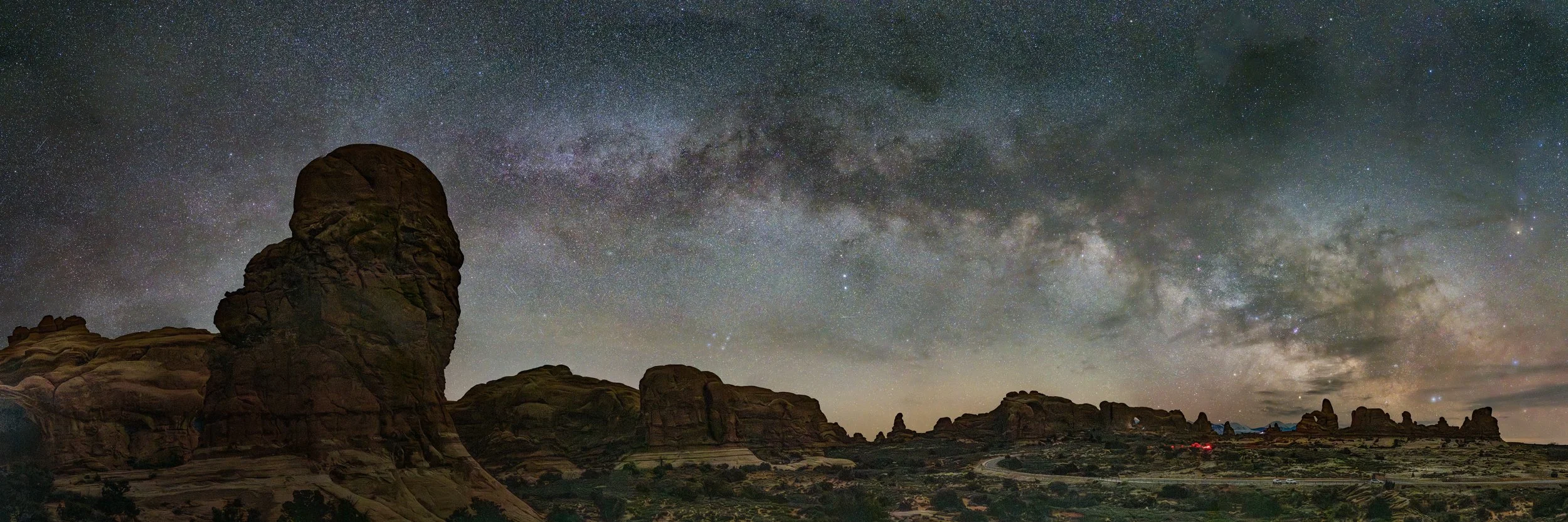
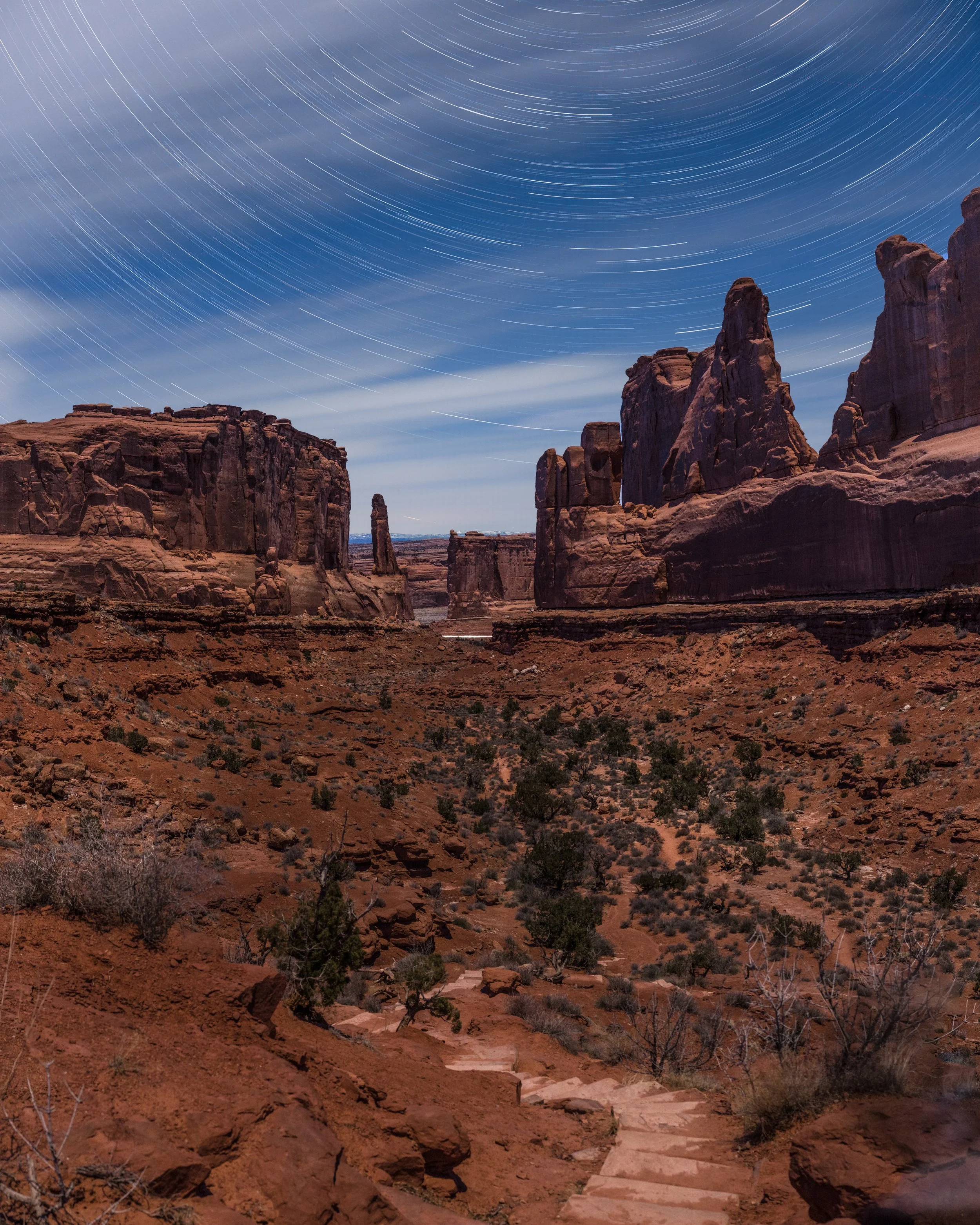
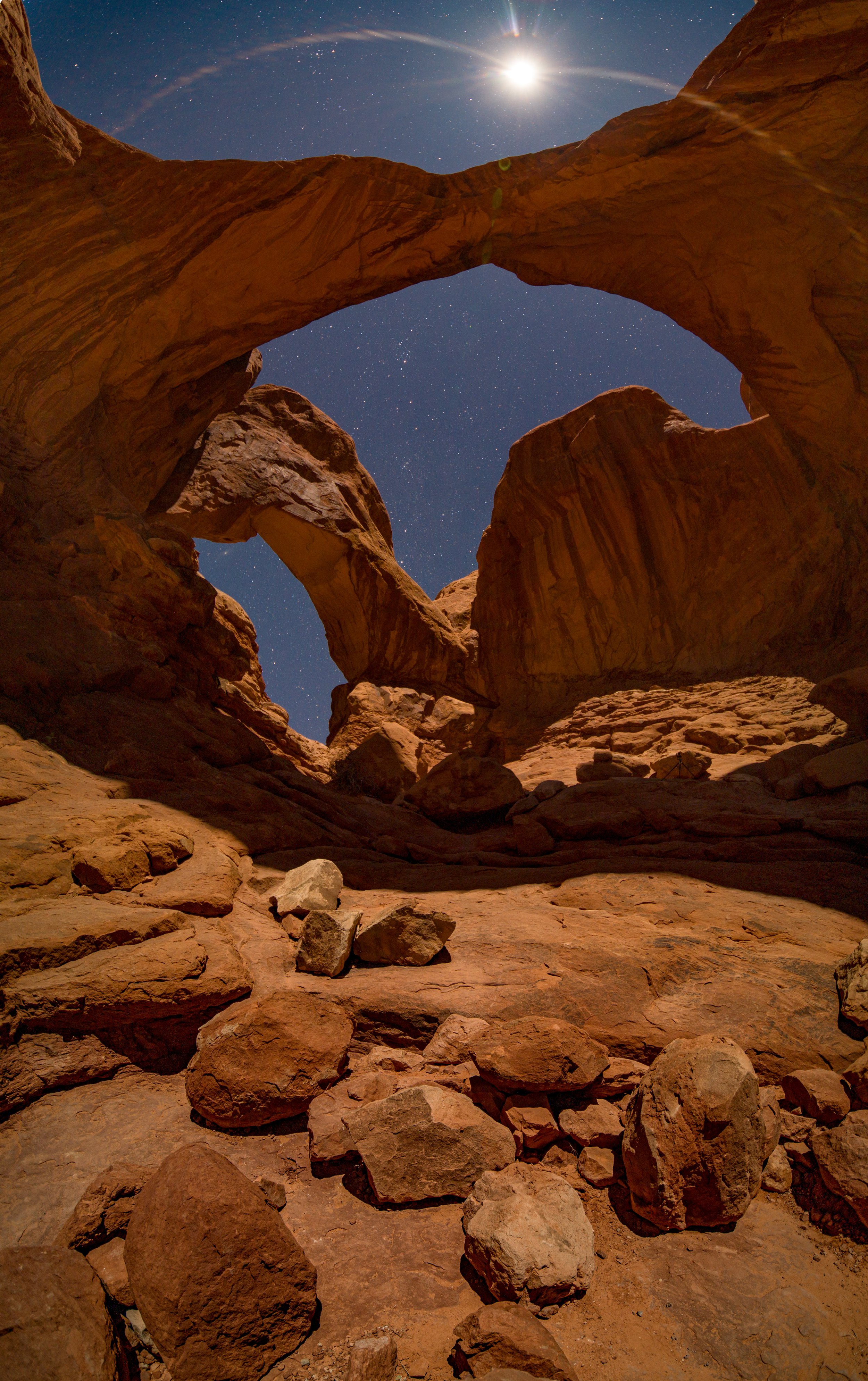
Join us for a masterclass in panorama photography—during the night and daytime, combining big sky, high desert, natural stone and earth formations to form unforgettable images. This is a small class size with big results for those who aspire to master this craft inside and out.






Workshop Details
Arches Panorama Workshop
March 7-12, 2027 — Sold Out, Join Waitlist Below
This is a 5-night, 6-day workshop. Your adventure begins on the morning of Sunday, March 7, and ends after an image lab on the morning of Friday, March 12.
$4,195 + applicable taxes. Register below.
Skill level
Intermediate and above. Participants should have a firm grasp of the basic principles of photography and of their cameras, and have a comfortable understanding of night photography fundamentals.
Group size
8, with 2 instructors — 4:1 ratio
NPS website
Workshop Leaders
Add-On: Delicate and Corona Arches
March 12-13, 2027
This is an optional hiking experience to photograph two iconic arches in and outside the park. See below for more info.
$1,245 + applicable taxes. After registration for the main workshop, you'll receive a link to register for the add-on option.
Group size
8, with 2 instructors — 4:1 ratio


Registration
Hoping to get a spot? Sign up below for our no-fee waitlist.
| • Deposit of $600 is required to reserve your spot at the workshop. |
| • Balance of $3,200 is due on November 18, 2023. —> Pay balance here. |
| • You may choose the “Pay in Full” ticket if you desire to pay all at once. |
| • Last day for a cancellation request is November 17, 2023 (see cancellation and refund policy). |
| • The workshop fee does not include lodging, food, airfare, Arches entrance fees, or transportation to Moab, Utah, or to our nightly shoot locations. |
The Arches Pano Experience
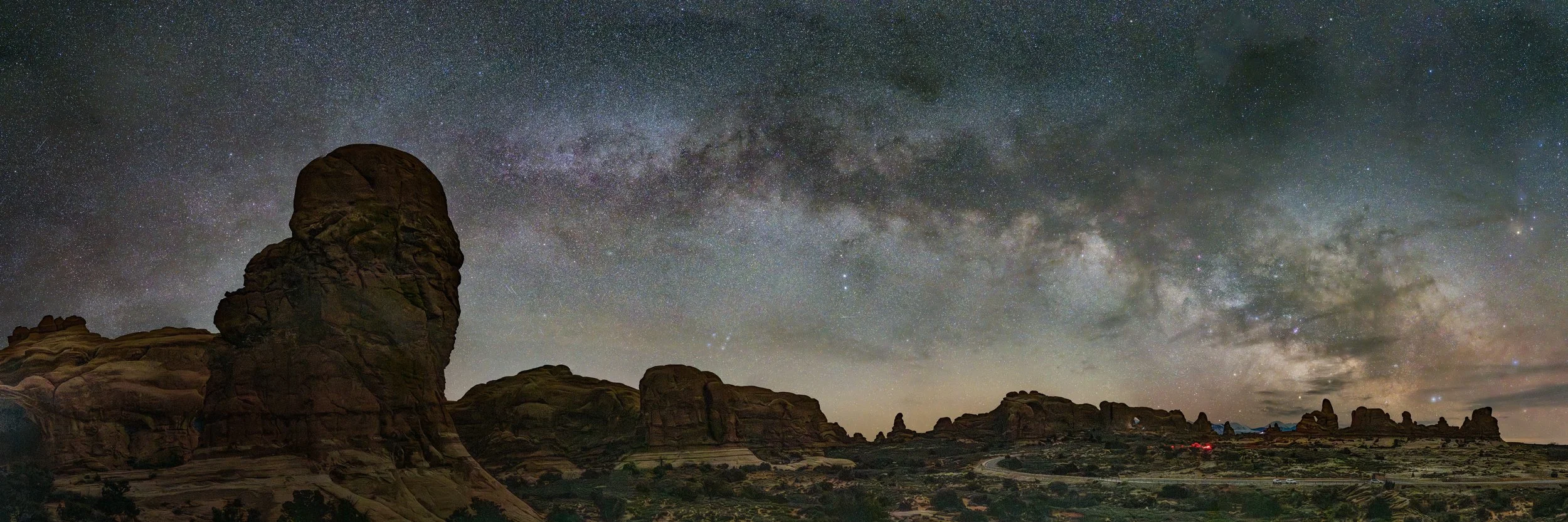
The Northern Hemisphere Milky Way and the winter triangle of constellations is a wondrous spectacle. Perhaps you’ve tried night sky panoramas and run into troubles, or you simply want to get better or even more consistent. If you say to yourself, “I’d really like to master that …” then this is the right workshop for you.
You’ll be taught by deeply passionate and experienced night photographers dedicated to carefully crafting and processing night sky panoramas. They will cover everything from the basics to complex multirow panoramas.
Arches in winter is an ideal location for this workshop, with ample room to spread out and still be able keep your pano sweep clear of other attendees.
This will be a complete curriculum focused on teaching you everything: planning, gear, capture and processing/compositing.
Also note that attendance is limited to eight people by design, so you all have more room to spread out and compose successful panos, and receive extra attention in the field for learning this specialized technique.
You’ll be capturing panoramas with a 1.2 percent waning crescent moon setting at 5:55 p.m. to a 8.9 percent waxing crescent moon setting at 10:14 p.m. The sun will set at about 6:20 p.m. and the galactic center will rise at around 2:45 a.m. If we choose as a group to pursue a Milky Way arch panorama, we can capture the galactic core just before dawn during the first few nights. Weather permitting, we may also attempt a “holy grail” double Milky Way arch; one captured during twilight after sunset and the other captured just before morning twilight.
Delicate and Corona Arches Add-On Experience
After our main workshop in Arches National Park we’ll have the opportunity to explore two more arches in the area, both of which require a hike to reach.
Delicate Arch
Even if you have never been to the national park, or even if you’ve never been to Utah, you have seen Delicate Arch. This rock formation is so iconic that it appears on the Utah state license plate.
However, while you can see the arch on cars across America, you can’t see it from the park road. You have to hike 100 yards just to see it in the distance. And if you want to get up close and photograph it? That requires a hike of 3 miles roundtrip with an elevation gain of 480 feet.
Once there, you’re greeted with a sweeping landscape centered around a soaring arch that’s 46 feet high and 32 feet wide—the largest free-standing arch in the park.
Corona Arch
Corona Arch Trail runs 1.5 miles one-way through BLM land to a pair of arches, one rather old and one rather youngish (by geological standards). The former of the two is the namesake arch, and it’s huge, standing 105 feet high and 140 feet wide.
The trail crosses railroad tracks and weaves through wildlife fences, and in two parts you need to hold a cable to help yourself up (and then down), and in one part you need to climb a ladder. Along the way you see cacti and slickrock and washes and cliffs and boulders and a valley of high-desert landscape so beautiful that you’ll certainly stop walking for a moment just so you can stand and gaze.
If you want to learn more about the Corona Arch Trail, see Chris Nicholson’s 2018 blog post “Celebrating the National Trails System Birthday with a Walk to an Arch.”
Note: This optional add-on is available only to workshop attendees. You’ll get a link to purchase a ticket after registering for the main workshop.
What You Should Know
This workshop caters to knowledgeable photographers with an intermediate or higher skill set. Participants should have a very firm grasp of the basic principles of photography and of their cameras, and have a comfortable understanding of night photography fundamentals. We will be happy to offer advice and answer questions about both day and night photography, but the focus of the formal education will be panorama photography.
If you would like to attend this workshop but are unsure whether you have adequate night photography skills, we can offer pre-workshop tutoring to get you ready for your adventure with us. Additionally, a few of us have written books that may be productive pre-workshop reads.
What You Will Learn
We hope to push you to step outside your comfort zone—to test the limits of what you and your camera can do.
TOPICS COVERED WILL INCLUDE:
planning a panorama remotely and in the field
choosing and using the right gear
understanding and finding your nodal point/eliminating parallax to avoid stitching errors
setup and capture of single-row panoramas
setup and capture of multirow panoramas
setup and capture of vertoramas
post-processing your panoramas in Lightroom Classic, Photoshop and PTGui Pro
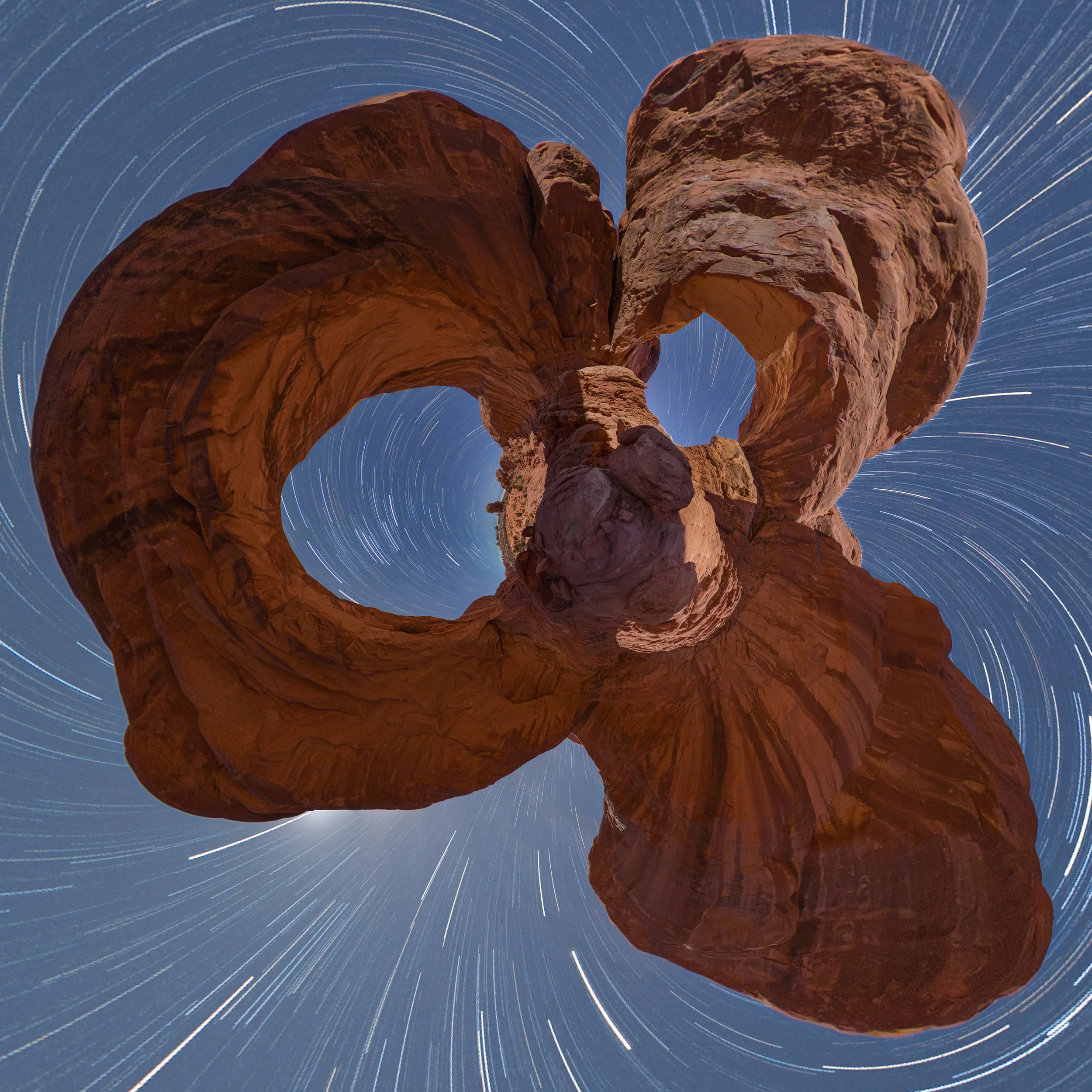
understanding pano projections and distortion
blending twilight and starlight foregrounds with starry skies
and more …
This workshop will have both field and classroom instruction. We will be in the classroom during the day, and out in the field at different locations each night.
PANOPHERNALIA
To get the most out of the workshop, you will need some specific gear and software.
You do not need a panorama rig/kit with a rotator, but having one will enable you to make more accurate, repeatable panoramas, and is strongly recommended.
Why a rotator with clicks? Not having to repeatedly turn on your flashlight to see how many degrees you rotated will significantly improve your night panos (and annoy other photographers less). Having a reliable rotation solution is also crucial for multirow captures without parallax stitching errors.
If you want to talk about your gear before committing, please contact us to discuss. We will also have some informational emails and a Zoom call or two leading up to the workshop to help you prepare, and part of that will be discussing gear.
Below is what we require and what we recommend. If you want to invest in gear beforehand, attendees will receive access to special discounts after registration.
Novoflex VR Slim
Required:
a solid, dependable tripod
a balancing head (e.g., the Novoflex MBAL20, Fanotech EZ-Leveler II or Benro LBA2)
a RAW-capable mirrorless or DSLR camera
a reliable way to trigger your camera without vibration or flashing lights (internal or external intervalometer, wireless trigger, etc.)
minimum: an invertible ball head (e.g., the Acratech GXP-SS or Novoflex ClassicBall)*
* you will not be using this if you have a pano rig (unless this is your leveling head)
Strongly Recommended:
a dedicated panorama rig with rotator (e.g., the Novoflex VR-System Slim, Novoflex VR-PRO II HD or Fanotech M2 w/RD16-II or M1-L w/RD16-II)
if not a rig, then a rotator with detents (e.g., the Novoflex QPL-PANORAMA, Fanotech Advanced Rotator RD8-II or Benro DP70) and a nodal rail (e.g., the Acratech Nodal Slide or Novoflex QPL-Panorama)
Again, don’t fret about what you have/need while considering this workshop. We can talk about your kit. But we feel it’s important to know beforehand that some key pieces of gear will make a big difference to get the most out of the trip.
Software:
Our post-processing work will be in Adobe Lightroom Classic, Photoshop and PTGui Pro.* Prior knowledge of Photoshop and PTGui Pro are not required, but knowing how to work with layers and masks in Photoshop will help you greatly. Feel free to reach out beforehand for assistance or suggestions on how to best improve your knowledge of these topics.
* Required software.
Night Conditions


Logistics & General Info

Travel
Arches National Park is easy to get to via highways.
Nearby Airports:
Moab (CNY) — 20 minutes from the hotel
Grand Junction (GJT) — 2 hours, from Moab, Utah
Salt Lake City (SLC) — 4 hours
Rental Car
You will need a rental car.
There is no need for four-wheel-drive for the main portion of the workshop.
If you are interested in carpooling or sharing a rental car, let us know and we will try to connect you with another attendee looking for the same.
You are responsible for arranging and paying for your own transportation.

Lodging & Food
Lodging
We will be staying just outside the park boundaries in Moab.
You are not required to stay at the official workshop lodging, though doing so does make it easier to meet with the group each day.
Info and group code will be sent once our lodging partner is ready to begin taking reservations.
If you are interested in sharing a room, let us know and we will try to connect you with someone like-minded in the group.
Food
Moab has a handful of food options.
We encourage eating two meals per day—a good breakfast and a great late lunch.
When on the night shoots, you may wish to bring snack food or a sandwich and plenty of water.
You are responsible for arranging and paying for your own meals and accommodations.

Weather
Expect daytime highs in the mid-50s F, lows in the low 30s.
Recommended Attire
Pants and long-sleeve shirts for daytime, much warmer pants, base layers, sweaters, gloves, a hat and jackets for night.
A wool or alpaca sweater and heavyweight winter jacket will likely be useful. Think base layers and winter gear!
Comfortable and protective shoes are recommended for getting around. There won’t be long hikes, but we will be on trails, so quality trail shoes or hiking boots would be optimal. Bring hiking poles if you desire the most secure footing. Micro spikes are also strongly recommended in case of likely ice or snow on the ground.

Exertion Level
The exertion level of this workshop is Easy to Moderate. (See more about our classifications.)
No vigorous activity will be required during the workshop, but please consider your physical abilities prior to registering. There won’t be any long hikes, but there will be trails involved, and you should be comfortable carrying your own equipment over uneven ground in the dark, potentially on patches of snow and/or ice.
Note: To ensure the safety of individuals and the group, the workshop leaders may use their discretion to limit an attendee from engaging in a vigorous activity on-site should that person's physical health or ability be in question. If you are unsure about your ability to meet the physical demands of this workshop, we will be happy to discuss your concerns one-on-one before you register. You are also, of course, welcome to attend a workshop and sit out any physical activity that makes you uncomfortable. In such cases, we can provide you with ideas for alternative shoot locations for that time.

Considerations
IMPORTANT: We encourage reading our FAQs section for more information about skill and gear requirements, and other information that pertains to all our workshops.
If you have questions, please contact us—we're happy to talk it over with you.
A Dream Come True—Again …
“The crown of stars drifted solemnly onward as my mind raced and my heart soared.”
On January 15, 2014, I visited Arches National Park under a winter full moon. The crisp, directional light reflected off the crystalline blanket of snow and slick rock. Stony shapes thrust into the air in seemingly impossible shapes. And the crown of stars drifted solemnly onward as my mind raced and my heart soared.
This photographic experience excited me like nothing else. Not bad for a first impression, right? That one night left me feeling full. Despite that, I wanted more. I also wanted to share that elation with other people—those feelings I had exploring the park and making astro-landscape images.
I brought that feeling and sense of urgency to Gabe. We talked about what we wanted to do more of—what thrilled us. Where we wanted to go and how we could bring the “gospel of night photography” to the masses. That’s when the idea for National Parks at Night was born, and we knew it was good.
So we threw ourselves into finding the right partners and building the dream. My second visit was with Gabe, and we met Tim at Arches. That was super fun. We had a couple of nights making photography and discussing the future, including Tim signing on to NPAN.
My third visit was with Tim again, and it was one of the first five workshops that we presented as National Parks at Night. It was chilly, light painting was still allowed and cameras were not nearly as good as they are now.
Now Chris and I are teaming up in Arches. And I cannot express how eager I am to celebrate 12 years of knowing this spectacular park. The vistas and the incredible shapes eroded into stone are an ideal playground for a workshop focused on panoramas. I’ve come full circle.