Dry Tortugas National Park
Chase historic offshore lighthouses on private charters. Snorkel pristine, uninhabited coral reefs by day. Unlock exclusive, pitch-black access inside America’s largest masonry fortress after midnight. Dry Tortugas should be on every night photographer’s Bortle 1 bucket list. The historic brick textures of Fort Jefferson create the perfect foreground for our cosmic canvas. In this pristine wonderland, the Milky Way burns so brightly, we’ll have a hard time thinking about sleep. This premium expedition offers unprecedented, front-row access to one of the finest national parks at night and the surrounding seven sentinels of the sea.






Workshop Details
June 4-8, 2027 — Sold Out, Join Waitlist Below
This is a 5-night, 5-day workshop. Your adventure begins on the morning of June 4, and ends after a night shoot on June 8.
$4,795 + applicable taxes.
Skill level
Intermediate+. Participants should have a firm grasp of the basic principles of photography and of their cameras, and have a comfortable understanding of night photography fundamentals.
Group size
10, with 2 instructors — 5:1 ratio
NPS website
Workshop Leaders


Registration
Hoping to get a spot? Sign up below for our no-fee waitlist.
| • Deposit of $TK is required to reserve your spot at the workshop. |
| • Balance of $TK is due on TK. —> Pay balance here. |
| • You may choose the “Pay in Full” ticket if you desire to pay all at once. |
| • Last day for a cancellation request is TK (see cancellation and refund policy). |
| • You may choose the “Pay in Full” ticket if you desire to pay all at once. |
| • The workshop fee does not include lodging, food, airfare, entrance fees, or transportation to or during the workshop. |
The Dry Tortugas Experience
Rising directly out of breaking Atlantic swells and isolated across remote Gulf shipping lanes, the historic lighthouses of the Florida Keys and the colossal Fort Jefferson at Dry Tortugas National Park stand as towering monuments to 19th century engineering. Invisible from the mainland and completely bypassed by public tourist boats, these deep-water beacons remain a holy grail for landscape, architectural and lighthouse-chasing photographers.
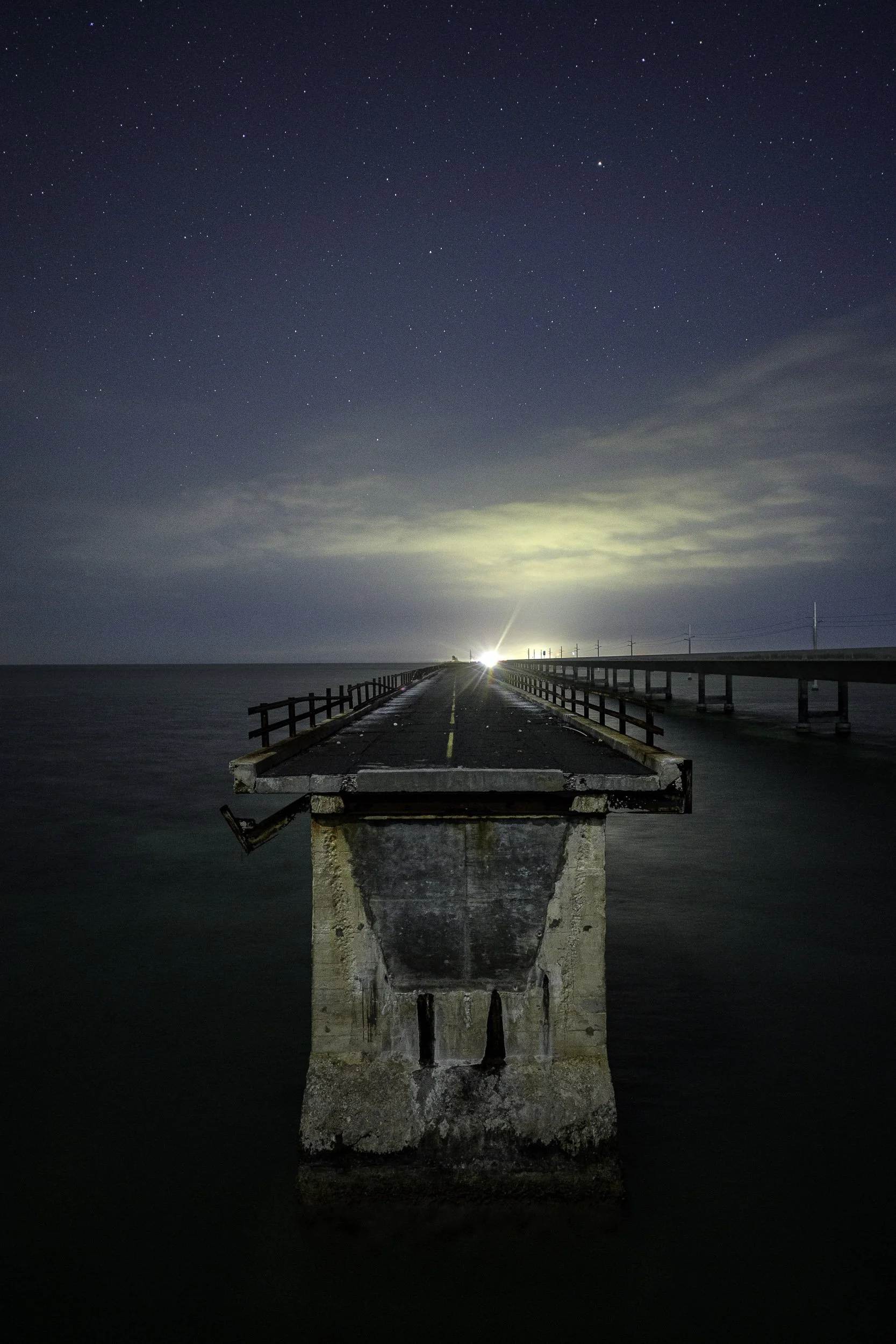
We have carefully curated this expedition to let you slowly explore the Keys. Our 113-mile journey down the Overseas Highway will include overnight stays in the middle keys so we can explore several reef lighthouses during the day and abandoned bridges and scenic coastlines at night.
Weather-permitting, our sea safaris will include the following lighthouses:
Alligator Reef Light: No alligators live here. Its impressive 136-foot skeletal iron frame was named after the USS Alligator, a Navy schooner that tracked down pirates from the Caribbean.
Tennessee Reef Light: The smallest and last of the reef lighthouses to be installed in 1933. It still retains its original fourth-order Fresnel lens.
Sombrero Key Light: The tallest and most iconic of the set rises 142 feet above the sea but rests in incredibly shallow water.
American Shoal Light: The furthest and least visited, its striking spider-legged wrought iron framework is anchored directly into the coral reef 109 feet below.
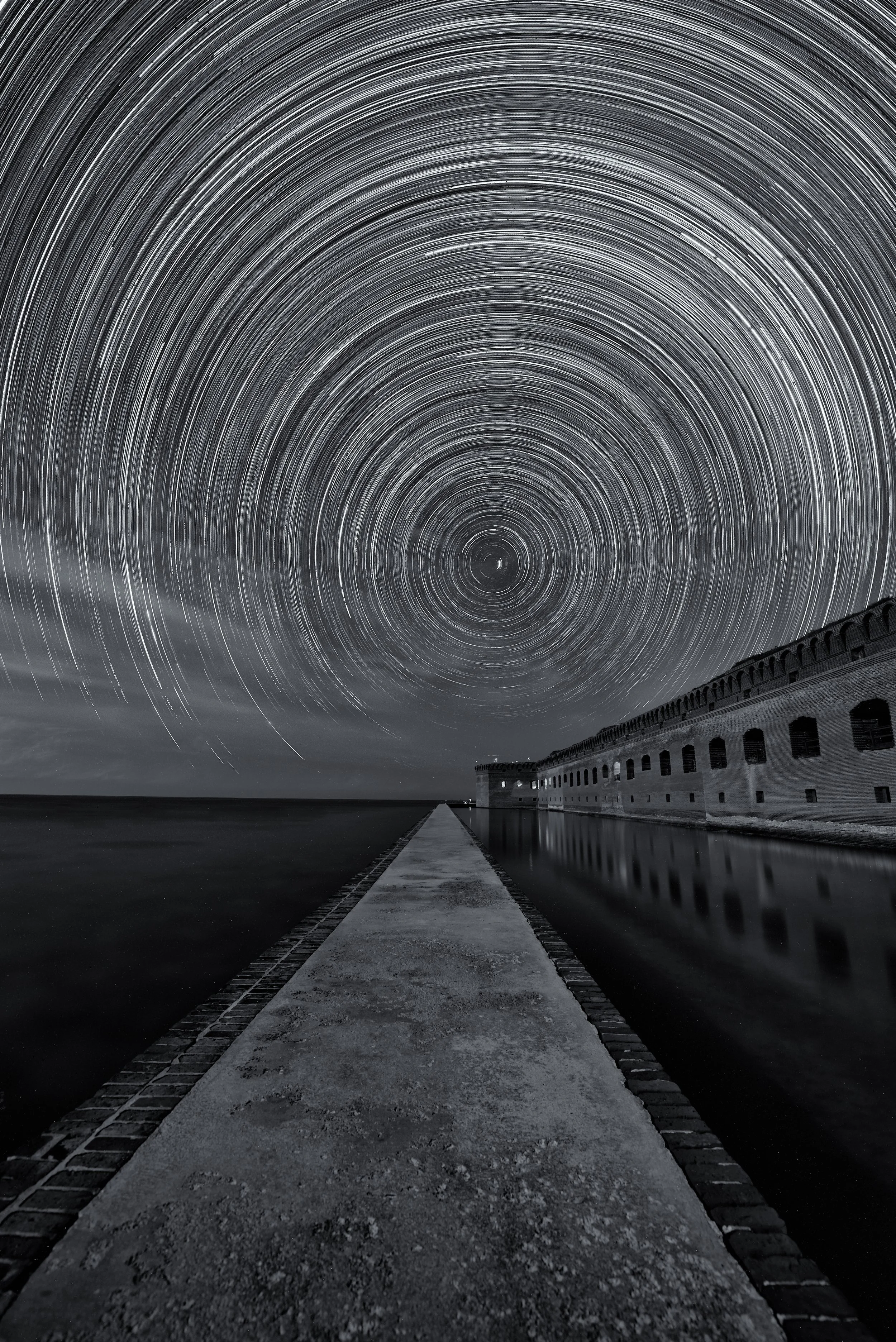
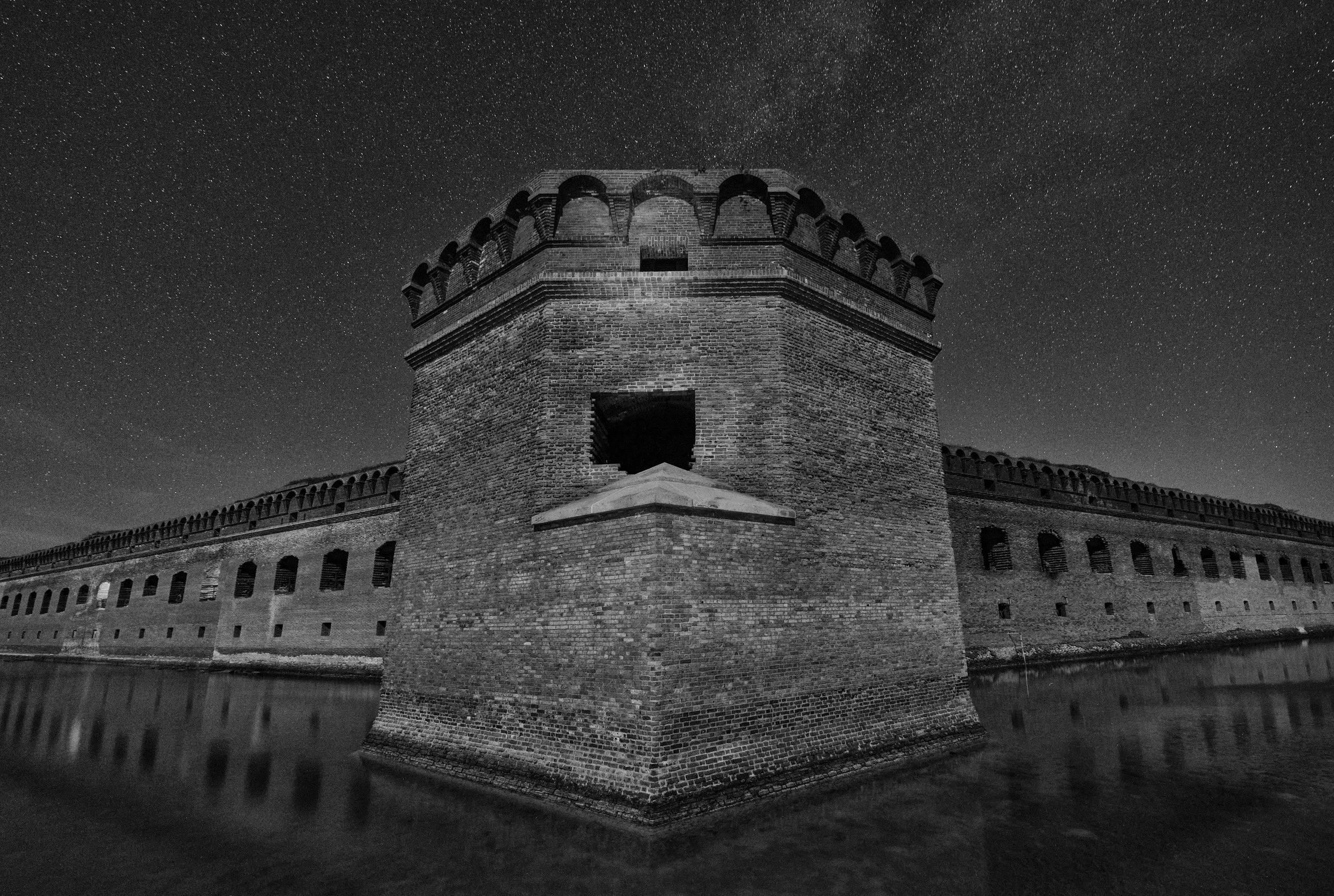
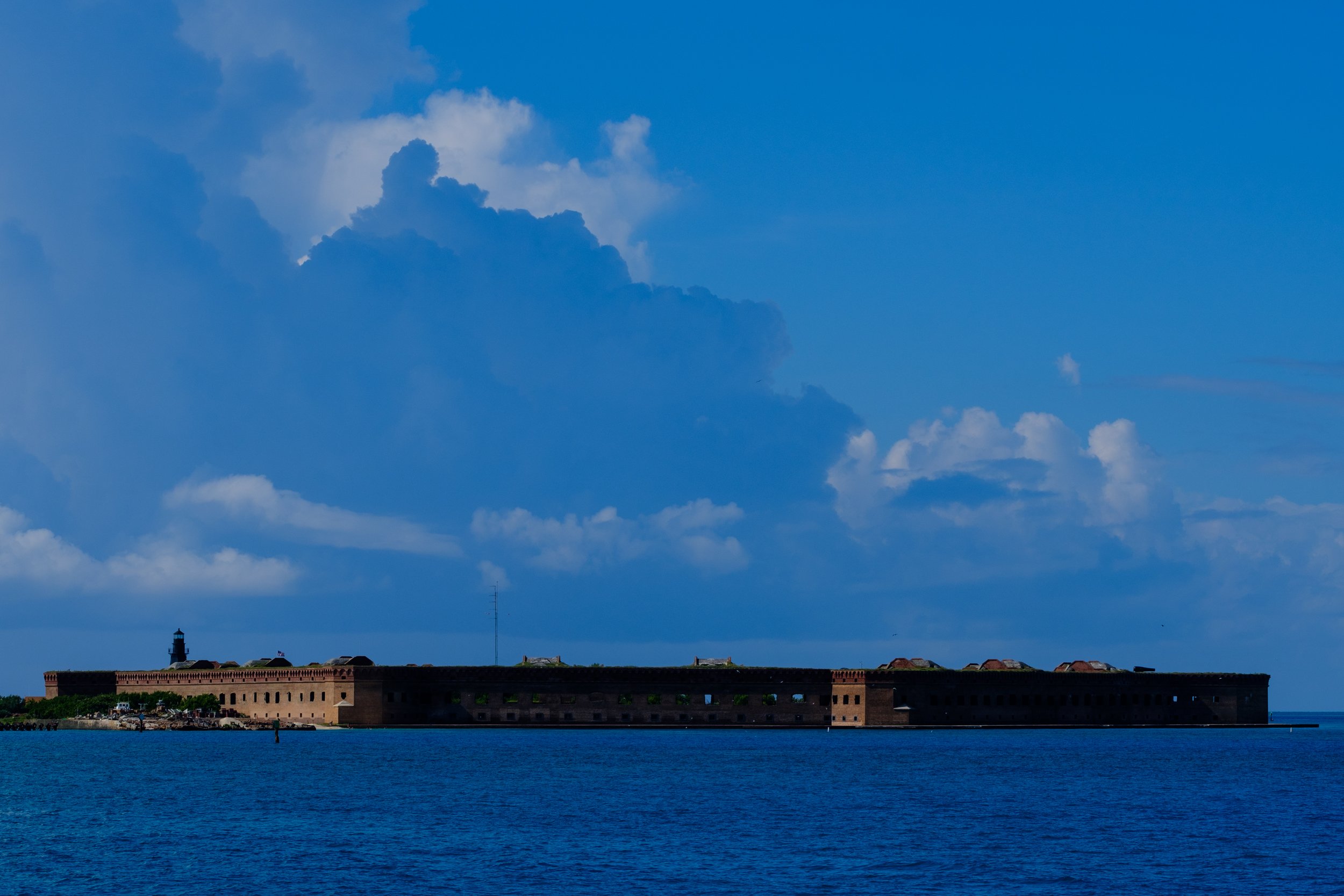
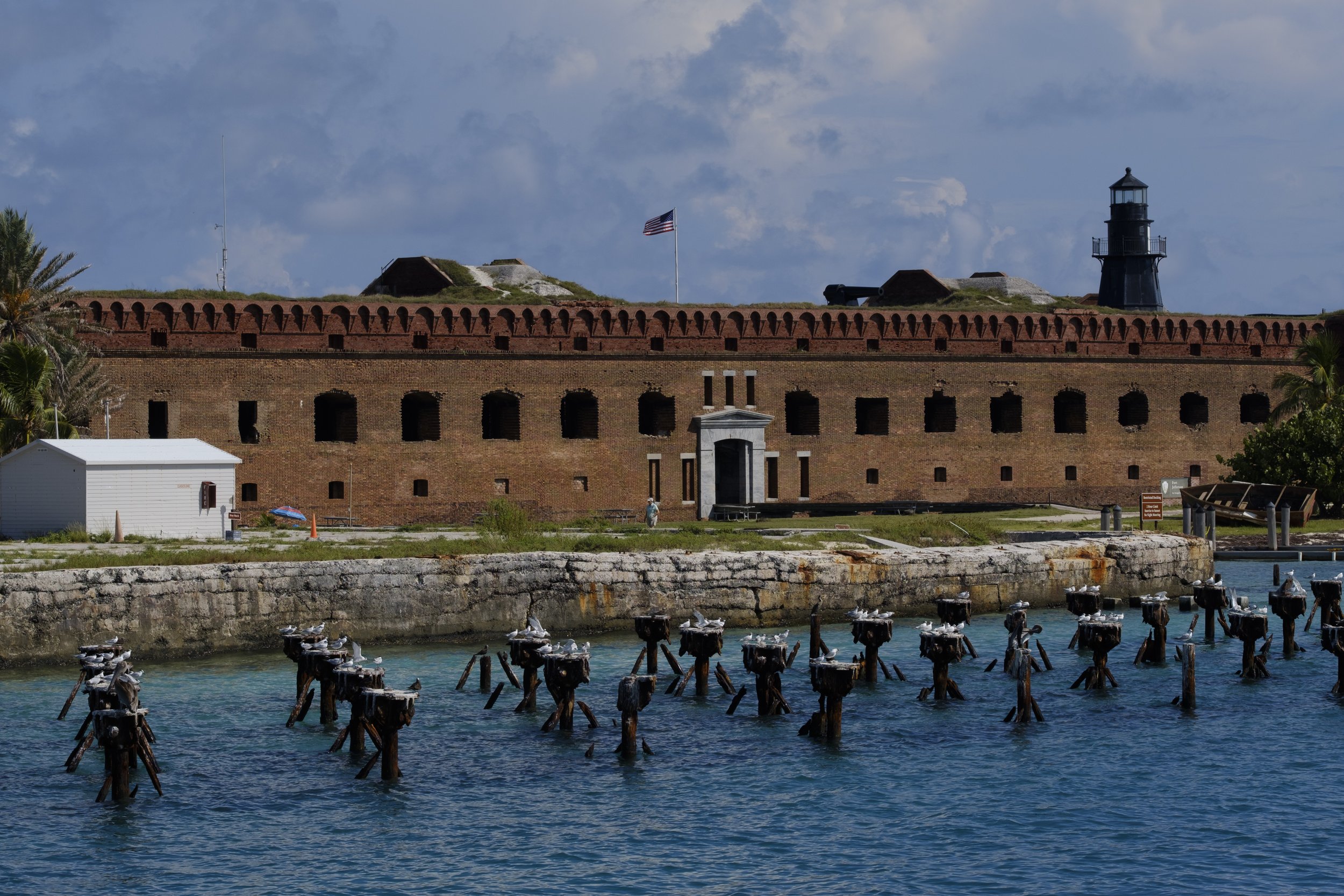
We’ll continue down the Highway that Goes to the Sea until we arrive at the end of the world, Key West. This isn’t our final destination, however—we’ll need to go even further. So we’ve chartered a couple of boats to take us 70 miles west to Dry Tortugas National Park. Our main nocturnal photographic subject will be the historic Fort Jefferson, which was constructed between 1846 and 1875. More than 16 million bricks were used and over 2,000 arches can be found as you walk around this dominating fortress.
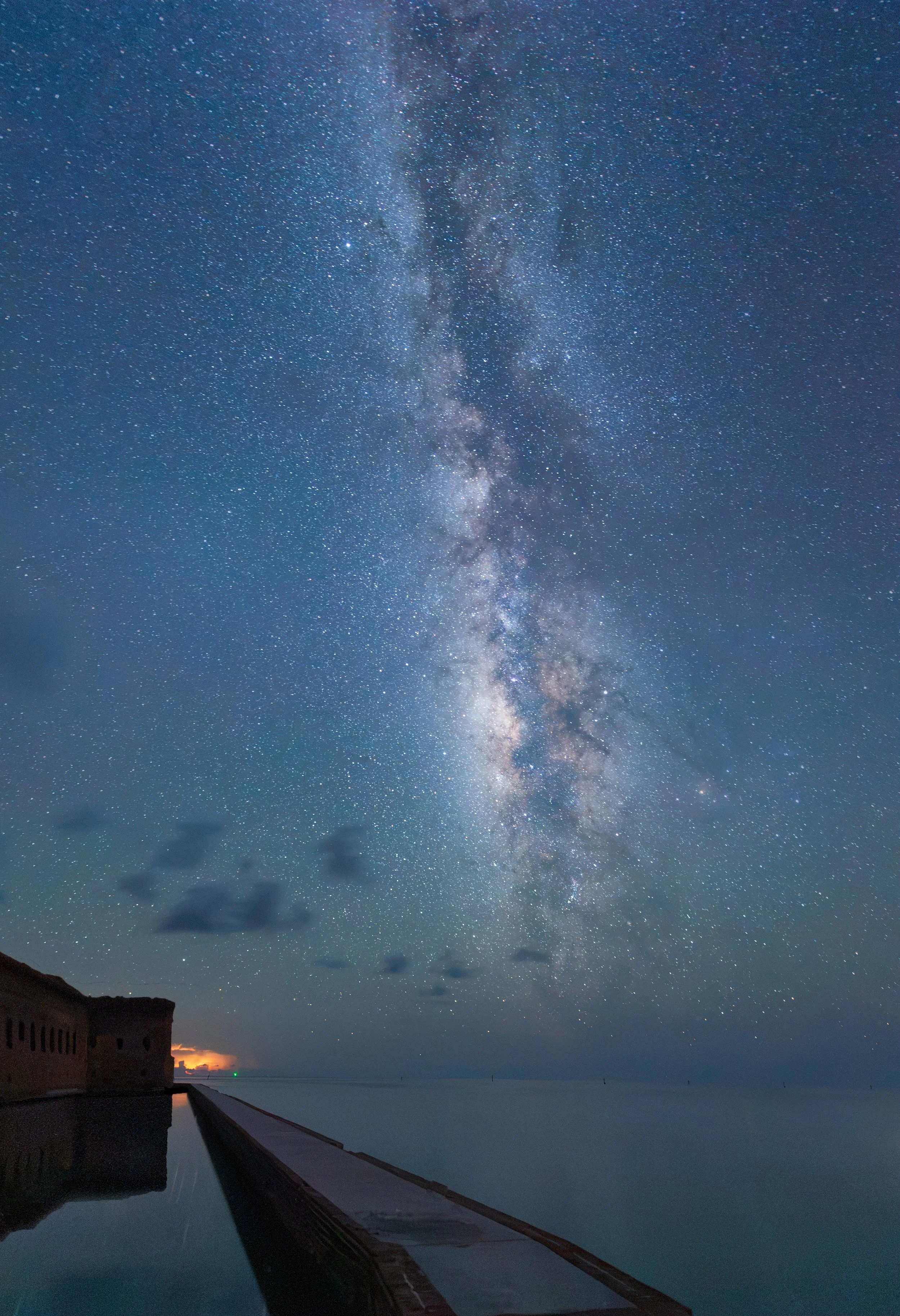
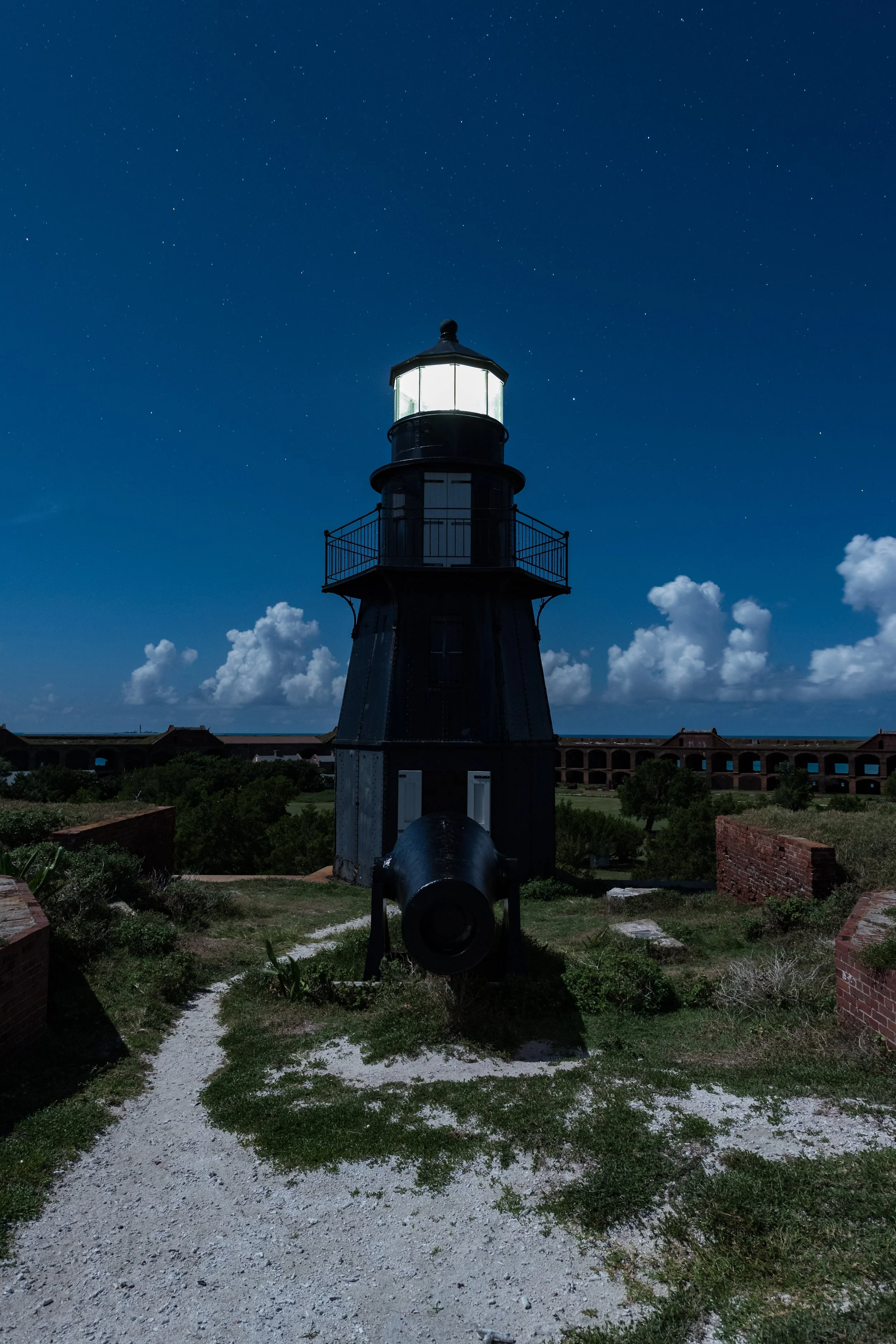
The night skies are absolutely brilliant in Dry Tortugas. There is a lighthouse on Garden Key and one on Loggerhead Key—other than that, it will be us and the stars. We specifically scheduled the workshop during a waning crescent moon and during peak Milky Way season. Weather-permitting, we should be able to see and capture the Milky Way from 10 p.m. to 2 a.m.
Your ticket includes a two-night, all-inclusive camping experience from our partners at Camping Florida Keys. Your full kit will be transported there and includes a tent, sleeping pads, linens, Therm-a-Rest pillows and other essentials. Meals for our two nights and three days will be catered.
By camping, we have full access to photograph Dry Tortugas long into the night. By day, the Tortugas transform into a tropical paradise completely detached from “real life.” We will trade our cameras and lenses for snorkels and fins, and we’ll dive straight into the crystal-clear waters along the fort’s historic moat wall to swim alongside vibrant coral formations, colorful tropical fish and maybe a sea turtle!
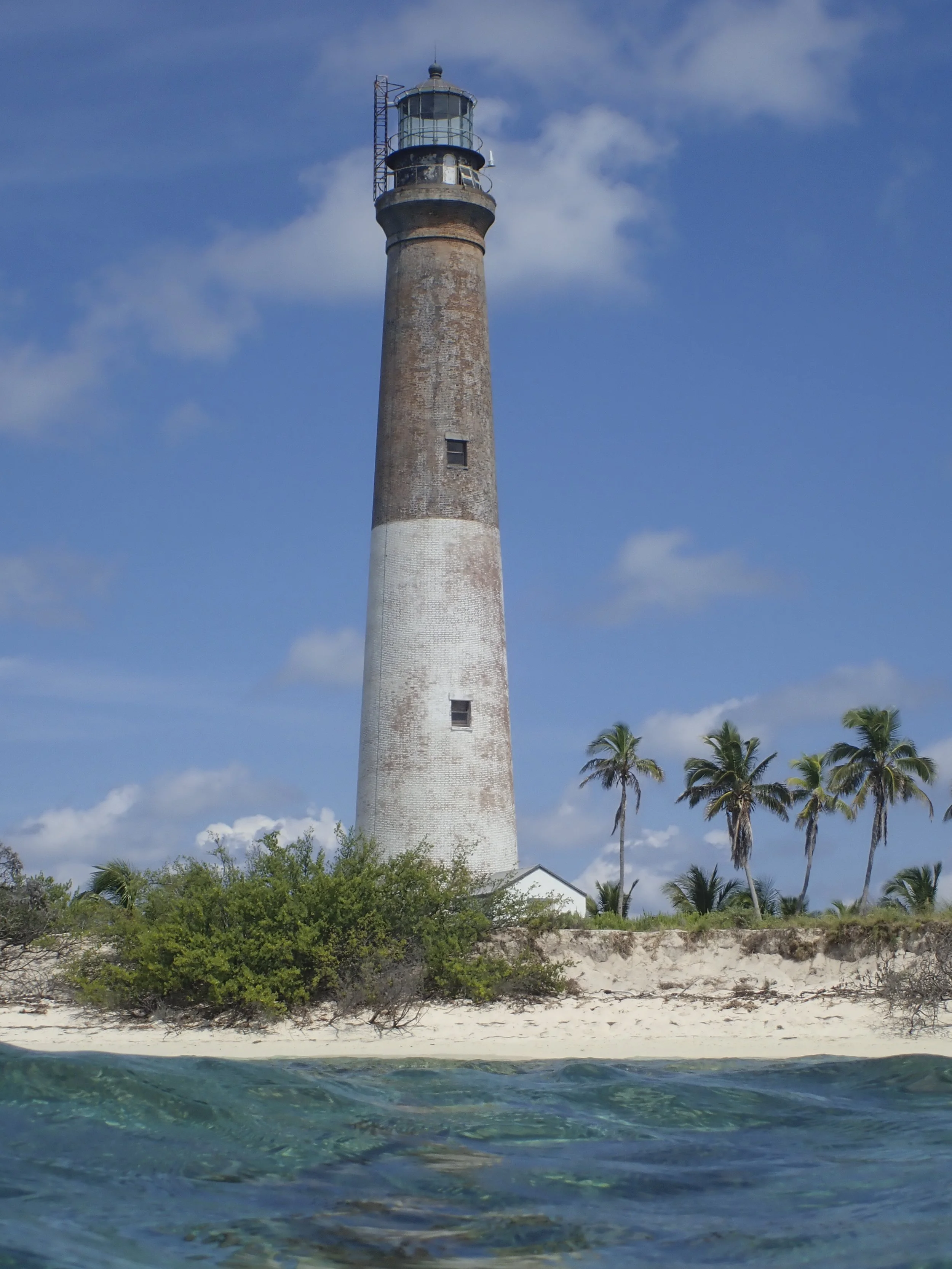
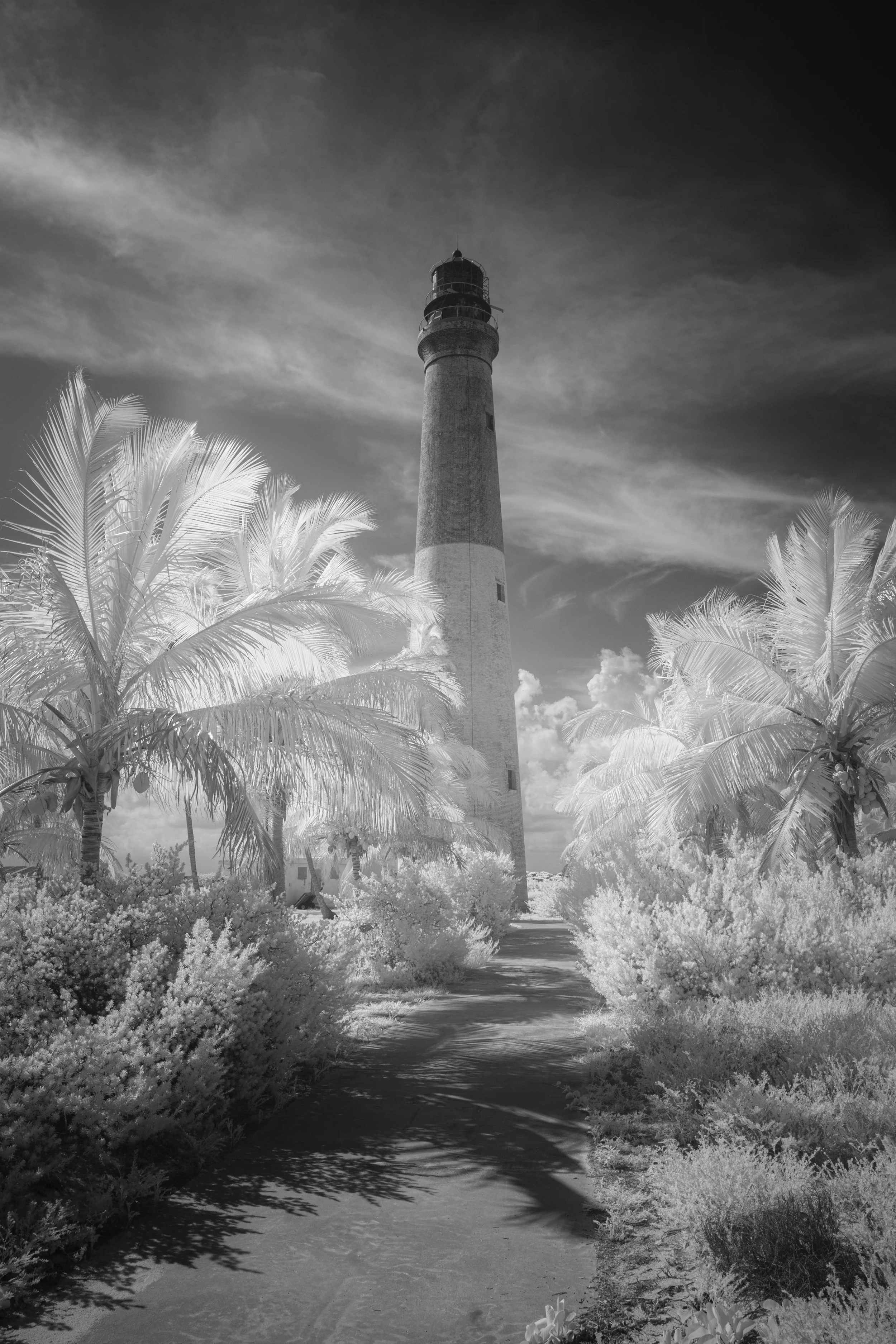
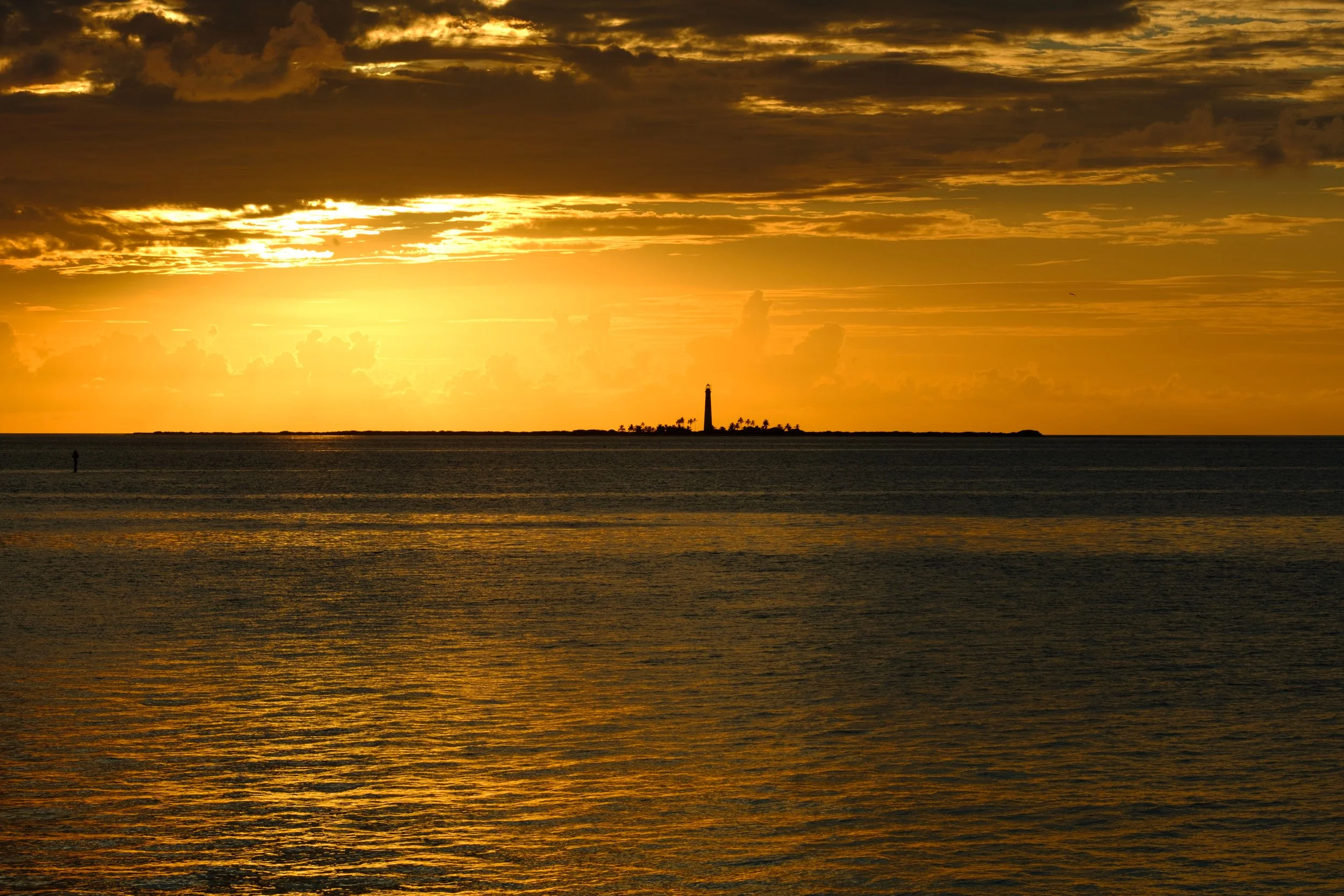
On Day 2 we’ll trek further west to Loggerhead Key, a completely uninhabited 49-acre island sanctuary. Here you can walk the pristine, deserted beaches before we set up to photograph the island’s towering, 157-foot brick lighthouse—an imposing, two-toned black-and-white giant standing completely dark as the absolute westernmost sentinel in the Keys.
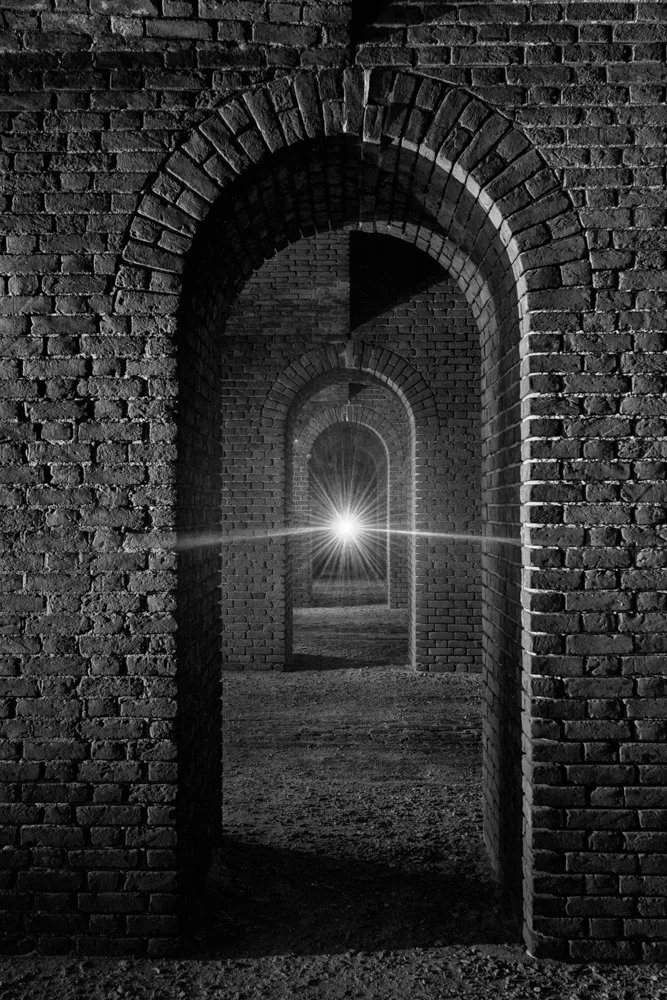
While the daily tourist ferry leaves the island completely bare by 3:00 p.m., our group has exclusive, after-hours permission to explore the interior of America’s largest 19th-century brick masonry fort under the stars. You will wander the hauntingly beautiful empty parade grounds, master light painting inside cavernous brick arches, and frame the stars through historic gun portals.
On our last day we’ll make our way back to mainland’s Mile Marker 0, but before we depart, we’ll have one last lighthouse sunset experience up our sleeve.
So get ready to stamp your national park and lighthouse passports like never before on our Dry Tortugas and the Seven Sentinels tour!
What You Should Know
This workshop caters to knowledgeable night photographers with an intermediate or higher skill set. Participants should have a firm grasp of the basic principles of photography and of their cameras, and have a comfortable understanding of night photography fundamentals. We will be happy to offer advice and answer questions about both day and night photography, but the focus of the formal education will be photographing lighthouses and Dry Tortugas.
If you would like to join us on this trip but are unsure whether you have adequate night photography skills, we can offer pre-event tutoring to get you ready for your adventure with us. Additionally, a few of us have written books that may be productive pre-trip reads.
What You Will Learn
We hope to push you to step outside your comfort zone—to test the limits of what you and your camera can do in a boat, on an island, and even underwater!
TOPICS COVERED WILL INCLUDE:
Milky Way
starlight blends
star points and trails
landscape compositions
timing a lighthouse flash with an exposure
using a shift lens for architecture during the day and night
controlling perspective distortion in the field and in processing
balancing the exposure of a bright lighthouse lantern in a dark environment
maritime architectural compositing: master polarizers, shutter speeds and frame rates to shoot razor-sharp architectural details from the deck of a moving vessel
and more …
Night Conditions


Logistics & General Info

Travel
Getting to one of the most remote national parks in the United States isn’t easy, so we are turning this into a road trip adventure to the final destination. You are responsible for your airfare and car rental.
Nearby Airports:
Miami (MIA) — 2.5 hours from Marathon Key
Fort Lauderdale (FLL) — 3 hours
Rental Car
You will need a rental car to get to the workshop and to the land-based shoot locations.
There is no need for four-wheel-drive.
If you are interested in carpooling or sharing a rental car, let us know and we will try to connect you with another attendee looking for the same.

Lodging & Food
You are responsible for arranging and paying for your own meals and accommodations outside of Dry Tortugas National Park.
Lodging
We’ll be staying at a combination of hotels on the mainland Keys and will camp for two nights at Dry Tortugas.
Chronologically, our first two nights will be in hotels on our way down the Keys, the second two nights will be in tents at Dry Tortugas, and our final night will be at a hotel in Key West.
Food
Iconic Floribbean food awaits your adventure! Conch fritters, Cuban sandwiches and plenty of Key Lime Pie.
We will be providing catered meals during our two-night stay in Dry Tortugas National Park.
When out on our other excursions or night shoots you may wish to pack snacks and, as always, plenty of water.

Weather
Expect daytime highs in the 80s F, and nighttime lows in the 70s.
Recommended Attire
Shorts and UV-protective shirts for daytime, light pants and long-sleeve shirts for night.
Don’t forget to pack a swimsuit.
Snorkel gear will be available for rent.
Supportive sandals and comfortable and protective shoes are recommended for getting around.

Exertion Level
The exertion level of this workshop is Easy. (See more about our classifications.)
No vigorous activity will be required during the workshop, but please consider your physical abilities prior to registering. You should be comfortable carrying your own equipment over uneven ground in the dark.

Considerations
While there are no mosquitos in Dry Tortugas, expect to encounter them during our mainland time. We recommend bringing repellent such as picaridin or using permethrin on your clothes to better protect yourself.
IMPORTANT: We encourage reading our FAQs page for more information about skill and gear requirements, and other information that pertains to all our workshops.
If you have questions, please contact us—we're happy to talk it over with you.
As South as South Will go …
“ At the top we had endless 360-degree views of the universe. The Milky Way never looked so big! …”
If you drive as far south as you can in the United States, you will eventually arrive at Key West. There is an amazing “end of the world” vibe down there. There is a reason why both pirates and poets have flocked there for years. The sunrises and sunsets are spectacular and the people are just as warm as the temperatures.
I’ve been attracted to many “land’s end” locations, so when I heard about Key West, I knew I had to go. The best way to experience it is to make the 3.5-hour scenic drive down from Miami. The Overseas Highway is a marvel of engineering, as it connects the mainland to the Florida Keys. Over 113 miles of pavement and 42 overseas bridges helped me leapfrog from key to key, and with each jump I became both more relaxed and excited. The Keys just have that effect on you.
What I discovered once I got there is a region with many treasures. The one that beckons far past the horizon—Dry Tortugas—can yield the most satisfying reward. On our boat ride out, we were given an overview of the islands and the 19th century fort. Our first glimpse of it was a small red blip that interrupted the perfect blue horizon. There was nothing else to see in any direction except this now-imposing marvel of engineering. How could this even have been built, and how could it have survived the thousands of storms that have crashed against its walls?
Ninety percent of the people who visit Dry Tortugas leave with the boat at 3 p.m. the same day they arrive. Not us. We had exclusive access to stay and photograph inside Fort Jefferson at night. To have this island to ourselves at night was beyond exhilarating.
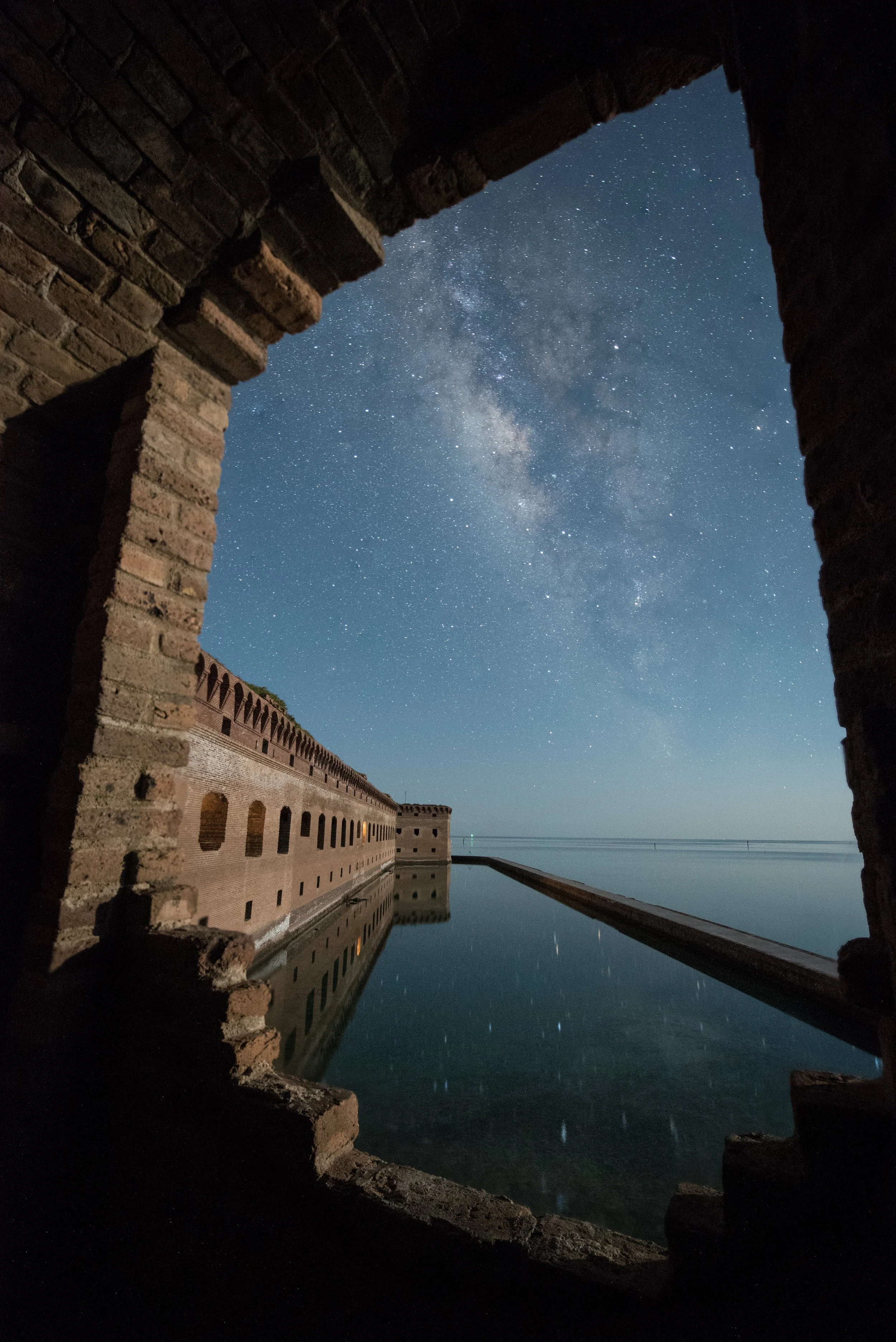
Each level of this massive building was an inspiration. At the top we had endless 360-degree views of the universe. The Milky Way never looked so big! We used the strong leading lines of Fort Jefferson to compose our shots. Moving down into the interior, repeating arches were an inspiration to paint with light.
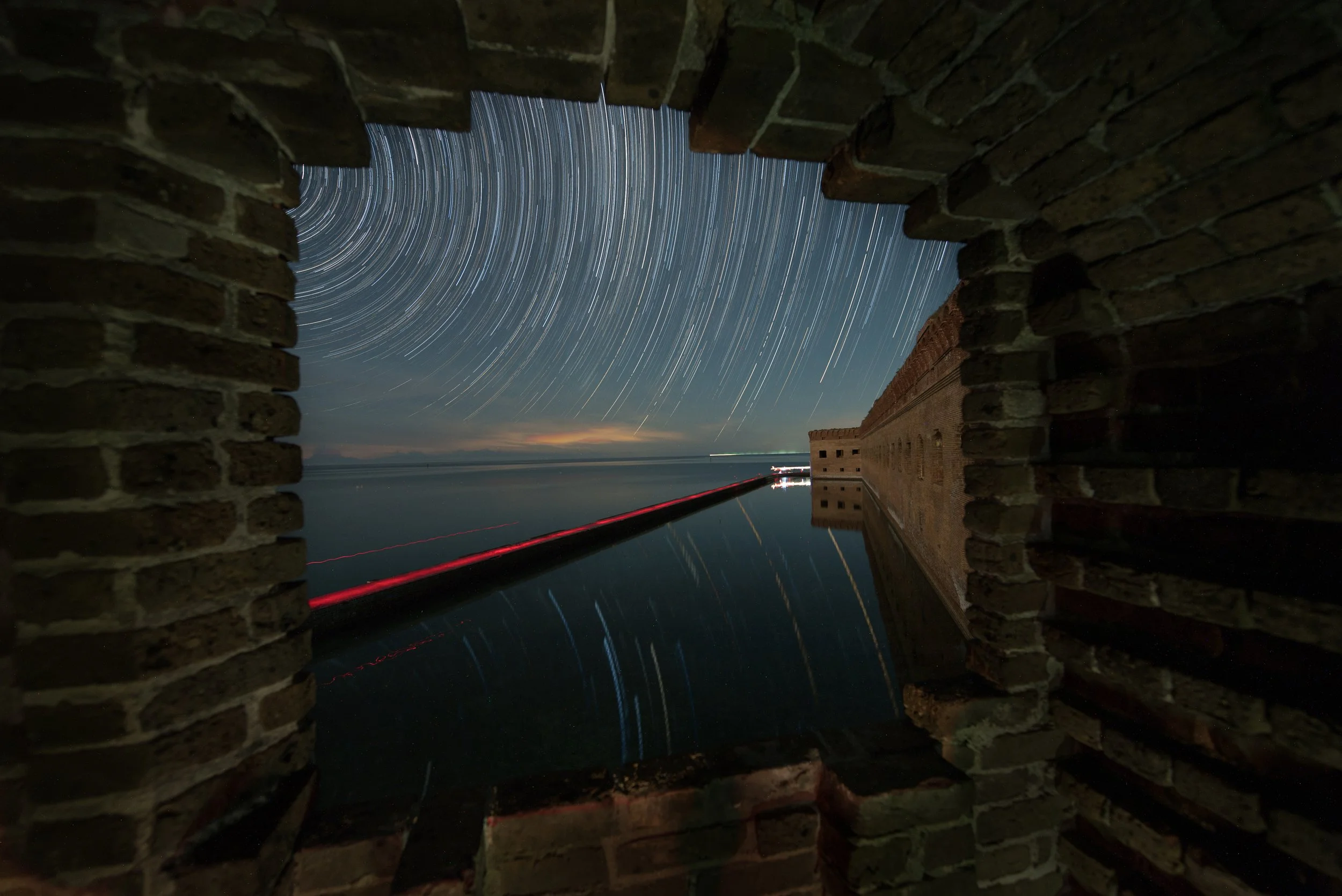
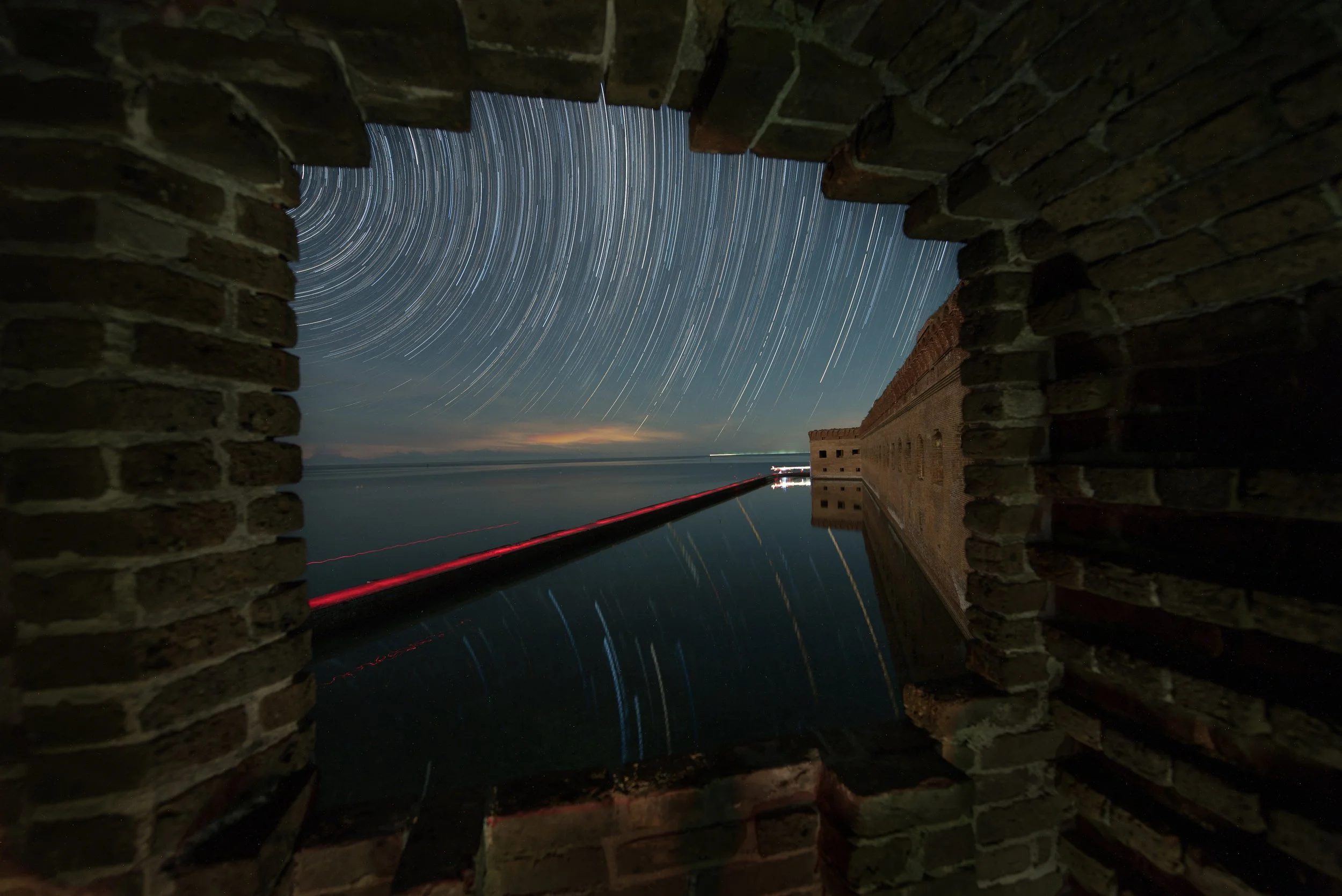
But to me, the most unique vision to photograph in Fort Jefferson are the windows. They are actually embrasures—large openings that allow massive casemate guns to target enemy ships. For us, each of these glassless windows targets a different part of the cosmos. We went from window to window framing the Milky Way rising over the horizon and star trails diving into the sea. Each frame was familiar but also showed a different slice of the universe. We all realized that we were experiencing something that very few people have seen. We wanted to never leave this place.