Canyonlands National Park
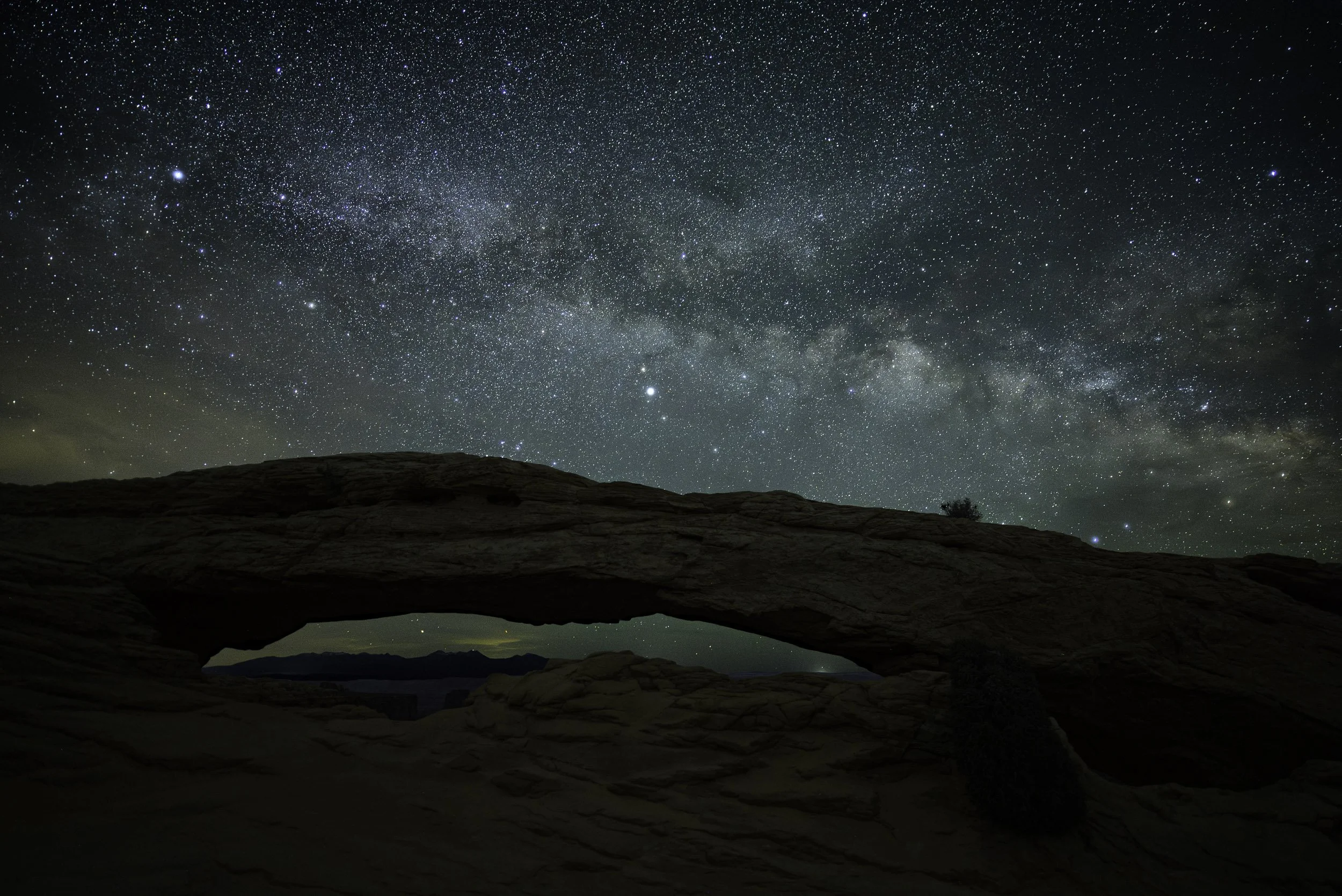
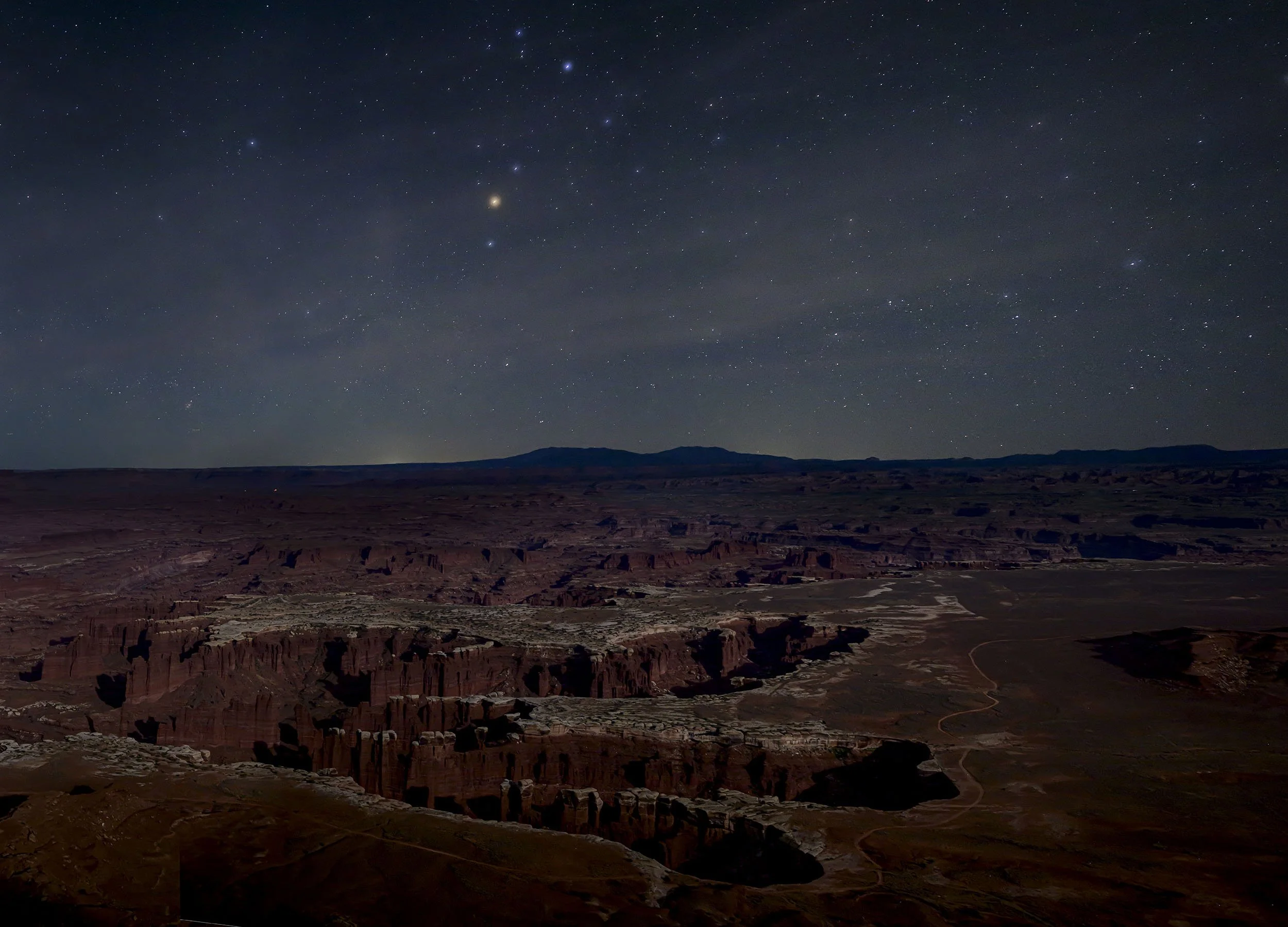
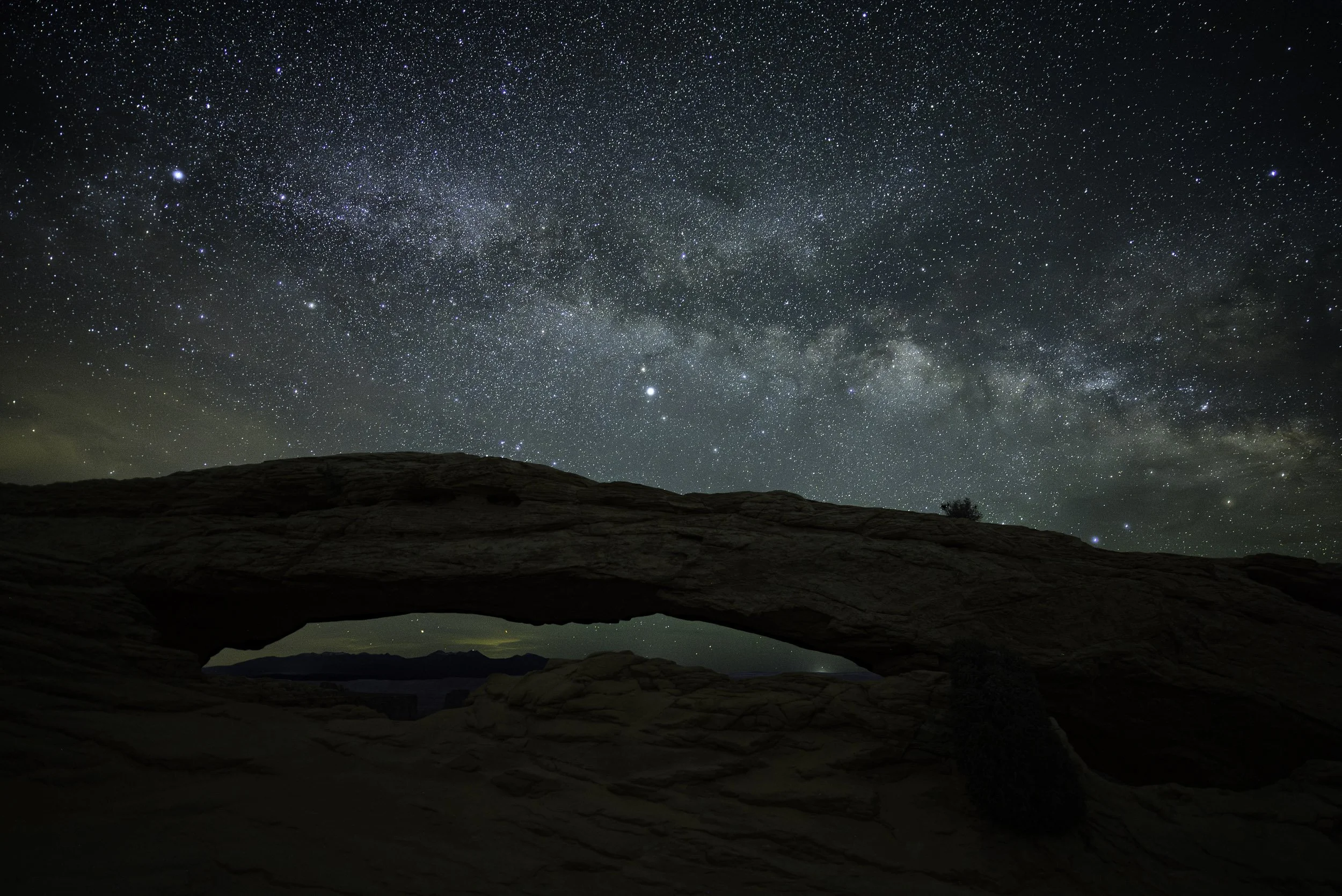
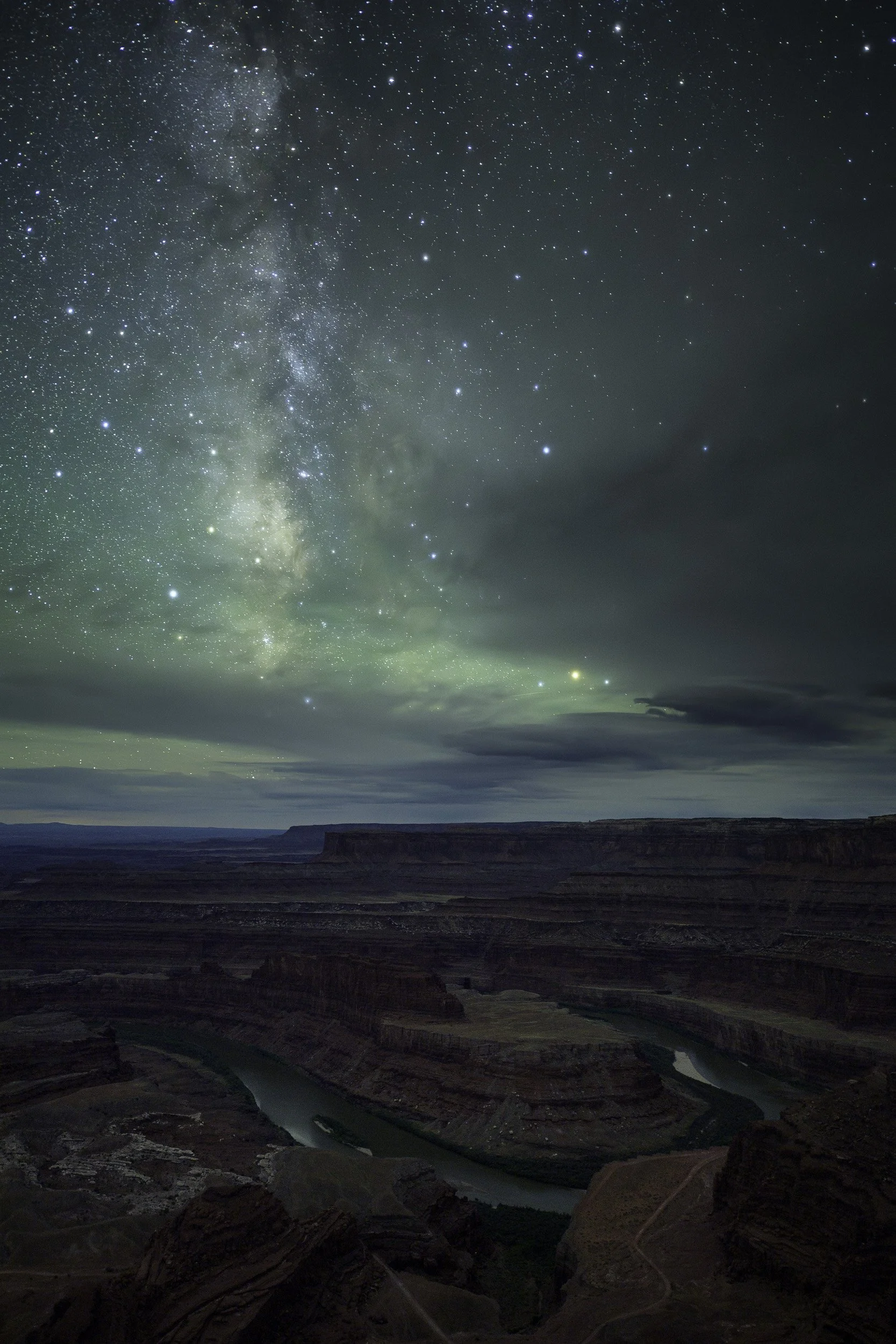
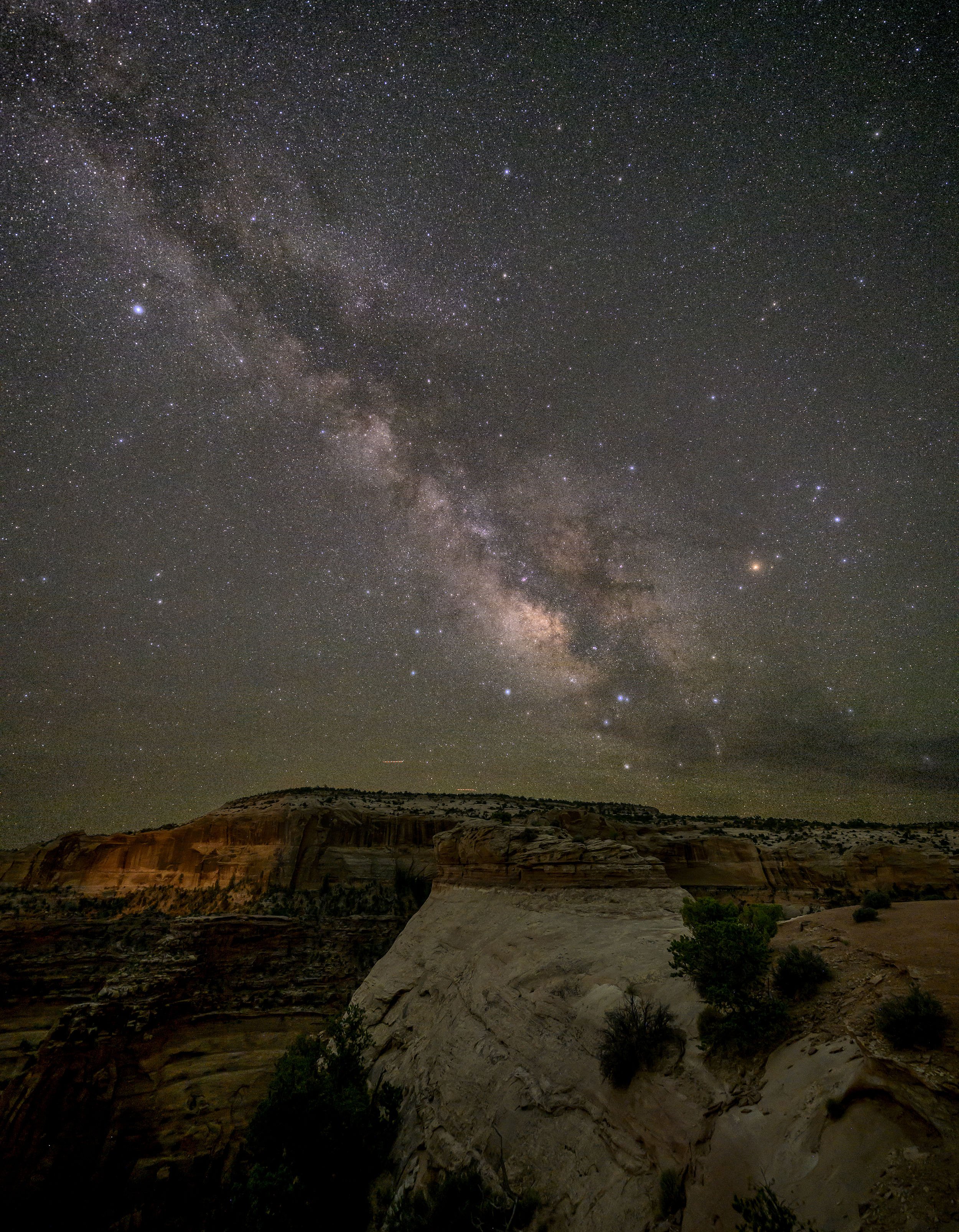
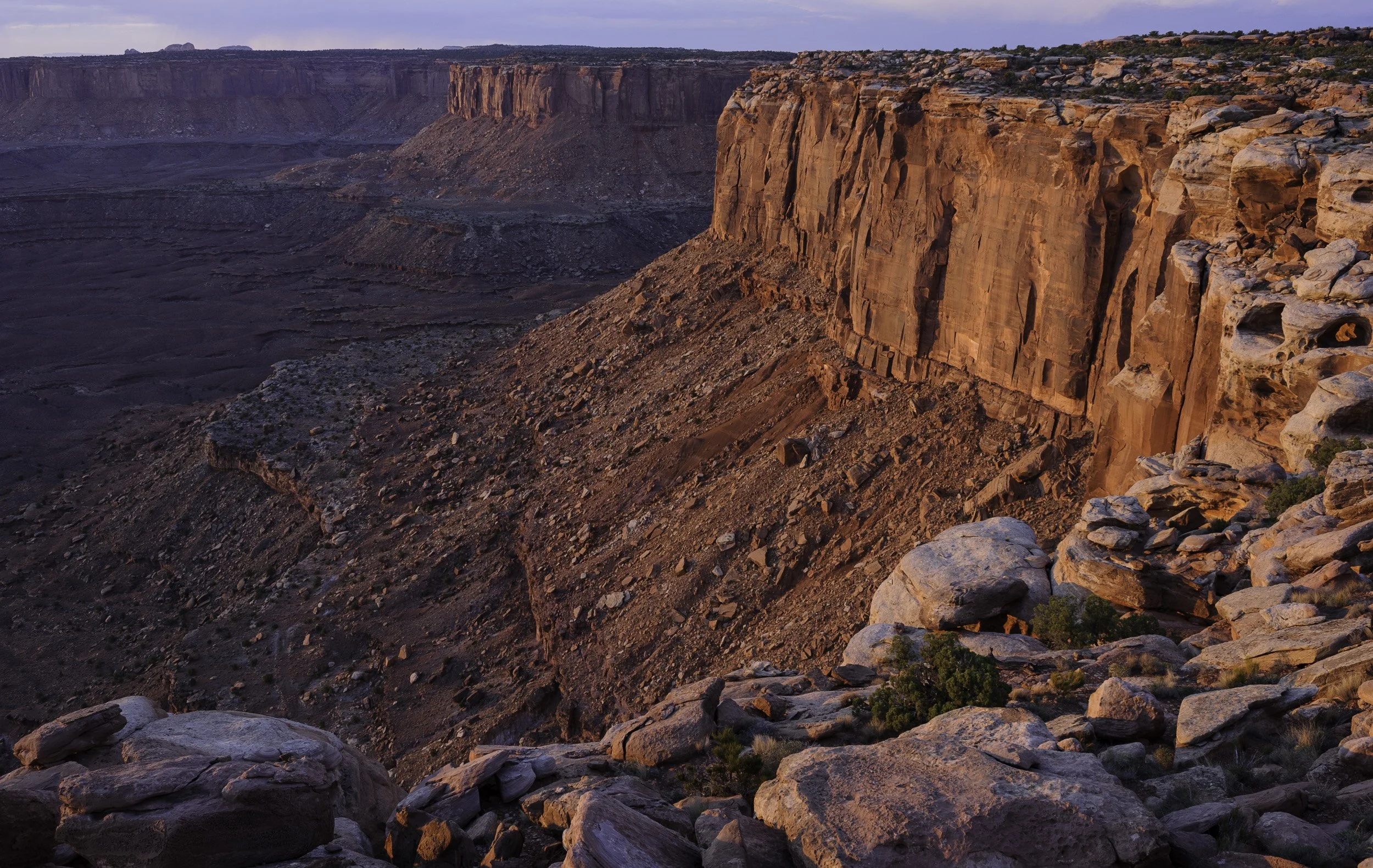
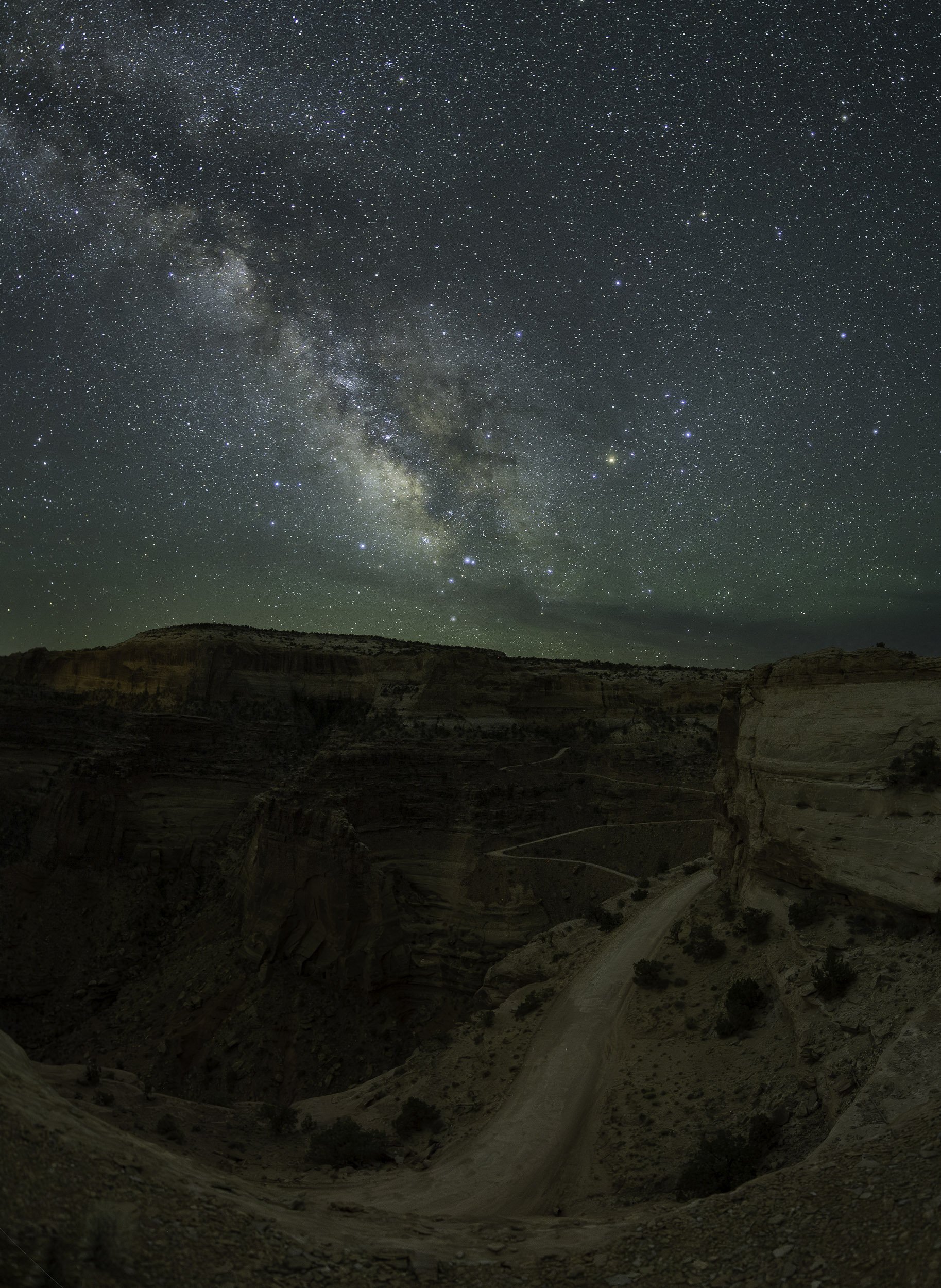
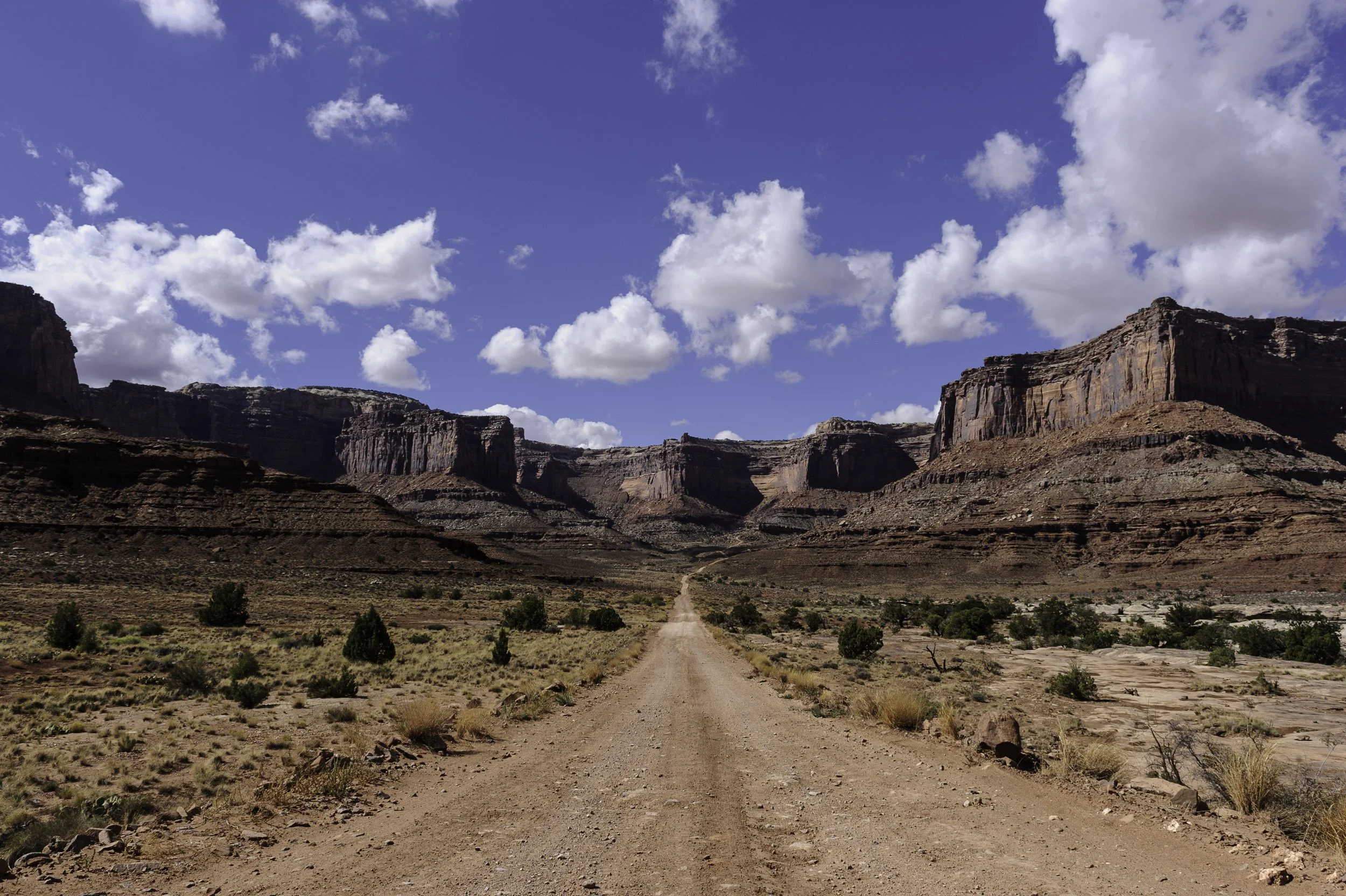
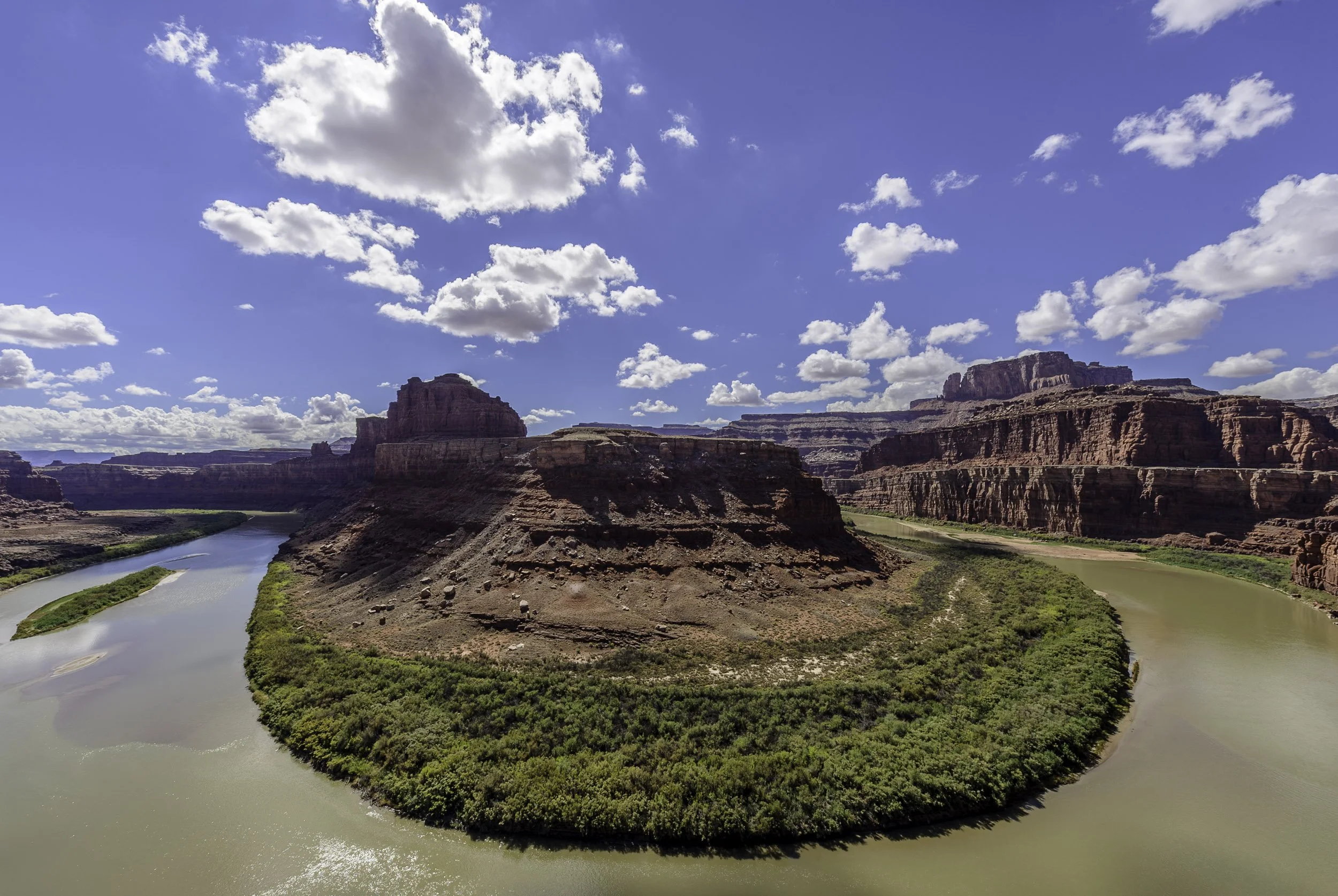
A land where canyons dominate the landscape. And not just canyons, but canyons within canyons within canyons, each dropping down in further abyss. From the edge, the land plunges below you and extends to infinity. 300 million years of exquisite erosion visible in every direction, severed only by meandering rivers of water and ribbons of canyon rim.





Workshop Details
September 7-10, 2027 — Sold Out, Join Waitlist Below
This is a 4-night, 4-day workshop. Your adventure begins on the morning of September 7, and ends after a final night shoot September 10.
$1,995 + applicable taxes.
Skill level
Open to all who have an understanding of the basic principles of photography and of their cameras.
Group size
14, with 2 instructors — 7:1 ratio
NPS website
Workshop Leaders
Registration
Hoping to get a spot? Sign up below for our no-fee waitlist.
| • Deposit of $TK is required to reserve your spot at the workshop. |
| • Balance of $TK is due on TK. —> Pay balance here. |
| • You may choose the “Pay in Full” ticket if you desire to pay all at once. |
| • Last day for a cancellation request is TK (see cancellation and refund policy). |
| • You may choose the “Pay in Full” ticket if you desire to pay all at once. |
| • The workshop fee does not include lodging, food, airfare, entrance fees, or transportation to or during the workshop. |
The Canyonlands National Park Experience
This workshop will explore one of the national parks in the surrounds of Moab, Utah: Canyonlands. It’s a wondrous landscape with canyon views, snaking rivers, winding dirt roads, arches and other rock formations, and more.
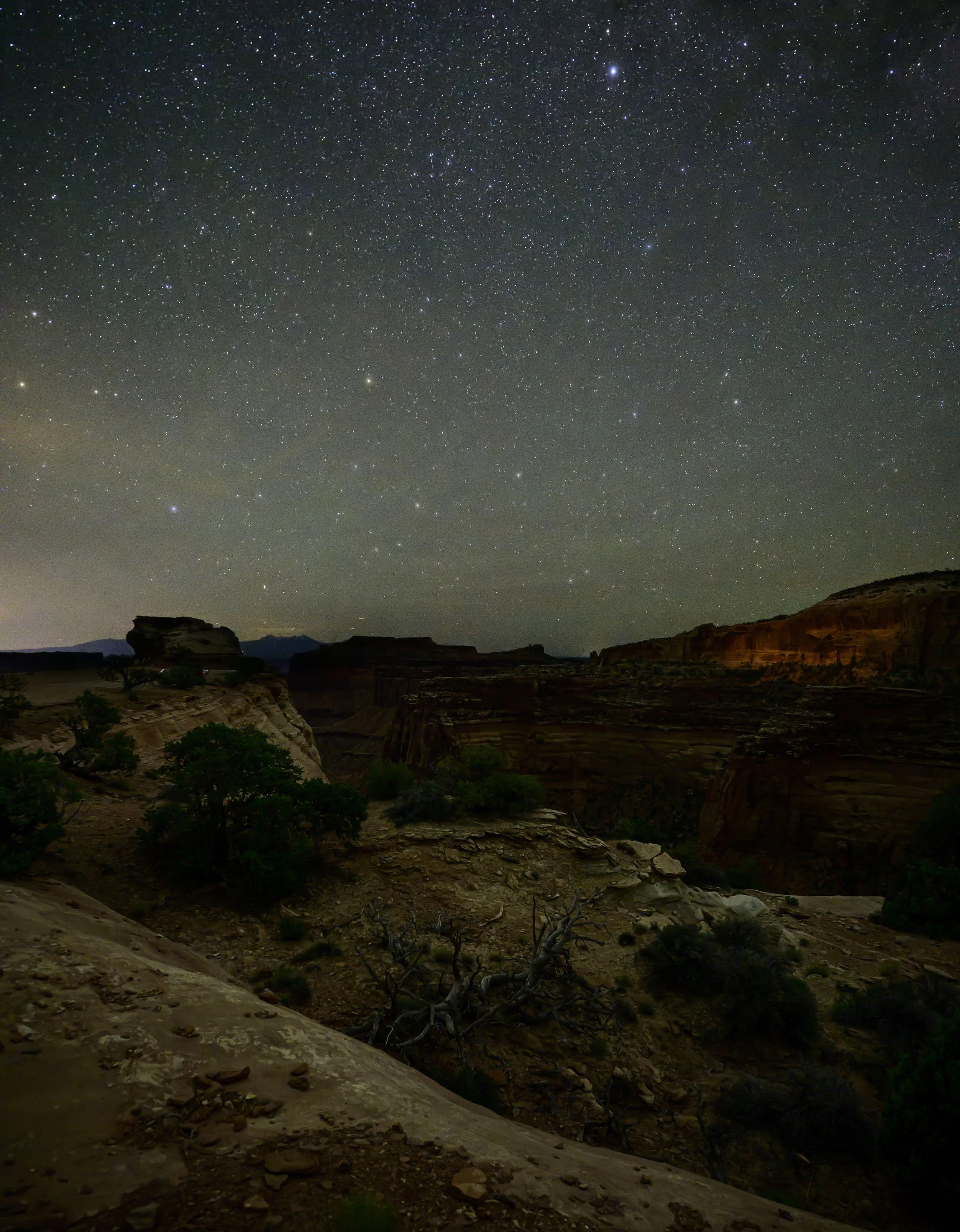
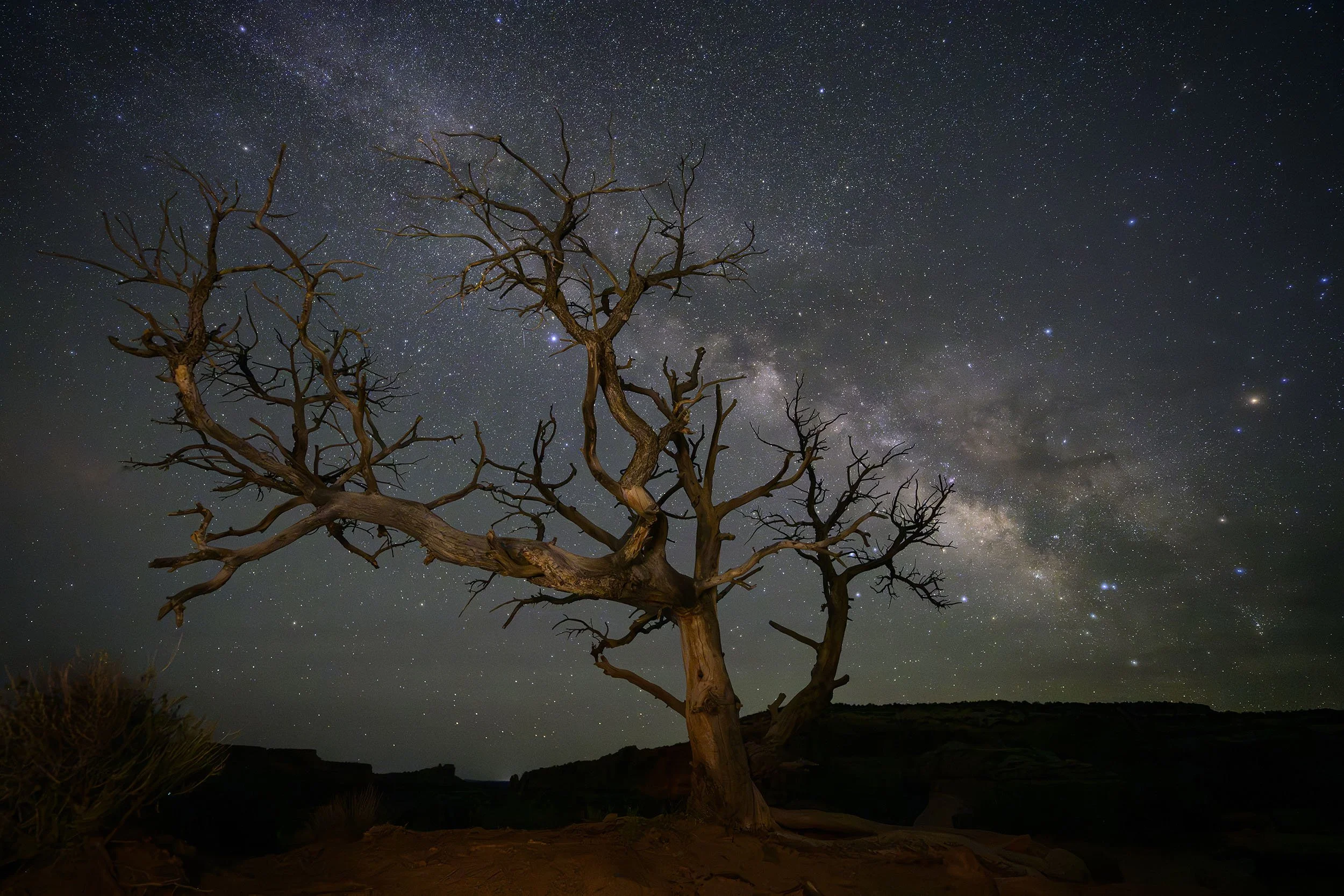
The timing of the workshop is strategic, planned for a mix of moonlight and dark skies. We’ll begin with a quarter moon and end with a gibbous, and each evening it will set later and later. That will give us nightly opportunities for shooting moonsets, as well as for letting the moonlight fill the canyons below us. And if you’re up for lateness, then dark skies and Milky Way will also be on the shot list.
For most of the workshop we will explore the Island in the Sky region of the park, which is about a 40-minute drive from our hotel base in Moab. We will also make a day drip (and probably execute a night shoot) to the lesser-visited Needles District, named for the colorful spires of Cedar Mesa Sandstone that dominate the area, which is a wholly different experience.
While the workshop will focus on Canyonlands, you’ll also have nightly opportunities to visit and photograph neighboring Arches National Park.
Nightscaper Photo Conference in Four Corners
This workshop begins two days after the 2027 Nightscaper Photo Conference ends, providing an opportunity to attend the world’s leading in-person night photography conference and then cap it off with an adventure to Canyonlands. You don’t need to attend one in order to attend the other—we’re simply highlighting the possibility. The conference is an in-person event devoted to astro-landscape photographers, scientists, artists and activists who wish to enjoy and preserve the night skies. For more information, visit nightscaper.com.
What You Should Know
Participants must have at least basic photo skills, know their cameras well, and be comfortable shooting raw in manual mode.
If you would like to join us on this trip but are unsure whether you have adequate night photography skills, we can offer pre-event tutoring to get you ready for your adventure with us. Additionally, a few of us have written books that may be productive pre-trip reads.
What You Will Learn
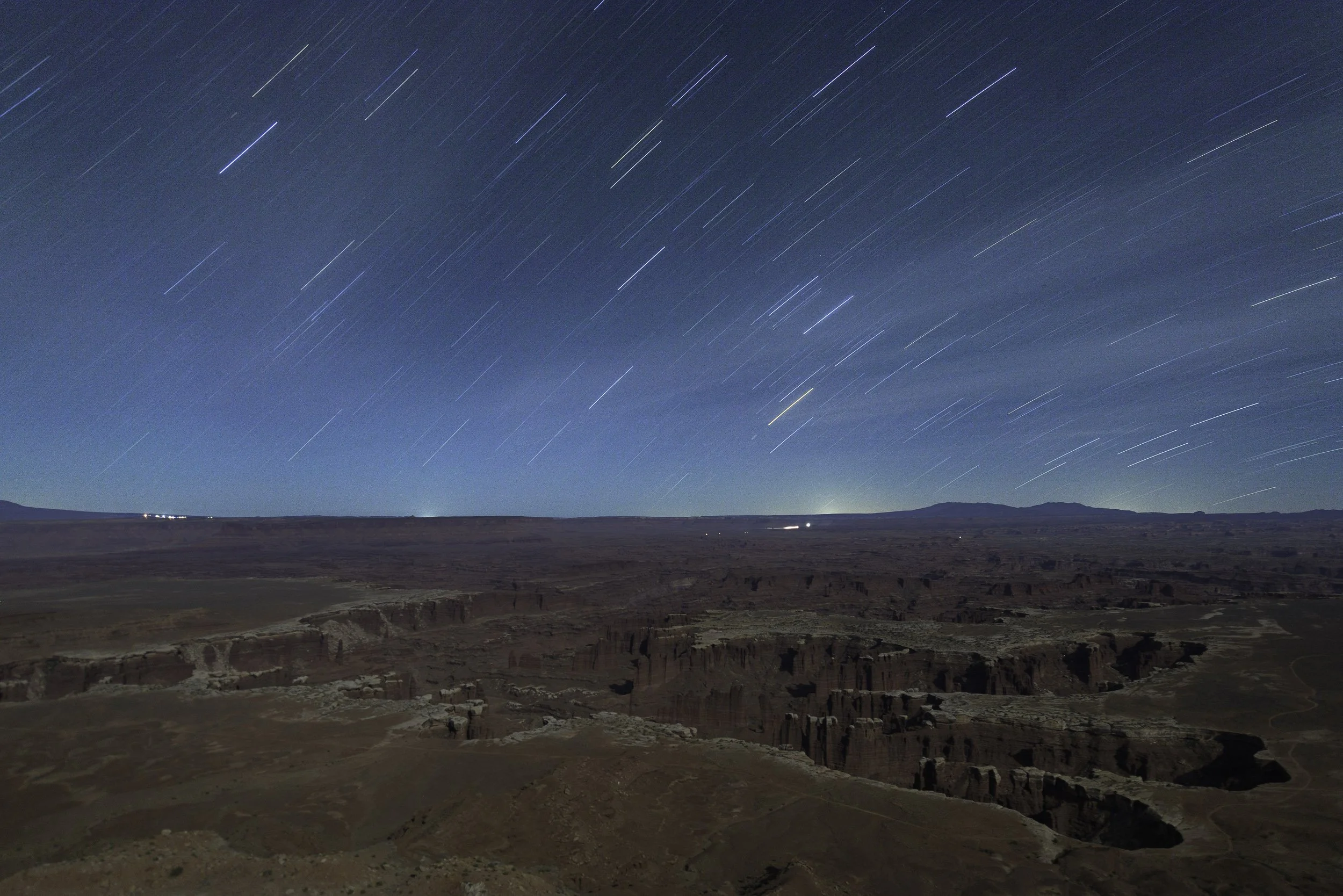
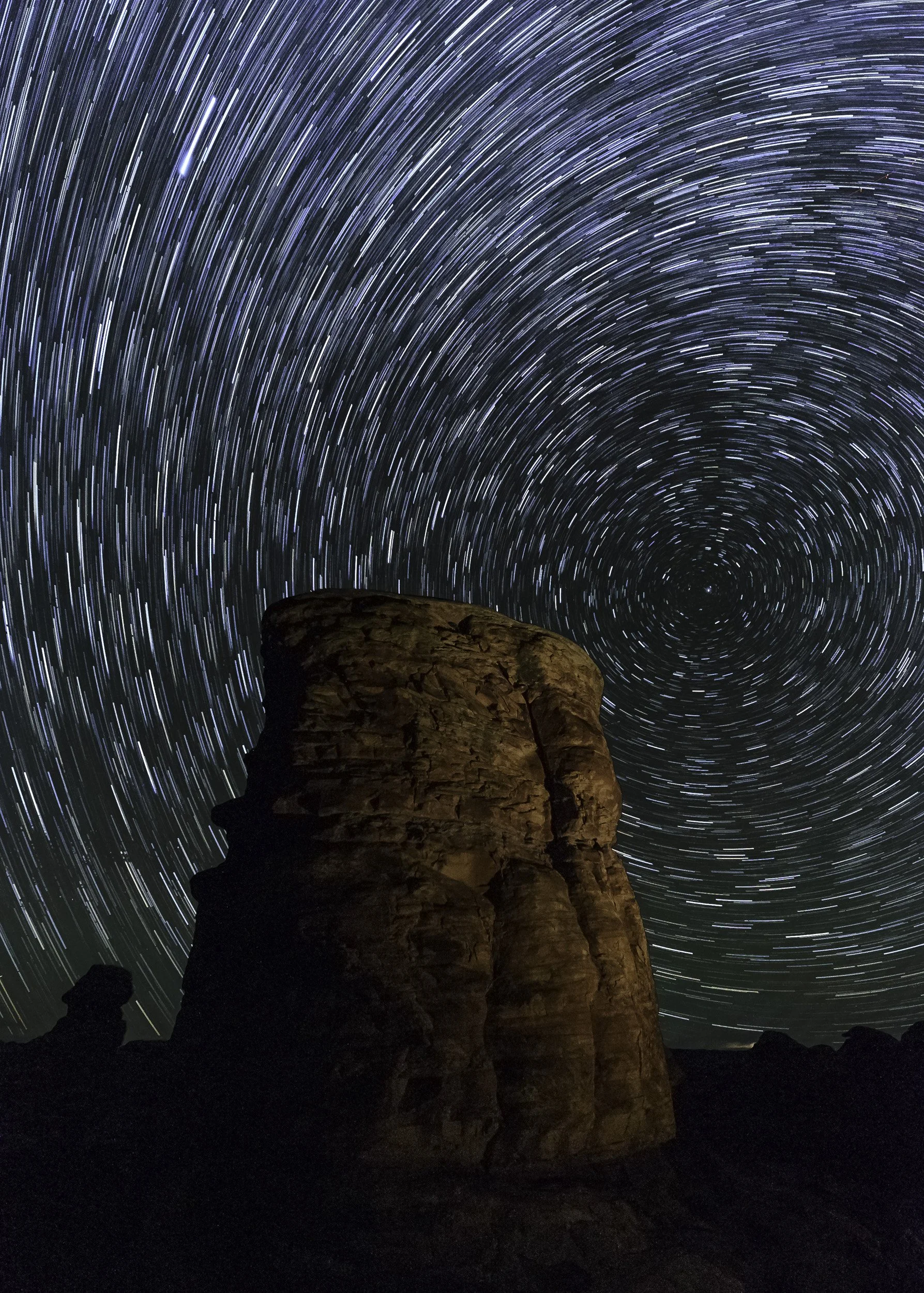
This workshop emphasizes honing your night skills and creating the most spectacular photographs once the sun dips below the horizon. We specifically chose the timing of this workshop to occur during the waxing crescent moon, giving us perfect conditions for star trails, star points and Milky Way, all with very gentle moonlight illuminating the landscape.
TOPICS COVERED WILL INCLUDE:
star-point and star-trail exposures
shooting and blending landscape and dark-sky exposures
preparing and shooting panoramas
scouting for night photography
and more …
The workshop will include some daytime classroom time, as well as some daytime touring and photography.




Logistics & General Info

Travel
The workshop will be based in Moab, Utah. You are responsible for arranging and paying for your own transportation.
If you plan to attend the 2027 Nightscaper Photo Conference, you can drive to Moab the day after the conference.. This workshop begins two days after the conference ends.
Nearby Airports:
Moab (CNY) — 15 minutes
Grand Junction (GJT) — 2 hours
Durango (DRO) — 3 hours
Four Corners (FMN) — 3 hours
Rental Car
You will need a rental car to get to the workshop and to the shoot locations.
There is no need for four-wheel-drive.
If you are interested in carpooling or sharing a rental car, let us know and we will try to connect you with another attendee looking for the same.

Lodging & Food
You are responsible for arranging and paying for your own meals and accommodations.
Lodging
You are not required to stay at the official workshop lodging, though doing so does make it easier to meet with the group each day.
Info and group code will be sent once our lodging partner is ready to begin taking reservations.
If you are interested in sharing a room, let us know and we will try to connect you with someone like-minded in the group.
Food
Moab has plenty of food options.
We encourage eating two meals per day—a good breakfast and a great late lunch.
When on the night shoots, you may wish to bring snack food or a sandwich and plenty of water.

Weather
Expect daytime high in the mid-80s F, and nighttime lows in the 50s.
Recommended Attire
Pants and short-sleeve shirts for daytime, pants and long-sleeve shirts for night.
A sweatshirt and medium-weight jacket will likely be useful. Layers are good.
Comfortable and protective shoes are recommended for getting around. Quality trail shoes or hiking boots would be optimal.

Exertion Level
The exertion level of this workshop is Easy. (See more about our classifications.)
No vigorous activity will be required during the workshop, but please consider your physical abilities prior to registering. There won’t be any long hikes, but there will be trails involved, and you should be comfortable carrying your own equipment over uneven ground in the dark.

Considerations
IMPORTANT: We encourage reading our FAQs page for more information about skill and gear requirements, and other information that pertains to all our workshops.
If you have questions, please contact us—we're happy to talk it over with you.
Decisions …
“My view out the tent was straight across the Canyonlands landscape. …”
I’m a fair-weather camper. I love sleeping out in a tent—as long as the air isn’t cold, snow isn’t on the ground and rain isn’t falling. The worst part about the latter is that everything gets wet, especially my tent, which then needs to be packed wet, traveled with wet, then sometime later opened up wet so that it can air-dry, inevitably in my living room.
The first time I visited the Needles District of Canyonlands National Park, I was there solo for night photography. I shot a rock formation with some star trails behind it. Things finished late, with me tired, and the night weather was clear and pleasant, so instead of driving back to any hotel in Moab, I decided to camp in the park. I set up my tent, crawled into my sleeping bag, and passed out.
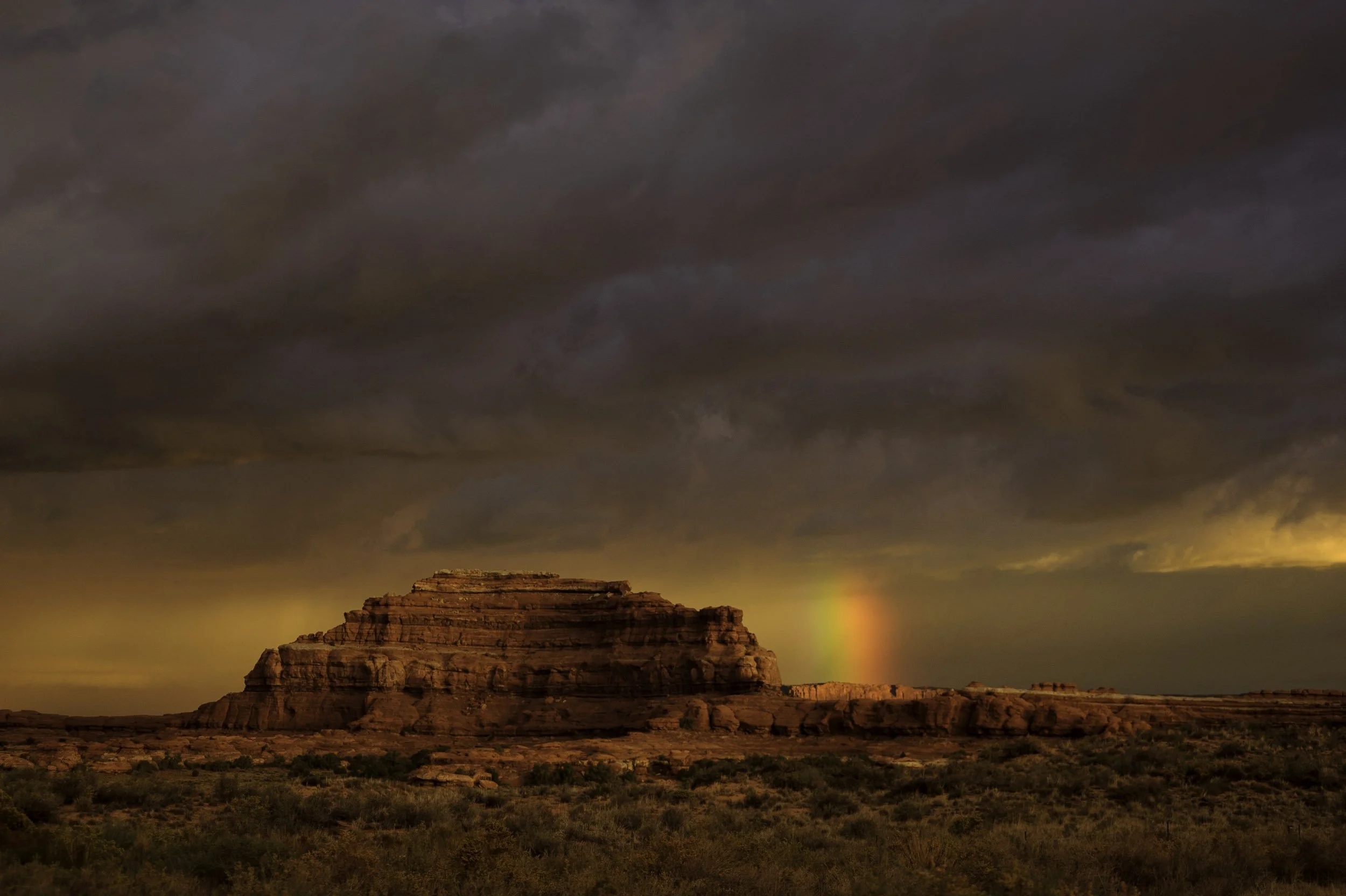
In just a few hours the soft light of dawn came and awakened me. I don’t usually force myself up for a sunrise after a night shoot, but if I happen to be awake anyway, then I’ll seize the opportunity. So that morning—my eyes puffy, my hair unkempt, my brain foggy—I unzipped the tent door and poked my head out into the cool morning air to see if the conditions might be right for a sunrise worth rising for. My view out the tent was straight across the Canyonlands landscape, where I could see a storm moving in from the west, coming right at me.
Yep. Rain was on the way, and it was going to make everything wet.
I had to work fast. I quickly popped out of my sleeping bag, threw on my clothes and climbed out of the tent, tripping over invisible objects, grabbing sundries, stuffing things in random bags. Then, from the corner of my vision, I saw a glint. The tiny edge of the morning sun slipped over a ridge on the eastern horizon and beamed unbelievably warm light onto the scrubby, red-rock scenery all around. I knew what that meant.
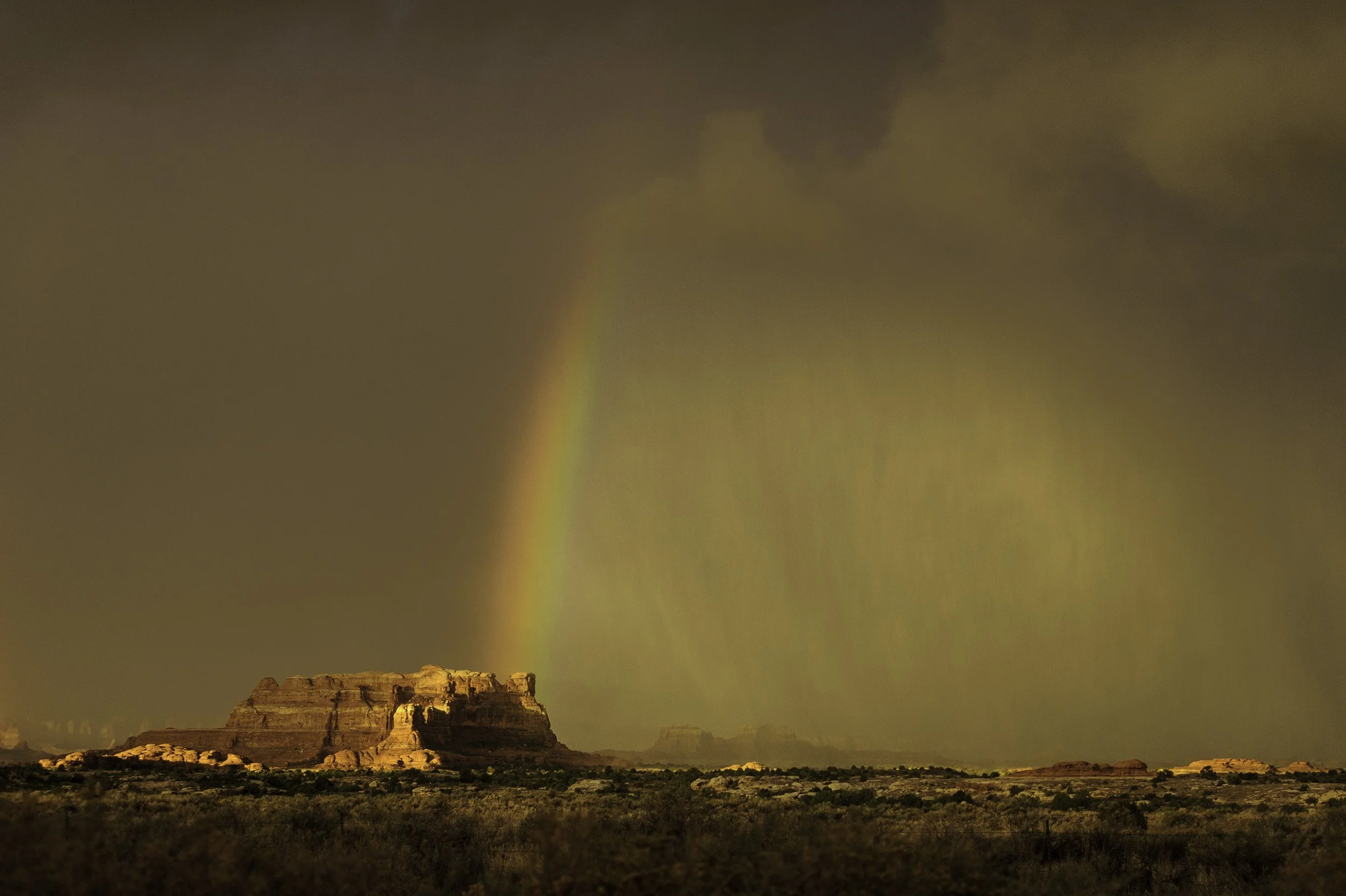
I turned my head toward the coming storm, and in front of the sheets of approaching rain, there it was: a beautiful, full double rainbow, stretching from one mesa to another, in beautiful light, over the beautiful Utah desert.
The rain was approaching rapidly. I knew that when it reached me, the rainbow would be gone, my camping gear would be wet, and I would be wet too. In that moment, I had only two choices, and I had to choose quickly. I could either finish my race to break camp before the rain hit, or I could photograph the rainbow.
I did what we all would do.