Expose to the Left: How to Really Maximize Image Quality at Night

Note: It has come to our attention that some readers are not seeing the photos in this post as intended. Please know you are not alone, that others have reported the same. See the Comments section below for more information.


We hear everyone in the photography industry talking about image quality, image quality, image quality. We especially hear about this in any circle of people chatting (or writing) about night photography. Conversations (and books, articles and blog posts) are rife with opinions and advice about how to push the limits of our cameras and lenses in order to get the best image quality in low-light situations.

But at what cost? We get so caught up in capturing all this dim light that we don’t notice that we’re making decisions that in every other photography situation are actually detrimental to image quality:

  • opening the aperture as wide as it will go
  • leaving the shutter open for long periods of time
  • jacking up the ISO to numbers far beyond what the photographers of yesteryear would even believe as factual

Ideally, night photographers need to be thinking the other way around: How do we improve our low-light photos in a way that capitalizes on everything we know about shooting in daylight? The answer is straightforward, and it all boils down to shooting with this philosophy, with this technique: Expose To The Left, otherwise known as ETTL.

What is ETTL?

Like its fraternal twin ETTR (Expose To The Right), ETTL is a way to maximize image quality, except while ETTR is used in daylight, ETTL is used at night.

How does it work? It’s simple. With your camera set to Matrix metering, shoot a test exposure that’s probably a couple of stops darker than the meter reading. You can just guessβ€”accuracy doesn’t matter, kind of like with print film. Looking at your histogram, adjust the exposure downward and keep firing test frames until all the data is crammed up against the left side, or the β€œshady side,” of the graph. We push that histogram over by using a smaller aperture, a faster shutter speed, a lower ISO.

A perfect example is a photo I made in Gates of the Arctic National Park, of the wingless bats that live in Inverted Canyon. I was shooting under a new moon. My first-guess exposure was 20 seconds, f/2.8, ISO 6400, which resulted in a rather β€œtraditional” histogram, as seen in Figure 1.

Figure 1. Initial, best-guess test exposure.

Figure 1. Initial, best-guess test exposure.

But I didn’t want traditionalβ€”I wanted ETTL and all the advantages that come with it. So I closed down the aperture to f/5.6 and dropped the ISO to 1600. That gave me a better ETTL histogram (Figure 2), but still not good enough.

Figure 2. The histogram of the same scene, stopped down quite a bit.

Figure 2. The histogram of the same scene, stopped down quite a bit.

So I cut another two stops of light by dropping my ISO again, to 800, and increasing the shutter speed to 10 seconds. The resulting histogram (Figure 3) was certainly closeβ€”close enough to be effective, in fact. But it resulted in what I call a β€œThick Shady” histogram, wherein you can see that all the image data is pushed to the left, but you can still make out a slope of data curving up on that left side. By increasing my shutter speed to 2 seconds, I was able to narrow that to a slim line of histogram data (Figure 4)β€”or what’s known as β€œSlim Shady.”

Figure 3. My third exposureβ€”not a bad one for ETTL, but we can get it even better. …
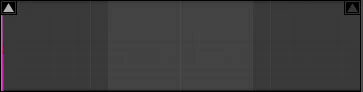
Figure 3. My third exposureβ€”not a bad one for ETTL, but we can get it even better. …

Figure 4. Histogram of my final β€œSlim Shady” exposure. Perfect ETTL.

Figure 4. Histogram of my final β€œSlim Shady” exposure. Perfect ETTL.

What did I gain by doing this? Consider my initial, traditional-histogram exposure of 20 seconds, f/2.8, ISO 6400:

  • That 20 seconds introduced long-exposure noise.
  • That f/2.8 gave me paper-thin depth of field.
  • That ISO gave me high ISO noise.

All of which are bad for image quality.

However, my ETTL exposure was 2 seconds, f/5.6, ISO 800, which fixed every one of the dire consequences of that first exposure. You can see how sharp the final image is in Figure 5; no long-exposure noise, adequate depth of field, no high ISO noise. Moreover, f/5.6 is the sharpest aperture for the Nikon lens I was using, which further improved the final image. Click/tap to see the photo at full size. Not a blurry pixel in sight. Not a spot of noise. The image quality is perfect.

Figure 5. Wingless bats in Inverted Canyon, Gates of the Arctic National Park. 2 seconds, f/5.6, ISO 800. (Click/tap for larger view.)

Ancillary Advantages of ETTL

In addition to image quality, ETTL has other advantages.

As crazy as it sounds, you can β€œfreeze” action even in the dark. Because you’re not worried about all the tedious challenges of maintaining highlights, midtones and shadow details, you can manipulate your shutter speed to almost anything you want. For example, while doing a night shoot at Upward Falls in North Cascades National Park, I didn’t want motion blur in the water. But because I was using ETTL, I was able to shoot at 1/60, f/4.5, ISO 2000. Subsequently, I got great image quality while freezing the action of the falls (Figure 6) despite the low light.

Figure 6. Upward Falls, North Cascades National Park. 1/60, f/4.5, ISO 2000. (Click/tap for larger view.)

Another side benefit of ETTL is that you can hand-hold your camera when making night images. Even under the new moon! Because you can shoot at those higher shutter speeds, you don’t really need to carry a tripod into the field with you. However, all five of us at National Parks at Night are Manfrotto Ambassadors, so we avidly recommend that you carry one anyway.

Drawbacks of ETTL

As great as ETTL is for improving image quality in night photography, there are some obstacles to work around.

For one, this exposure technique gets trickier when you’re light painting. It’s especially troubleshome when you’re using a sunbeam-like flashlight such as the Coast HP7R, because it completely ruins your hard-achieved left-biased exposure. How? By adding light. But don’t fretβ€”there’s an easy solution.

Figure 7. Coast HP7R flashlight with snoot by Light Painting Brushes, modified for ETTL light painting.

Figure 7. Coast HP7R flashlight with snoot by Light Painting Brushes, modified for ETTL light painting.

If you’re using ETTL to determine exposure for a scene you need to light-paint, then get a snoot that fits onto the end of your flashlight, such as the Universal Connector made by Light Painting Brushes. Cover the far opening of your flashlight with a thick and subsequently expensive layering of gaffer’s tape (Figure 7, above). With this modified snoot on your flashlight, you won’t impair your ETTL exposure. This is exactly what I did to light-paint a night wildlife scene in Voyageurs National Park (Figure 8).

Figure 8. In Voyageurs National Park I got an opportunity to photograph these greater horned marmots. Unfortunately the moon was new, and it was winter in northern latitudes, so I needed to light-paint my subjectβ€”obviously quite cautiously. The need for light painting introduced a further obstacle to achieving a good ETTL exposure, which I circumvented by using the snoot method described above. (Click/tap for larger view.)

Another option is to apply a thick layer of black paint over the front of the flashlight lens. Just be sure to use removable paint, so you can peel it off, lest you have to head back down the trail in the dark. 

Along the same lines, a strobe is even more detrimental to ETTL, because even though that light burst comes and goes in a flash, it’s really bright. For this situation, I suggest foraging your closet for the case your strobe came in when you bought it. Then put the strobe in that case before firing it. Even better, see if you can buy an extra case and put the flash in both. Extras are pretty easy to find on eBay. (Well, maybe not now that I’m sharing this tip.)

Lastly, pixel-peepers will notice that the ETTL approach diminishes highlights a bit. But don’t worry about it. Just like Meghan Trainor sings in her catchy pop songβ€”β€œIt’s all about that bass, about that bass, no treble”—it’s similar for night photography. It’s all about the shadows, about the shadows, no highlights. After all, night photography is all about photographing within the biggest shadow in the whole world. Seize the shadow.

A Final Note on ETTL

Some photographers accomplish the ETTL effect solely in post-production. In other words, they photograph the scene with a β€œtraditional” exposure. Then they import the photo to Lightroom, pull the Exposure slider all the way to the left, and then reduce the Shadows setting a tad. But the effect just isn’t the same. Get it right in-camera.

I suspect that the ETTL technique will be new to many people reading this, but I promise two things: 1) It will result in better image quality in your night photos. 2) It’s easy to learn, and fun!

If you decide to experiment with ETTL, please do come back and share your results in the Comments section.

Note: It has come to our attention that some readers are not seeing the photos in this post as intended. Please know you are not alone, that others have reported the same. See the Comments section below for more information.
Chris Nicholson is the author of Photographing National Parks (Sidelight Books, 2015). Learn more about national parks as photography destinations, subscribe to Chris' free e-newsletter, and more at www.PhotographingNationalParks.com.

UPCOMING WORKSHOPS FROM NATIONAL PARKS AT NIGHT

How I Got the Shot: Walkway to the Stars at Dry Tortugas National Park

Star stack over the moat wall at Florida's Dry Tortugas National Park. Β© 2016 Gabriel Biderman.

The Location

Last year, an amazing time-lapse video brought awareness to one of the most remote national parks in our country, Dry Tortugas. Three days after I watched that stunning piece, I was invited to come down and create my interpretation of the largest masonry structure in the Americas, under the night skies, all while doing prep work for our workshop in Dry Tortugas this coming July.

Dry Tortugas takes some effort to get to: Go as far south as you can in the continental U.S., then turn right and go 70 miles out into the sea. The fastest boat gets you there in just over two hours. As I walked around the deck of the boat, all I could see was an endless horizon in every direction. It was like looking at an infinite blank canvas, which can be thrilling and definitely a little daunting. Eventually a small red dot on the horizon turned into a larger box, then a brick rectangle, until … it finally became Fort Jefferson looming ominous above us.

I had a good eight hours to scout the fortress, which encompasses the whole island. I was immediately drawn to the walkway, which creates a moat around most of this engineering marvel. The fort’s overall shape is hexagonal. I was paying attention to a few things as I made my way around the six-angled pathway. First, I noticed that at each turn, and at a low enough angle, the road seemed to meet the horizon.

This emphasized an infinite passage to the sky.

OK, I like that.

The next thing that came immediately to my mind: Does one of these paths point directly north? If we can blend that straight line to meet an epic circular star trail, I think we have a winner!

Lighting and Conditions

In an ideal world I would have planned this shoot around a new to half moon. It was summer and Milky Way season, plus the fort offers so many light painting opportunities. But the only time we could coordinate my visit was around a full moon, so I had to embrace the idea of lots of light. Fortunately the sky was clear except for some clouds that hovered over the far horizon.

Gear

Because I had only one night to scout, I brought a bunch of gear, including two rigs so that I could stay as productive as possible on a short summer night. The gear I used for this shoot was:

Test Shots

I always take two to 10 high ISO test shots to confirm focus, composition and exposure. Even though it was bright out with the full moon, our eyes adjust and see better than our viewfinder or LCD screen.

The first test shot (Figure 1) of 6 seconds, f/5.6, ISO 6400 was taken at a focal length of 24mm. The histogram showed that it was an average exposure with very little dark shadows and bright highlights.

Figure 1

The composition wasn’t doing it for me. My main subject was the path, and it was not being given its due with that framing. I moved the rig to the middle of the walkway and went a little widerβ€”from 24mm to 20mm for the second shot (Figure 2).

Figure 2

Still needed some finesse. So I closed all the legs to the tripod and shot lower and wider, going from 20mm to 14mm. I was also observant of keeping the camera very levelβ€”I didn’t want to distort or have converging lines in the fort by pointing at an oblique angle. I also wanted to include lots of stars and sky. Figure 3 is one of my few shots where the horizon is practically in the middle, but the strong foreground of the path plays nicely against the open sky.

Figure 3

I was almost there. Before I commit to an hour-plus exposure, it is very important to patrol those composition borders and make sure everything is there for a reason. I felt the entry point of the walkway was a little off. I wanted it to be coming in from both of the lower corners, so that path would fill the bottom of the frame and then fade off to infinity (Figure 4).

Figure 4

Using the Six-Stop Rule, I lowered my ISO from 6400 to 100 and then added the six stops to my shutter speedβ€”which turned 6 seconds into 6 minutes. However, the air temperature was about 75 F, too hot to rip a 6-minute exposure without inducing long-exposure noise. I felt safer using an ISO of 200 and a shutter speed of 3 minutes.

But something was nagging me: That histogram was too average.

I was about to create a dramatic 1- to 2-hour stack of exposures, and I didn’t want it to be average-looking. So I shaved about one-third of a stop off the shutter speed, and set a final exposure of 2 minutes, f/5.6, ISO 250.

I set the camera to Bulb, turned off my LENR and set my Vello Shutterboss to 2 minutes, with a 1-second interval between shots, and an infinite number of frames. I set the timer on my phone and then went to the top of the fort to continue photographing with my other rig for a couple of hours.

Putting it Together in Lightroom and Photoshop

I ended up with 60 2-minute exposures that I was going to stack to create a 2-hour star trail. The exposure was similar across the 60 images, so in Lightroom I worked on one image, making simple Lens Profile corrections and slight adjustments to the Exposure (-45), Clarity and Vibrance settings, and then synced those adjustments to the other 59 images.

Then I selected all 60 frames and went to Photo–Edit In–Open as Layers in Photoshop (Figure 5).

Figure 5

Depending on how big your file sizes are and how juiced your computer is, this can open in 1 to 2 minutes or 1 to 2 hours. (I recently stacked 600 shots and it took my poor MacBook Air close to 4 hours. Guess who is upgrading their travel computer!)

When my Dry Tortugas image opened in Photoshop, I selected all the layers and changed the blend mode to Lighten. And voila, all the stars connected to create a nice long star trail.

However, the caveat with this post-processing technique is that the Lighten blend mode also stacks any other highlights in the sceneβ€”such as, in this case, the white clouds. Photoshop blended all the clouds into one, which was a bit too much for my liking. (Figure 6).

Figure 6

I turned different layers on and off to find the clouds that I didn’t want in the scene. I unfortunately identified that the first 45 images had clouds cutting right through the middle of the star trail. My two options were to go in and touch up 45 layers, or cut them out completely and go with a shorter star trail. I choose the latter strategy, keeping the last 15 layers and settling for a 30-minute trail with fewer clouds. The remaining first layer had two small clouds that I wanted to remove, so I added a layer mask and used a black brush to paint them out (Figure 7).

Figure 7

Once I finished editing in Photoshop, I flattened the layers to keep the file size from exploding, and then did final cropping, sharpening and touch-up in Lightroom (Figure 8).

Figure 8: Here is the difference between the fully stacked image (right) and one edited down to remove the intrusive clouds.

I do love the blue and green colors in the scene, but to heighten the drama and stay true to how old this building is, I converted the photo to black and white in Silver Efex Pro 2.

Which do you preferβ€”the color or B&W? Feel free to add your thoughts in the comments section below.

Be one of the few people to experience Dry Tortugas and Fort Jefferson at night during our upcoming workshop in July. See our Dry Tortugas National Park page for more information.

Gabriel Biderman is a Brooklyn-based fine art and travel photographer, and author of Night Photography: From Snapshots to Great Shots (Peachpit, 2014). During the daytime hours you'll often find Gabe at one of many photo events around the world working for B&H Photo’s road marketing team. See his portfolio and workshop lineup at www.ruinism.com.

UPCOMING WORKSHOPS FROM NATIONAL PARKS AT NIGHT

Keep the Noise Down (Part II): Examining Your High ISO Test Photographs

Read Part I Here

In Part I of this article, we learned:

  • What is high ISO noise?

  • How to prepare for a high ISO test

  • How to shoot a high ISO test

Now we're going to learn how to spot disadvantageous noise in our high ISO night photography images. And then I'll show you how to use these boundaries to your advantage.

Pixel-Peeping: Looking at your High ISO Images

Figure 1. 1 second, ISO 51,200, ambient temperature 50 F.

I'll start by using the images referenced in our last post. Figure 1 above is an image that clearly demonstrates a lot of high ISO noise. You can see it clearly as a pattern of dots in the highlight and shadow areas. Boom. Easy to spot, right?

Figure 2. 8 seconds, ISO 6,400, ambient temperature 50 F.

At ISO 6,400 (Figure 2), it's much smoother, and the noise is not as apparent. But it's still there.

Figure 3. 8 minutes, ISO 100, ambient temperature 50 F.

And at ISO 100 (Figure 3), the noise is gone. No surprise here. That's where the highest possible quality is with my camera. Native ISO.

What did I Choose for this Scene?

I am a big fan of dilating time. So I like the ISO 100 shot the best. And that is an aesthetic choice. I'm not concerned about the length of the shutter speed, because there are no stars, so I don't have to choose between star points or trails. And at 8 minutes, the clouds are not totally smeared, yet show enough motion to depict a sense of time passage that I am attracted to. And no noise.

If I had to choose one of the shorter exposure times (because, for example, there were stars in the frame, or the clouds were blurring too much), then I would choose the ISO 800 photo. At ISO 1600, I start to see the noise affect the clouds in a way I don't like. It appears as blotchy areas.

Figure 4. Left: ISO 800 with acceptable noise. Right: ISO 1,600 with unacceptable noise. (Click/tap for larger view.)

Screen Shot 2017-03-12 at 1.07.54 PM.png

Tip:

Use the Compare View ( looks like "X | Y") in Lightroom to zoom in on two photos at the same time and same position in both photos at once.

Juxtaposition for the Win

I made a PSD from my test set by selecting all the frames in Lightroom, right-clicking and choosing "Open as Layers in Photoshop."

Figure 5. You may be familiar with this action from Star Stacking!

Then, so I can show you, I used layer masks to reveal a vertical slice of each layer. This way we can see the changes between each of the exposures side by side (see Figure 6 below). (Power tip: I divided the width by the number of images and added rulers to create evenly spaced slices.)

Figure 6. Finished PSD with layer masks.

So let's look at the highlight transitions:

Figure 7. Highlights crop from left to right: ISO 51,200, 25,600, 12,800, 6400, 3200, 1600, 800, 400, 200 and 100. (Click/tap for larger view.)

As I demonstrated with the X/Y view of ISO 800 and 1,600 in Figure 4, I found a breaking point for quality in the highlights. I do like seeing the whole spectrum of exposures in this crop too (Figure 7). I learned a lot from it.

Figure 8. Midtones crop from left to right: ISO 51,200, 25,600, 12,800, 6400, 3200, 1600, 800, 400, 200 and 100. (Click/tap for larger view.)

In the midtones (Figure 8), you'll notice it's harder to see the noise because the sandy desert floor of Valley of Fire State Park in Nevada has similar natural patterns. If the composition had no sky in the frame, I could choose a shorter exposure. ISO 12,800 looks great in the midtones. 

Figure 9. Left: ISO 12,800 with acceptable noise. Right: ISO 25,600 with unacceptable noise. (Click/tap for larger view.)

If you have an interesting sky that requires a short exposure and a foreground that begs for light painting or a longer exposure for car trails, moving water, etc., you can layer the two images together in post. Just shoot them separately and (duh ...) don't move the tripod a single millimeter between frames. It's a common use of imaging technology these days. Purists reject it, but if this is how you make your art, use it to your benefit.

Want to see my original PSD? Download it here. (Careful, it's 2.5 GB!)

When Does High ISO Noise Work?

You'll find that you can tolerate high ISO noise in your night photography when there are patterns that complement the noise pattern. Times when it works are:

  • Milky Way star points

  • scenes without gradients of color

  • black and white post-processing

Figure 10. Devil's Tower, Wyoming. 30 seconds, f/2.8, ISO 400. Ambient temperature approximately 65 F. (Click/tap for larger view.)

In Figure 10, the desert floor has that quality of patterns that complement the noise pattern. It was a warm night in Wyoming, and even at ISO 400 and 30 seconds, there was high ISO noise. But the sky glow and star points mask it pretty well. The noise comes from the ambient summer heat. It's also worth mentioning that it was very dry with lots of dust in the air.

Figure 11. 100 percent view of above photo. Screenshot from Lightroom.

The month doesn't always have to be the determining factorβ€”it could also be the temperature. The image below (Figure 12) was also shot in August, but at Crater Lake National Park in Oregon at a much higher altitude, and lower temperature (closer to 40 F). Comparing ISO 400 at 65 degrees and ISO 6,400 at 43 degrees, you'll see a dramatic difference: much less noise.

Figure 12. Crater Lake National Park, Oregon. 30 seconds, f/2.8, ISO 6400. Ambient temperature approximately 43 F. (Click/tap for larger view.)

And below (Figure 13) is a 100 percent crop to see the magic.

Figure 13. 100 percent view of photo in Figure 12. Screenshot from Lightroom.

Figure 14. Left: ISO 400 at 65 F. Right: ISO 6,400 at 43 F. Both at 100 percent crop in Lightroom. (Click/tap for larger view.)

In Figure 14 the areas of solid color between the star points are much cleaner in the example on the right. Thus (to me) it is more pleasing. For pixel-peeping! Which leads me to my final point:

How are you Finishing your Work?

Intent is everything. If you intend to finish your work by printing it, you should evaluate your tests that same way. Print them at the size you intend to show (or sell!) them. Stand at the appropriate distance for viewing and ask, "Does this look right?"

Remember that getting 3 inches away from a print isn't normal consumption of the product. Normal viewing distance is usually twice the diagonal measure of the print.

If you are going to display your images only on Facebook, Instagram or another social outlet, then your quality standards can frankly be much less. But consider the future of your craft: If you want to sell your work for others to enjoy or invest in someday, why not practice the pursuit of the best quality in the present?

If the answer is a solid, "nope," then don't sweat it. You made an image that makes you happy. Enjoy, and move on to making more images.

Homework

If you're up to it, export one or two images where you pushed the high ISO limit and share them in the comments section. Tell us what you do and don't like about it. And tell us what you learnedβ€”namely, where does your camera start to fail? At what temperature? Let's see you stretching your camera to the limits.

See more about Matt's photography, art, workshops and writing at MattHillArt.com. Follow Matt on Twitter Instagram Facebook.

UPCOMING WORKSHOPS FROM NATIONAL PARKS AT NIGHT

How I Got the Shot: Ryan Ranch Ruins in Joshua Tree National Park

Ryan Ranch Ruins in Joshua Tree National Park, Β© 2016 Lance Keimig

Ryan Ranch Ruins in Joshua Tree National Park, Β© 2016 Lance Keimig

The Location

Last September I spent a week in Joshua Tree National Park, and stayed in five different campgrounds within the park during that time. It was a great way to get to know this gem of the California desert a bit better. I had visited before, but I wanted to dig a little deeper before leading a workshop to Joshua Tree this year.

Joshua Tree is a large park in Southern California that lies in both the Colorado and Mojave deserts. The lower, hotter and drier Colorado Desert makes up the eastern half of the park; the higher, wetter and slightly cooler Mojave Desert makes up the western half, which is home to the famous, wily trees.

β€œOver the years, I have developed a field workflow that I follow for every image I make.”

One of my favorite spots turned out to be the adobe ruins at Ryan Ranch, one of the smaller, less popular campgrounds. Ryan Ranch and the adjacent well supplied water to the nearby Lost Horse mine. The house was destroyed in a fire in 1978. The remains have been stabilized, and make excellent subject matter for light painting, and in particular a great opportunity to work on a series of lighting variations.

Scouting and Prep

For this shoot, I scoped out the ruins earlier in the afternoon after setting up camp. I saw a westward-facing composition that included two different structures that played well off of each other, and would be easy to light independently. This was going to be fun.

I set up my shot as it was getting dark, and planned to make good use of the very last bit of daylight on the western horizon.  Over the years, I have developed a field workflow that I follow for every image I make. By using a standardized method with consistent, repeatable steps, I have a high success rate with relatively few images lost to technical problems. The steps that I follow are:

  1. compose
  2. focus
  3. expose
  4. light
  5. adjust
  6. repeat

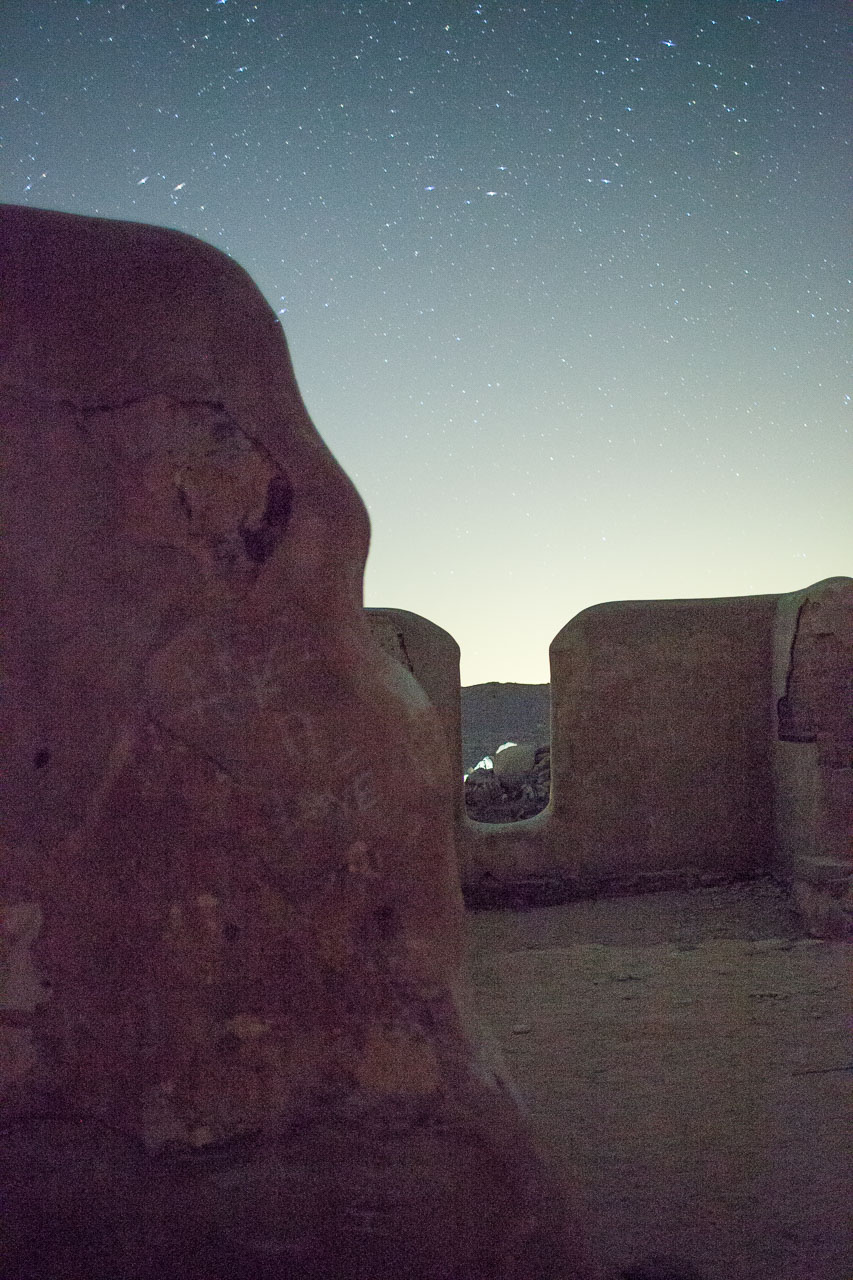
In this case, I saw the composition almost immediately. I’ll often begin with high ISO, hand-held shots to rough out a composition, but in this case, I already knew what I wanted to do. I went right to the tripod and made my first exposure. I still used a high ISO and wide aperture to keep the exposure time short, as I was interested in only the composition at this point.

High ISO test for compositionβ€”20 seconds, f/3.5, ISO 6400

High ISO test for compositionβ€”20 seconds, f/3.5, ISO 6400

The biggest challenge would be achieving critical focus using hyperfocal distance, because my foreground element was quite close to the cameraβ€”less than 10 feet away. As it was an important part of the composition, it had to be sharp. I hadn’t yet decided if this would be a star-point or star-trail shot, but either way, I also wanted the stars to be tack sharp.

Using the Field Tools app, I concluded that f/6.3 would give me sufficient depth of field when focused at the hyperfocal distance of 16.5 feet. (For more information on how I did this, see β€œUse Hyperfocal Distance To Maximize Depth Of Field At Night.”) I measured the distance from the back of the camera to a spot on the ground in the scene by taking five and a half big steps. I then put a flashlight at that spot, returned to the camera, focused on the light, and shot a test image to confirm that both the foreground structure and the stars were sharp.

Next, it was time to figure out the ambient exposure. By this point, it was almost completely dark, with just a hint of glow left on the western horizon. I used the high ISO testing technique, and came up with 30 seconds for my ambient exposure with an ISO of 6400 and my preselected aperture of f/6.3.

At this point, I had composed using high ISO shots, focused using the Field Tools app to determine the hyperfocal distance, and determined the exposure with high ISO testing. Then I decided to stick with 6400 for the time being to maintain star points. It was time to play!

Getting the Shot

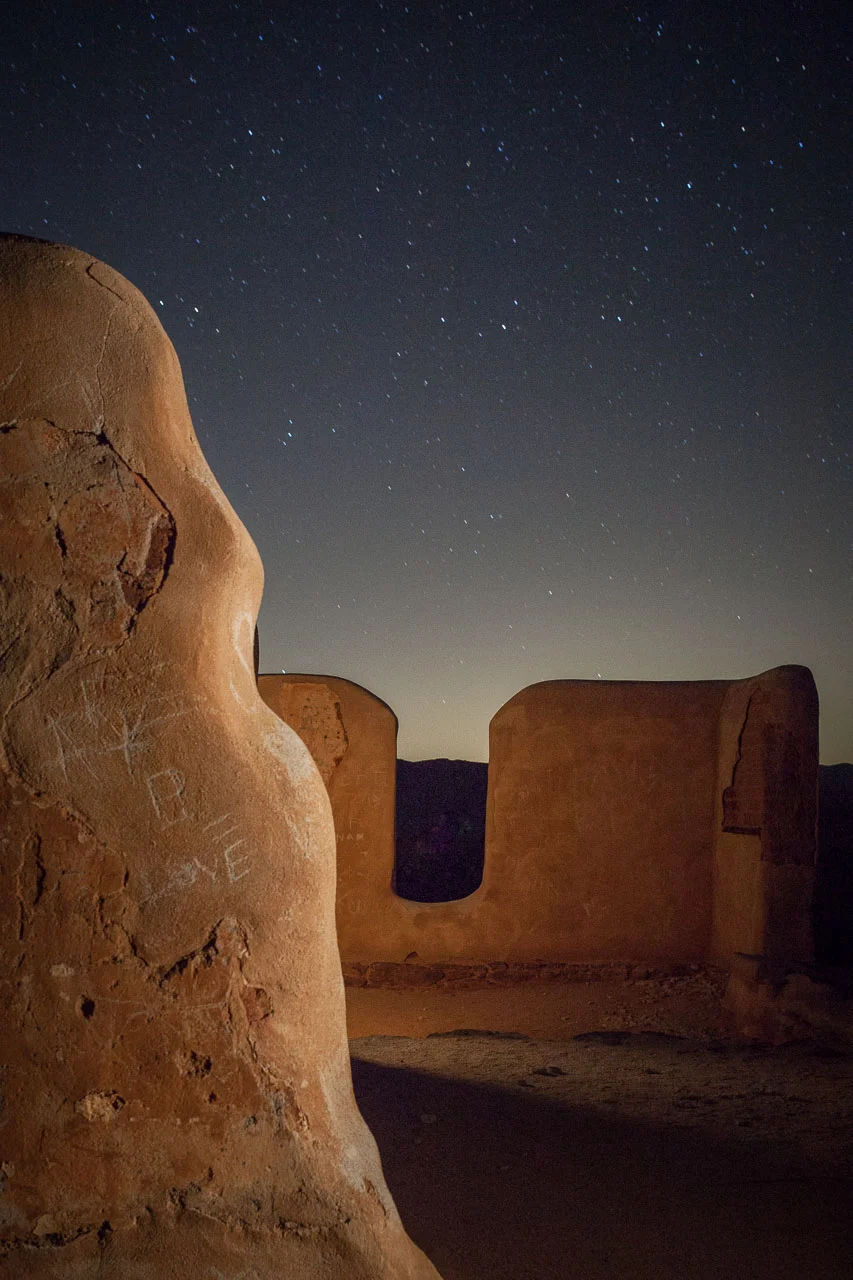
Using a Coast HP5R flashlight with a full CTO gel, I stood about 3 or 4 feet in front of the middle-ground structure, out of the frame behind the foreground structure, and swept the surface of the adobe with one quick pass of the light at low power, and also lit the ground toward the camera with a momentary flash of light.

Next, I stood out of frame camera-right in the foreground, and did a very quick pass with the flashlight along the vertical edge of the foreground element. Because I was using ISO 6400, it didn’t take much light to get the job done.

Variation #1β€”30 seconds, f/6.3, ISO 6400

Variation #1β€”30 seconds, f/6.3, ISO 6400

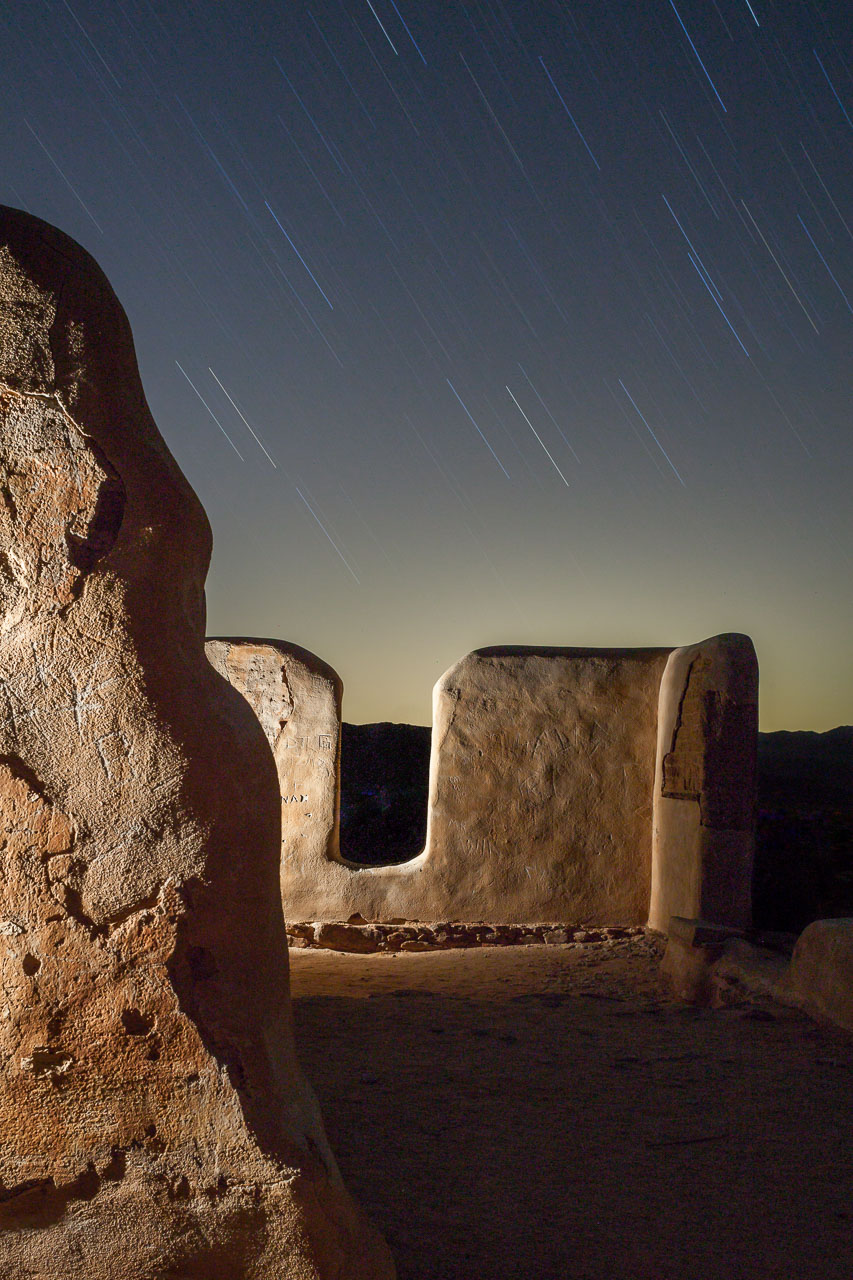
After doing several variations, I decided to try something different. For the next exposure, I chose to go long. The equivalent exposure to the previous one would have been 16 minutes at ISO 200, but I instead decided to go for 20 minutes just to get some longer star trails.

Aside from the star trails, the main difference between the short and long ambient exposures was that the extended time allowed for the last bit of twilight to build up on the horizon. The star trails created leading diagonal lines that paralleled the slope of the foreground element.

The light painting differed in that I moved closer to the rear wall, which had the effect of making the light harsher and more directional, and it brought out the texture of the surface. For the foreground wall, this time I lit from camera-left, scraping the light along the surface of the wall, leaving the edge in shadow.

Variation #2β€”20 minutes, f/6.3, ISO 100

Variation #2β€”20 minutes, f/6.3, ISO 100

For the final frame, I used a variation of the lighting technique from the first shot. I adjusted the exposure to an equivalent 3 minutes, f/6.3, ISO 800β€”mainly because I wanted more time to light than I was allotted in the 6400 ISO version, and as this photograph was meant mainly as an experiment in lighting, I was less concerned about having long star trails.

For the light painting in the rear, I moved further from the wall until I was standing just behind the foreground wall, pointing back to the other structure. Notice how the light is softer and more even, and spreads across a larger area of the ground. The light on the foreground wall is similar to the first lit version, but is cooler because I removed the CTO warming gel from the flashlight. I also took a step back away from the camera (i.e., toward the scene), which had the effect of keeping the camera-facing surface of the front wall in shadow, which emphasized the curved line rather than the texture of the surface. I made a few other variations, but these are the ones that I liked the best.

Final variationβ€”3 minutes, f/6.3, ISO 800

Final variationβ€”3 minutes, f/6.3, ISO 800

Chris Nicholson and I will be leading a workshop in Joshua Tree National Park from April 21 to 26, as will Gabriel Biderman and I the following week. Both weeks will include this location as well as the historic structures at Keys Ranch, an area that is usually off-limits at night. I’m looking forward to returning to these spots then to see how our NPAN workshop participants work with these fun and playful structures, and also to see how a year and a half has changed the way I see them.

Note: The second week is sold out, but we have a few spots remaining for the first week of the Joshua Tree workshop. As is the case with all of our Passport Series workshops, we’ll be teaching here only once. We hope you can join us!

Lance Keimig has been photographing at night for 30 years, and is the author of Night Photography and Light Painting: Finding Your Way in the Dark (Focal Press, 2015). Learn more about his images and workshops at www.thenightskye.com.

UPCOMING WORKSHOPS FROM NATIONAL PARKS AT NIGHT

Sharing the Experience(s): Celestial Celebrations (And More) in the National Parks

As the end of winter nears, our minds and hearts and cameras are ready to get outdoors again. (Well, at least for those who weren’t crazy enough to already be out there, like me, spending a few days in very snowy Rocky Mountain National Park a couple of weeks ago. Brr. But awesome.)

We here at National Parks at Night are particularly itchy to spend more time in the great wildernesses of our country photographing in the dark. Our 2017 workshop season is about to get underway, kicking off in Joshua Tree National Park next month, and aside from our workshops, all five of us like to get into the parks as much as we can. Fortunately for everyone, the parks offer myriad means and reasons to enjoy them.

Below I’ve detailed some of the opportunities you may be interested in taking advantage of, including a brand new centennial, night sky festivals and solar eclipse events.

Fee-Free Days

First, you might want to know how to get into the parks for free. They’re a great deal anytime, whether you’re buying a day pass for a single park or purchasing the much-recommended America the Beautiful annual pass. But if you want or need to get in fee-free, you can do so on the following days in 2017:

  • April 15-16 and April 22-23: National Park Week weekends
  • August 25: National Park Service Birthday
  • September 30: National Public Lands Day
  • November 11-12: Veterans Day Weekend

On those dates, all 84 million acres of the 417 National Park Service units are free to enterβ€”that’s all national parks, national monuments, national historic sites, national battlefields, national recreation areas, national seashores … you get the picture. (Ha! See what I did there?)

You can find more information here: β€œNational Park Service Announces Fee Free Days for 2017.”

The Whole World Goes Dark

April 22 to 28 is International Dark Sky Week. At this moment we are not aware of any national parks preparing or hosting events to coincide, but regardless, it’s a great time to get outdoors and be part of seven days of observing, photographing and championing the night. You can also enter and win the associated 2017 International Earth and Sky Photo Contest.

Chimney Rock in Capitol Reef National Park, one of 16 International Dark Sky Parks in the U.S., and one of only three U.S. national parks with a gold-tier designation from the International Dark Sky Association. Photo Β© 2016 Chris Nicholson.

Chimney Rock in Capitol Reef National Park, one of 16 International Dark Sky Parks in the U.S., and one of only three U.S. national parks with a gold-tier designation from the International Dark Sky Association. Photo Β© 2016 Chris Nicholson.

Moreover, this week is an excellent time to learn more about the host organization, the International Dark Sky Association (IDA). Among other things, they’re the ones who research, designate and support International Dark Sky Parks, 16 of which are in the U.S., and are uniquely wonderful for night photography:

  • Flagstaff Area National Monuments, Grand Canyon National Park and Grand Canyon-Parashant National Monument (Arizona)
  • Death Valley National Park (California)
  • Black Canyon of the Gunnison National Park (Colorado)
  • Big Cypress National Preserve (Florida)
  • Great Basin National Park (Nevada)
  • Capulin Volcano National Monument, Chaco Culture National Historical Park and Salinas Pueblo Missions National Monument (New Mexico)
  • Big Bend National Park (Texas)
  • Canyonlands National Park, Capitol Reef National Park, Cedar Breaks National Monument, Hovenweep National Monument and Natural Bridges National Monument (Utah)

Bonus Location: Also check out Cosmic Campground in New Mexico’s Gila National Forest. It’s one of only two International Dark Sky Sanctuaries in the world certified by the IDA.

Double-Bonus Location: There’s also Headlands International Dark Sky Park in Michigan, which, you can tell by its name, is kind of tailor-made for what we all like to do.

Happy 100th!

No, not to the National Park Serviceβ€”that’s so last year! I’m talking about the centennial of Denali National Park in Alaska, established in … (hold on, I’ll do the math) … 1917. They’ve already planned a bunch in a series of events to mark the birthday, including a Summerfest and a 100th Anniversary Celebration in the town of Talkeetna, right outside the southern borders of the park.

Denali is perhaps Alaska’s most famous national park, home to some of the most rugged, beautiful mountain landscapes in the U.S., along with countless grizzly bears, wolves and wolverines, and also lots of other animals that won’t try to eat you as you hike through the park’s Massachusetts-size wilderness, all by bushwhacking because it doesn’t really have a lot of trails. (Bring bear spray.)

In all seriousness, this place should be on any park-lover’s bucket list. Also, Denali’s night skies are amazing, and you may even be able to photograph aurora.

For more information, see Denali’s centennial webpage.

Bonus: Florida’s Dry Tortugas National Park is also celebrating a birthday this year. In October 1992, the island fortress and its surrounding spots of land 70 miles into the Gulf of Mexico from Key West, were all designated as a national park. This is an amazing placeβ€”unique, remote, quiet, and with stunning night skies, and it deserves some birthday love. We are not aware of any plans they have to officially celebrate this anniversary, but perhaps they’re considering our workshop there in July to be celebration enough. We’ll bring cake.

2017 Night Sky Festivals

Of course, photographers aren’t the only ones who enjoy seizing the night. The dark skies of our national parks are appreciated by scores of people who are passionate about other things too, such as astronomy, telescope viewing, constellation watching and so on. To corral all that fervor, several national parks offer night sky festivals, where professionals and enthusiasts gather to appreciate and gaze upon the most pristine dark skies in the land.

Lassen Dark Sky Festival. Photo courtesy Lassen Volcanic National Park, by volunteer photographer Alison Taggart-Barone.

Lassen Dark Sky Festival. Photo courtesy Lassen Volcanic National Park, by volunteer photographer Alison Taggart-Barone.

As we did last year, we’ve put together a list of all the night-sky festivals currently scheduled for national parks in 2017. We hope you can use this guide to track down some opportunities to share this wonderful natural resource with others. If you’re interested in more than attending, you might want to consider volunteering at one of these eventsβ€”the help is always appreciated.

And even if you can’t make it to one of these festivals, keep an eye on the calendars of any National Park Service unit that may be close to where you live or where you might be visiting. Many of them host single-night events throughout the year, such as star parties, full-moon walks, dark-sky presentations, celestial event watches, and more. Places that host these smaller opportunities range all over the country, including Saguaro (Arizona), Pinnacles (California), Hawai’I Volcanoes and Virgin Islands national parks.

(For the record, there are a few more national park night festivals that will probably be announced, but have not been yet, β€œat press time.” As we hear about these throughout the year, we’ll be sure to post details on our Facebook and Twitter feeds.)

Grand Canyon National Park

Grand Canyon Star Party, June 17-24, Arizona

Highlights: nightly presentations and slide shows, access to multiple telescopes and assistance from the Tucson Amateur Astronomy Association on the South Rim and the Saguaro Astronomy Club of Phoenix on the North Rim

Sequoia and Kings Canyon National Parks

Dark Sky Festival, July 21-23, California

Highlights: astronaut guest speakers, Crystal Cave tours, a special presentation on night photography in national parks

Bryce Canyon National Park

Annual Astronomy Festival, June 21-24, Utah

Highlights: hosted by Bryce Canyon’s astronomy rangers and local astronomical societies, keynote speaker to be announced

Lassen Volcanic National Park

Lassen Dark Sky Festival, August 11-12, California

Highlights: presentations and demonstrations by National Park Dark Sky rangers, NASA, International Dark Sky Association, RECON, Astronomical Society of Nevada and the Astronomical Society of the Pacific

Ochoco National Forest

Oregon Star Party, August 17-22, Oregon

Highlights: astronomy lectures, access to a β€œtelescope park,” the solar eclipse totality, 900 friendly amateur astronomers, and a truck you can shower in

Shenandoah National Park

Night Sky Festival, August 18-21, Virginia

Highlights: constellation tours, telescope viewing, star parties, presentations

Theodore Roosevelt National Park

Dakota Nights Astronomy Festival, September 15-17, North Dakota

Highlights: stargazing with rangers and astronomers, presentations by nationally recognized speakers, access to a β€œtelescope field”

Great Basin National Park

Great Basin Astronomy Festival, September 21-23, Nevada

Highlights: β€œAstronomy 101” presentation, astronomical viewing through 30 telescopes, free night-sky photography workshop by the Dark Rangers

Acadia National Park

Acadia Night Sky Festival, September 21-24, Maine

Highlights: workshops, speakers, hands-on experiences in the largest expanse of naturally dark skies in the eastern U.S.

Eclipse Events

This is not really a night thing, but definitely is a dark thing. Or maybe we can say it’s two nights in one day. Either way, 2017 is a year with a celestial rarity: a full solar eclipse that will streak across the skies of the U.S. on August 21β€”including directly over several units of the National Park Service. We at NPAN will be celebrating the event with our workshop in Montana’s Centennial Valley, but there are also plenty of opportunities elsewhere.

Photo courtesy of NASA Solar Dynamics Observatory.

Congaree National Park

South Carolinaβ€”One of the least-visited national parks in the country will also be one of the three that will have the totality pass directly overhead. Not many details of their β€œShadows and Science in the Wilderness of Congaree National Park” event have been announced, but viewing the eclipse in this swamplike floodplain forest would be rather surreal, to say the least.

Grand Teton National Park

Wyomingβ€”As of now, we are not aware of any official event being hosted by Grand Teton, but the Jackson Hole area is more than ready for the dark sun to pass overhead. Hotels have been booked up for months, and the town of Jackson (at the southern tip of the national park) could be the hottest hotbed in the country for viewing the eclipse. Grand Teton is not huge, and there will be a lot of people, so I recommend getting off the beaten pathβ€”ideally, up onto the mountain trails, or at least along the little-traveled, four-wheel-drive-only Grassy Lake Road.

Great Smoky Mountains National Park

North Carolina and Tennesseeβ€”The bad news is that Great Smoky Mountains is the most visited national park in the U.S. and midsummer is its busiest time of year, so chances are good that it will be a tad crowded when the sun turns off. The good news is that GSM is the most popular park in the U.S. for good reasons, the totality of the eclipse will pass over the entire western half, and three awesome locations will be hosting official viewing events: Clingmans Dome, Oconaluftee and Cades Cove (one of my favorite photography spots in the whole park system). See the GSM’s 2017 Solar Eclipse page for more information.

Other National Eclipse Sites

In addition to those three national parks, other NPS units will also experience totality and/or host eclipse events (click links for details on organized happenings):

In addition to those sites, several national forests (technically Department of Agriculture lands, but still pretty) will also be darkened by the eclipse. These can be great places to go for a better chance at solitude, as they tend not to be strong tourist attractions like the national parks and monuments are. National forests in the eclipse’s path include:

  • Salmon Challis and Sawtooth (Idaho)
  • Mark Twain and Shawnee (Missouri)
  • Nantahala (North Carolina)
  • Willamette, Ochoco, Umatilla and Malheur (Oregon)
  • Francis Marion (South Carolina)
  • Chattahoochee (Tennessee)
  • Bridger-Teton, Shoshone and Medicine Bow (Wyoming)

And one final place that’s a fantastic location to photography an eclipse, even though it’s not a national land, is Carhenge in Nebraska. Seriously. It might even be cooler than photographing an eclipse at Stonehenge.

If you can’t make any of those opportunities, go to the parks anyway! The night skies are gorgeous, and you never know when you might find a ranger program to make the experience even richer.

Wherever you go, wherever you roam, we hope to see you out there, seizing the night.

Chris Nicholson is the author of Photographing National Parks (Sidelight Books, 2015). Learn more about national parks as photography destinations, subscribe to Chris' free e-newsletter, and more at www.PhotographingNationalParks.com.


UPCOMING WORKSHOPS FROM NATIONAL PARKS AT NIGHT