Photo Essay

Hanging Ten: Our Favorite Photos of 2022

As time seems to accelerate with each passing year, we can look back at 2022 as when the world got its collective groove back. If 2020 is best remembered as the year we’d rather forget as the full force of Covid shut down the globe, and 2021 was a year of starts and stops as one variant after another reared its ugly head, then 2022 is the year we hit full stride and really got back up to speed.

Here at National Parks at Night, we ran a full schedule of workshops and tours, including a couple that had been twice rescheduled due to the pandemic. We ran 23 workshops and tours, six of which were international trips, including our first aboard a sailboat and our first to the Faroe Islands. We also welcomed some wonderful new people into the National Parks at Night community with our first Intro to Night Photography workshop in Death Valley.

It was a productive year for image-making too. Tim dug deeper into blue hour blends. Matt focused on rendering astro-landscapes through panoramas, vertoramas and little planets. Chris leaned into natural-looking foregrounds for night photos, whether blue hour blends, moonlit foregrounds, long exposures to fill in shadows, or employing Low-level Landscape Lighting (LLL) with a dim and cool light. Gabe leveled up his post-processing skills, getting more comfortable with blending, masking, stacking and compositing. I used new LLL tools to repurpose lighting skills I had developed a couple of decades ago.

It’s always a challenge to pick our favorite images of the year, but it’s also a great opportunity to look back at the images we made, to revisit the places we went, and especially to remember the people we traveled and worked with while making those images.

Below you see each of our top two picks from the night photographs we made in 2022.


Chris Nicholson

Moon Over Mount Baker

Nikon D5 with a Nikon 14-24mm f/2.8 lens. 10 seconds, f/5.6, ISO 800.

The Mount Baker Wilderness is one of my favorite places in the world. It’s part of Mount Baker-Snoqualmie National Forest, in a stretch of Washington state’s North Cascades mountains, bordering the wilds of North Cascades National Park. Walking the trails is like walking at the edge of heaven.

Gabe and I brought a group to the area this summer. We stayed in a chalet in the mountains for a couple of nights, where we had access to some of the most beautiful alpine scenery in the U.S. On the second night we took a short hike, and I looked for an interesting way to photograph an area I’d shot twice before. The moon over Mount Baker was calling to meβ€”the balance of moonlight between the sky and landscape was perfectβ€”but I was struggling to find an intriguing foreground.

I walked a little further up the trail, turned a bend around some large glacial erratics, and came upon this expanse of ice and snow. Perfect! I had to climb one of those erratics to get the angle right. The boulder didn’t have enough room for both me and my tripod, so setting up was a little precariousβ€”but worth the trouble.

I spent a lot of time this year working on natural-looking foregrounds to night photos, and using moonlight is one of the techniques I most enjoy. The serenity and dynamics that combine in this scene are a perfect example of why.

Star Trails Over Ocean Cliffs, Acadia National Park

Nikon D5 with a Nikon 24-70mm f/2.8 lens. 20 minutes, f/6.3, ISO 200.

From one corner of the mainland to the other, I moved from North Cascades in summer to Acadia in fall. On our last night in the latter, I brought Matt and a couple of our friends to one of my favorites spots in the parkβ€”one of my favorites for either photography or hiking or even just for enjoying the sound of waves swishing onto the cliff-bottom shores.

I made this photo while waiting to make another. I’d scouted a composition that required facing west, which is the last direction of sky to get dark at night. I wanted to stay productive while waiting, so I wandered around the rocks and eventually found this eastward view toward the entrance to Frenchman Bay.

Long exposures aren’t always easy to visualize, and that was the case with this setup. I wasn’t sure I’d like the image. But I had time, so I dilated it into this exposure. And when it was done, I was very glad I’d opened the shutter.

The scene was bathed in moonlight, so I didn’t need to do any blending or light painting to get detail in the foreground. There was so much moonlight, in fact, that the stars were getting a bit washed outβ€”so I mounted a polarizing filter to make the moonlit sky pop a little better.

Once all that was done, executing the photograph was a matter of a simple 20-minute exposure and some easy tweaks in post.

Gabriel Biderman

Liberty Bell, Milky Way and Car Trail

Nikon Z 6 with a Nikon Z 14-24mm f/2.8 lens. Foreground: 2 minutes, f/4, ISO 1600; sky: 8 seconds, f/2.8, ISO 12,800.

I was incredibly fortunate in 2022 to travel 70,000 miles, to 4 countries, to 15-plus national parks, adding almost 50,000 clicks to my cameras. Needless to say, I explored and taught a lot under the stars.

One of the most epic trips was my 3 weeks in the Pacific Northwest where I visited all three of the national parks in Washington, none of which I had previously been to. I was excited most about the least visited one, North Cascades National Park.

Known as β€œthe American Alps,” North Cascades is challenging to explore, but once you peel back the layers it just gets better and better. The craggy mountains reminded me of the ancient peaks of Lofoten. And of those, Liberty Bell, to me, won the prize as the most distinguished of the peaks. It doesn’t hurt thatβ€”in this photo, anywayβ€”the Milky Way rises above it and car trails act as a mirror below the peak.

We brought our workshop here and figured we’d stay for an hour or 2, but we all fell so in love with this location that we ended up staying the whole night.

There aren’t many times that I choose one spot to set up and happily stay all evening. But we had so much fun. We were all careful to compose with the Milky Way and add the road below. Some of us composed horizontally and some vertically. Most of us were shooting noise stacks because after we took our twilight base shot it got really dark and we were pushed to ISOs of 12,800 and beyond.

We’d shout out whenever a car was coming up the valley, and you’d hear the triggers firing, as well as our giggling that we’d captured another successful image of several awesome elements coming together.

We could feel the world rotating and the Milky Way moving closer and closer to the peak. Should we stay to see how it looks coming out of the top? Will it look like a volcano erupting with space dust?

The answer is yes, but that is a picture for another time. This one was similar to many that our group shot, and I don’t care. It genuinely brings me back to Liberty Bell and the excitement we all shared when all the stars, cars and mountains aligned.

Auroras Over Sleeping Bear Dunes National Lakeshore

Nikon Z 6II with a Nikon Z 24-70mm f/2.8 lens. 8 seconds, f/2.8, ISO 12,800.

Sleeping Bear Dunes National Lakeshore is one of my favorite places in the park system. The sand dunes, picturesque farmsteads, historic buildings and pristine dark skies keep me coming back for more. The people who live in the small towns that dot this Lake Michigan region are so warm and welcoming that I feel right at home.

I created this image during a workshop I teach for the Glen Arbor Arts Center. We experienced auroras on two nights! Sleeping Bear is at the 45th parallel, the halfway mark between the equator and the North Pole. That’s pretty far north for Michigan’s Lower Peninsula and the area is definitely prone to green, red and purple auroras.

This night was magical. We were chasing spiking and Steve auroras, and we settled on composing the light show and stars in reflecting pools of water. We were having a blast, but the composition was missing … well, the human element, to express how excited both the atoms and we were. So I set up the intervalometer and walked to the other side of the pool, careful to place myself close to the water so the reflection would be from head to toe.

Lance Keimig

Thurmond Train Station, New River Gorge National Park

Nikon D780 with an Irix 30mm f/1.4 lens. Two blended exposures of 15 seconds and 2 minutes, f/3.5, ISO 800.

I had long been aware of the semi-ghost town of Thurmond, West Virginia, as it reminds me of the sort of location used by O. Winston Link, train night photographer extraordinaire and one of my heroes. I had expected it to be a highlight of my visit to New River Gorge National Park, and the little town did not disappoint.

On the afternoon of the night I visited, there had been a tremendous thunderstorm, and all but emergency power was out in the area. Luckily for me, this also caused the few trains that passed through the town that evening to stop at Thurmond station and wait for traffic down the line to clear. Their headlights provided ample illumination and just the right atmosphere when combined with the heavy wet summer air lingering in the gorge after the storm.

I didn’t think that the train would stay put long enough for me to make some good exposures, but after a minute or two staring at the scene and feeling as if I’d been transported back in time, I hustled down the track to a point halfway between the resting engine and the red signal lights that were holding the train in place.

I set up low to the ground and quickly determined that multiple exposures would be required to hold detail in both the highlights and shadows. I made a number of exposures, leaving myself options to either manually blend a couple of layers or to make an HDR composite if that turned out to be the better option. It did. I was excited that a car approached from across the river, lighting part of the bridge and filling in some shadows in an otherwise dark part of the frame.

I spent the whole night enraptured by the little town, thinking of Link, and feeling so pleased to finally get to create images in his footsteps.

Eidi, Faroe Islands

Nikon D780 with a Tamron 15-30mm f/2.8 lens at 15mm. 3 minutes, f/4.5, ISO 800.

During our pre-workshop scouting in the Faroe Islands, Tim and I took a slight diversion to the outskirts of the little town of Eidi to check out a soccer pitch near the coast that we had seen as we came down the mountain above the town. I was much more interested in the town, but Tim saw the potential of this coastal view.

We didn’t shoot that day, but we did come back with the workshop one night after a wonderful Ethiopian meal prepared especially for our group at Rose’s Cafe a few miles away.

We didn’t get to do as much night photography as we had hoped, in part due to the weather, and in part due to sheer exhaustion from the long, full days we were experiencing. It was in fact raining off and on this night, but the group toughed it out and we photographed at the water’s edge for about an hour and a half. At one point the clouds opened up with the moon rising behind them, and that combined with waves crashing on the rocky shoreline and a long exposure made for one of my favorite images from our 18 days in Faroe, and of the whole year.

The Faroe Islands were a new destination both for me and for National Parks at Night in 2022, and in a year full of outstanding adventures with outstanding colleagues, it stands out as my favorite recent trip and the place I’m most excited to get back to.

Matt Hill

Half Dome Forest Fire Tracked Vertorama
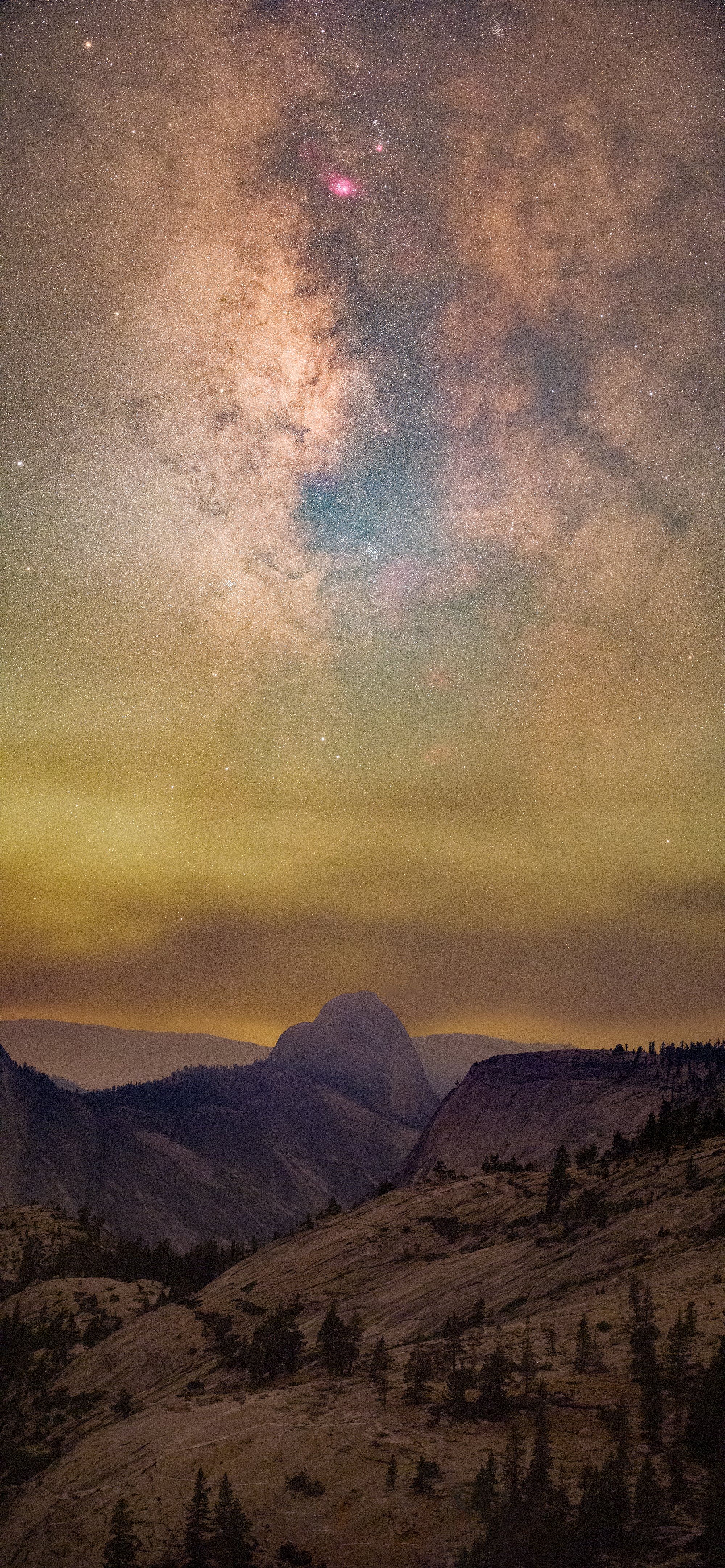
Astro-modified Nikon Z 6 with a Nikon 70-200mm f/2.8 lens and FTZ Adapter; foreground tracked with a Benro Polaris. 30 seconds, f/2.8, ISO 12,800.

When Lance and I were in the Eastern Sierra for a workshop this year, there were scattered forest fires that occasionally blew smoke in a direction that affected us. At Olmsted Point there is a spectacular view of Half Dome, and the Milky Way core was going to line up vertically over it. What an opportunity!

Alas, upwind of the iconic peak was a forest fire and the smoke was drifting right into the view. Some people might pout, stomp their feet, shake their fists at the heavens and shout, β€œI want clear skies!”

Not me. I saw that smoke and said, β€œWow, now this isn’t something I’ve ever seen before! It’s something real that is happening now and tells a story of the drought and fire cycles. How can I make this work for an image?”

It was after twilight, but the fire and starlight provided enough illumination for exposures at ISO 12,800. And I wanted Half Dome, which is quite diminutive from that vantage, to really stand out. So I put on a 70mm lens and composed for a vertorama where the landscape and sky were exposed at the same settings to blend well.

I shot with my astro-modified Nikon Z 6 to pull out more of the reds and magentas. I exposed the sky first to see how well the stars poked through the low smoke layer. Using the Benro Polaris to track that image for 30 seconds was a breeze.

Liking the results, I recomposed the landscape frame to include the granite valley walls leading up to Half Dome, and then completed the two-panel vertorama.

Animus Forks Little Planet

Nikon Z 6II with a Laowa 12mm f/2.8 lens. Foreground: 18 blended frames shot at 1/4, 1 and 4 seconds, f/11, ISO 800; sky: 10 stacked images shot at 15 seconds, f/4, ISO 12,800.

When we arrived at the abandoned mine town in Colorado at 11,000-plus feet, I was awestruck. I wanted to try to get everything I saw and felt into one photo. Reasonable, right? Of course. A spherical panorama would solve that! And PhotoPills showed me that the Milky Way arch from mountain peak to mountain peak would make for a strong β€œLittle Planet” edit.

So I set up a tripod along the river’s edge and embarked on the most ambitious panorama I’ve ever attempted. (Watch your inbox for a blog post dedicated to the process from tip to tail.) The short story is that I made an HDR multi-row panorama of the landscape, left my setup in place and walked away for a few hours. I came back when the Milky Way hit the right position, then made sets of pano images of the sky to noise-stack in post.

I stitched the landscape and sky images separately in PTGUI Pro, then blended them in Photoshop. I did this process twice to find just the right shape for the little planet projections.

It was a risky idea, but I am super proud of how it turned out. And it’s inspired me to attempt even more blue hour spherical panorama blends in the future.

Tim Cooper

Northern Lights Near Fredvang, Lofoten Islands, Norway

Nikon Z 6II with a Nikon Z 14-24mm f/2.8 lens, lit with a Luxli Fiddle panel light and a Coast HP7R flashlight. 5 seconds, f/2.8, ISO 3200.

Sought after by photographers and night sky enthusiasts, the northern lights are a bucket list item for many folks. On our March trip to Norway, I was lucky enough to witness these amazing lights over one of the world’s great landscapes: the Lofoten Islands. While there are many places to view the aurora borealis in the Northern Hemisphere, not all supply the dynamic mix of mountains and beaches that Lofoten provides.

Three days after the group arrived we were treated to our first aurora opportunity. Keeping an eye on several aurora tracking apps, we headed out with high hopes. As we were photographing at a local beach, they finally appeared. The mix of waves, mountains and clouds with auroras was beautiful, but it soon petered out. We decided to try another location in the hopes they would reappear.

I’ll never forget the excitement in the van as we recounted the beauty we had just witnessed along with the fun of chasing some more. Once we arrived at our new location, we quickly scrambled out of the van and got to work.

I remember snapping a couple of quick frames before I headed along a trail that led to an inlet. Turning around I saw the trail leading directly back to the glow of green. Beautiful!

To be sure I captured something, I snapped a few quick shots. Then I set up a Luxli Fiddle to illuminate the foreground. This panel light coupled with a handheld Coast HP7R flashlight brought out the texture of the grasses and helped define the trail. I was in heaven.

It felt like I shot a thousand images while watching the auroras dance and change shapes. Everyone had plenty of time to capture the magic. The northern lights are truly phenomenal and experiencing them with like-minded folks was a true gift.

Star and Car Trails Near Checkerboard Mesa

Nikon Z 6II with a Nikon Z 14-24mm f/2.8 lens. 30 stacked frames shot at 30 seconds, f/4.0, ISO 800.

I love lines in my photographs. Both real and implied lines generate impressions that influence the feel of the photo. Converging lines suggest speed, vertical lines suggest stability and horizontal lines give a feeling of calm. My favorite lines, however, are curved ones. These lines are elegant. They are in no rush to get you through the composition, and they make you slow down and take in more detail.

Car trails and star trails are two very common types of lines we encounter in night photography. The National Parks at Night team will tell you that my love of car trails borders on an obsession. It was no surprise to Chris, then, when I found this scene while we were scouting locations for a spring workshop in Zion National Park.

Climbing up from the Zion-Mount Carmel Highway near Checkerboard Mesa, we were searching for dramatic red rock formations to use as foregrounds. The eastern side of the park is noted for its swirling sandstone and solitary trees, so these subjects were in my mind’s eye as we climbed the ridge.

Not finding my imagined scene, I switched from looking for a particular subject to seeing what the area offered. That type of β€œsearching for a specific thing” has often made me miss great opportunities, so I am glad I was able to switch mental gears that night.

After walking around with an open mind I saw the road bisecting the peaks and leading straight to the sky. I was thrilled. In typical (for me) fashion, I made plenty of images to capture the best car trails and many more to capture the night sky. To round it off, I had to make several frames using different focus points to ensure that the foreground was sharp front-to-back at my wide-open aperture setting.


Your Turn

What was your favorite night photograph of 2022? We’d love to see it! Share in the comments below, or on our Facebook page, or on Instagram (tag us @nationalparksatnight #nationalparksatnight #seizethenight). Be sure to tell a story tooβ€”the technical aspects, the challenge overcome, or a tale of the experience.

Then … have a Happy New Year!
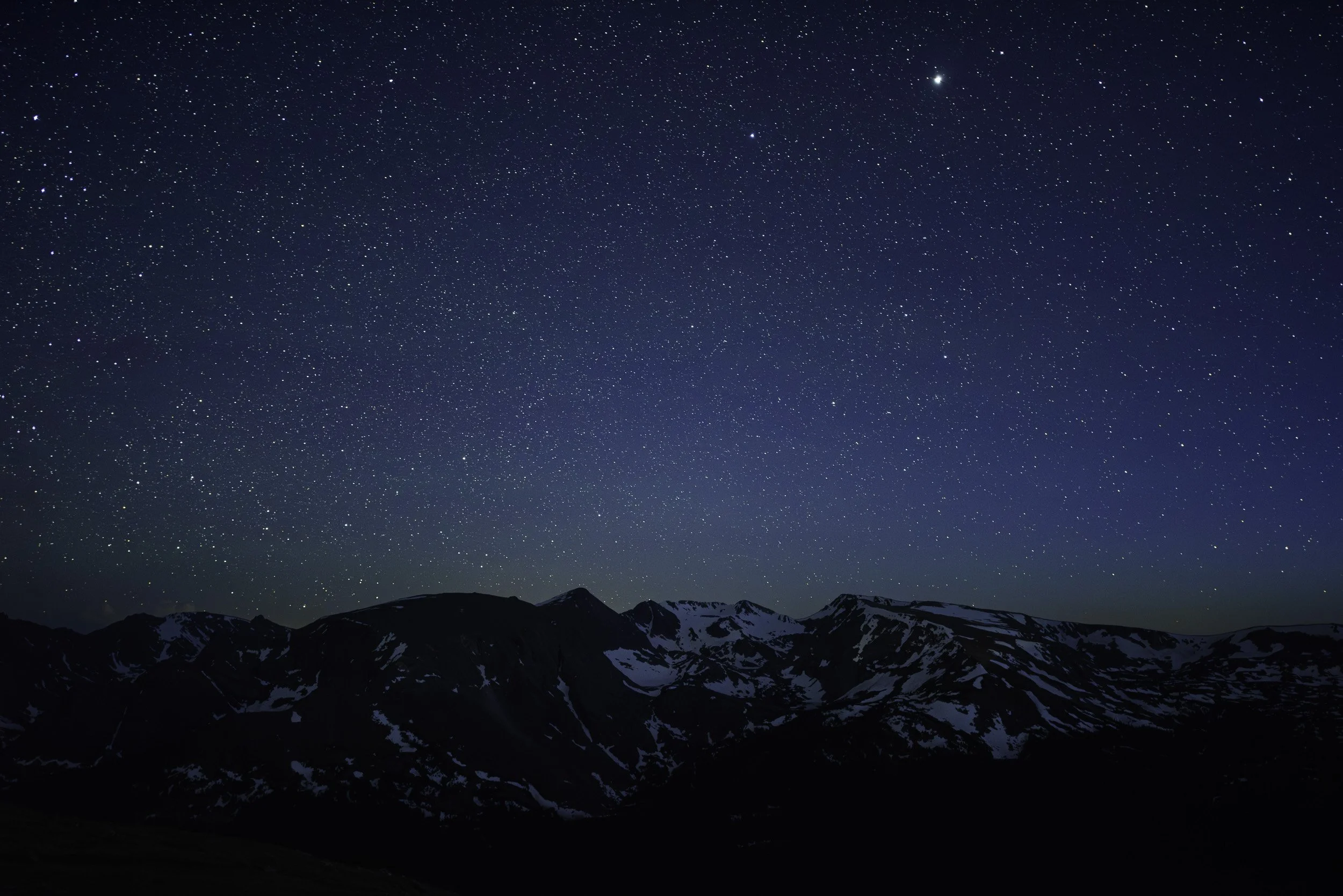
Lance Keimig is a partner and workshop leader with National Parks at Night. He has been photographing at night for 35 years, and is the author of Night Photography and Light Painting: Finding Your Way in the Dark (Focal Press, 2015). Learn more about his images at www.thenightskye.com.

UPCOMING WORKSHOPS FROM NATIONAL PARKS AT NIGHT

10 Pictures, 10 Tales: Our Favorite Night Photos of 2021

2021 was a challenging year for all. But the overall themes that prevailed were hope and celebration, as many of us could finally rejoin the great outdoors with friends and family. At National Parks at Night, we were so thrilled to see our community in-person and to share sacred spaces under the stars.

Now, at the end of 2021, as in the past we look back on our year’s worth of images and note the ones that are most precious to us. Choosing your favorite photos can be a daunting project. What makes a 5-star image? Is it the technical work that went into creating it? Or the reminder of a very special night? Which photographs still continue to shine and what new gems have been uncovered?

As you read about each National Parks at Night instructor’s favorite two photographs of the year, the underlining theme is that each had the power to transport us back to that precise moment in time. The feelings that come rushing back can be a combination of everything that aligned to create the image. It transports us back and hopefully takes you on a similar journey.


Chris Nicholson

Stars Over Zumwalt Meadows, Kings Canyon National Park

Nikon D5 with a Nikon 14-24mm f/2.8 lens. Two blended exposures shot at 30 seconds, f/5.6, ISO 400 (foreground) and 20 seconds, f/2.8, ISO 8000 (sky).

When I was writing my book Photographing National Parks a few years back, I spent a lot of time in coffee shops in Queens, New York, where I lived at the timeβ€”as well as in coffee shops in my hometown in Connecticut and in other places I traveledβ€”researching and writing about various places, including some I’d never been to. I recall writing about fantastical-sounding spots such as Cinder Cone in Lassen Volcanic National Park, and Grand View Point in Canyonlands, and Artist Point in North Cascades, and hoping that someday I’d get to visit them.

In the following years I was fortunate that my book carried me to these places and more. On multiple occasions I’ve stood gazing at grand vistas, thinking back to my days leaning over my laptop in some random Starbucks learning and writing about these places, and marveling at the journey that brought me to be there in person.

Another such place was Zumwalt Meadow in Kings Canyon National Park, which I wrote about sometime around 2013 and finally was able to visit in 2021. From my book: β€œZumwalt Meadow is easy to hike to and around, and is pleasant to photograph, as well. The meadow sits on the valley floor, with lush greenery providing a softer aesthetic than found in most other areas of the park. The Kings River flows through the grasses, framed by the distinctive granite walls of Grand Sentinel and North Dome.”

Zumwalt sits near the end of the furthest mile of paved road in Kings Canyon. Lance and I ventured out there, scrambled about 30 feet up some talus, set up our tripods for a dusk foreground exposure, then waited under a peaceful, spectacular night sky for a starry background exposure.

For a long time I sat on a boulder, just watching this beautiful space on Earth roll into darkness, once again remembering where I’d been and feeling grateful for where I’d come.

Tuolumne River and Meadows, Yosemite National Park

Nikon D5 with an Irix 11mm f/4 lens. Two blended exposures shot at 4 minutes, f/4, ISO 2000 (foreground) and 25 seconds, f/4, ISO 8000 (sky).

My next favorite photo from 2021 is also a blue hour blend, which isn’t much of a coincidence because it’s a technique I deliberately tried to employ more during the year.

This time I was in Tuolumne Meadows in Yosemite National Park. It’s a beautiful location in the High Sierra region of the parkβ€”an area that for many visitors is practically ignored in favor of the oft-visited valley.

At 8,600 feet, Tuolumne is one of the highest-elevation meadows in the Sierra Nevada. The Tuolumne River quietly bisects the glacier-carved meadow, meandering among erratics and past scattered lodgepole and Jeffrey pines, supporting a teeming riparian ecosystem that’s practically an oasis in the beautiful yet rugged and vast sub-alpine landscape.

I was again with Lance, and we hiked into the meadow to a beautiful view of the Tuolumne River flowing toward the distant mountains. The moon was new, so I knew the landscape would be completely dark once twilight was over. Phrased another way, it was a perfect situation for a blue hour blend.

I set up my tripod and used the ultrawide Irix 11mm f/4 lens to fill the foreground with the river. I made a few exposures during dusk, then left the setup while heading off to shoot with a second camera for awhile. I came back once the stars were shining, and made several exposures over the course of an hour or so, capturing the Milky Way in different spots as it drifted along the horizon. I later composited two of the frames in Photoshop to create the final image.

Gabriel Biderman

Officer’s Row, Sandy Hook

Nikon Z 6 with a Nikon Z 24-70mm f/4 lens at 24mm. 30 seconds, f/11, ISO 1600.

My new year’s resolution for 2021 was a simple one: to get out more at night and photograph! I live in Brooklyn, New York, and spent most of 2020 indoors; I didn’t travel farther than my Vepsa could take me.

So in early January my wife and I decided to spend a weekend with a good friend of ours in New Jersey, right outside Sandy Hook. Part of Gateway National Recreation Area, Sandy Hook is a very popular spot in the warmer months, but in the winter when the temperature is below 20 F, not so much.

For the two nights I poked around with my camera, I was bundled up like an Arctic explorer. Everyone thought I was crazy for going out, but I would not be daunted. This was the first national park I had stepped into in over a year, and I was energized!

Officer’s Row is one of the most scenic spots at Sandy Hook, especially for the brilliant sunsets that light up the sky. I tried a variety of focal lengths, cropping in tight to one, three or five houses. It was nice, but almost too simple. I continued to move back to include more buildings and then I realized that the trees at the other end of the field stood in a row similar to the homes. By adding the trees, it created the perfect foreground to give a better sense of place. Officer’s Row is not just the homes they lived in, but the field where military folk played with their families.

It was a cold and lonely experience, but one that jump-started my 2021 relationship with national parks at night.

Reacquainted with the Night, Joshua Tree National Park

Sony a7S III with a Sony FE 12-24mm f/2.8 lens at 18mm. 13 seconds, f/2.8, ISO 6400.

I was thrilled to have my first road trip of the year be to a familiar and always inspirational place, Joshua Tree National Park. I was also excited to be sharing the experience with my good friend and co-teacher, Matt Hill. We both packed our kitchen sinks for what would end up being a 3-week road trip. Not only did I bring trackers, tripods and time-lapse devices, but I also borrowed every Sony A7 and A9 camera and most of their wide and fast glass.

Matt and I had 3 days to scout and enjoy the night skies as we prepared for an upcoming workshop. But with so much gear, I got stuck in β€œtesting” mode and created very few images for myself.

After the workshop we stayed an extra night to team with Chris and Tim to record our OPTIC Imaging Conference presentation for B&H Photo. That was a long, focused night that required the four of us to play multiple roles from creative to producer and grip!

During a break in the filming Matt went to lay on one of Joshua Tree’s many boulders. He was exhausted and needed to re-energize by taking a few moments to be one with the stars.

I immediately took one of our Luxli Fiddle LED panels and boomed it up and over him. I love the spotlight effect that made it seem like Matt was bathing in the moonlight. For the camera, I chose a low angle to create a new horizon line that makes it seem like Matt is floating on a wave of rocks.

This could be one of my favorite night portraits I have ever made, because to me Matt is experiencing something I have done and that we all need to remember: Take a break under the stars and get reacquainted with the night.

Lance Keimig

Julie at Bass Harbor

Nikon D780 with a Tamron 15-30mm f/2.8 lens at 29mm. Six composited frames exposed at a range of 2 to 30 seconds, f/5.6, ISO 100.

This image was made more or less as a grab shot as the last twilight was fading at Bass Harbor, Maine, during our PhotoPills workshop in Acadia National Park.

We had arrived just as the light was fading, and by the time the group dispersed and got to work, it was too late to get it all in one exposure. Not to be deterred, I did a six-frame bracket at 1-stop intervals. I was struck by the scene, and even in the fading twilight the light was gorgeous. Our workshop participant Julie had set up on the pier, and at first I was bummed that she was in my frame, but in the end I think that she adds to the image.

I’m attracted to the cool blue colors punctuated with one sodium vapor streetlight and a few warm lights in the houses, plus the stillness and the simple architectural shape of the shack on the pier. Julie adds another element, and marks the context for my memory.

To me, it’s a great example of how a photograph has the power to transport me to a different place and time. As I sit here typing on a cold December evening in Vermont, I’m taken back to coastal Maine in the height of summer, and all of the places spent over the course of a week with a fine group of people making images. It’s personal, and I like that. The viewer will make whatever they want or nothing at all of the image, but for me it is a place-keeper for a boatload of memories.

Tanguy Key

Nikon D750 with a Nikon 28mm PC f/3.5 lens. 15 seconds, f/5.6, ISO 6400.

After completing our Everglades National Park workshop in April, Chris and I took a couple of days to explore the Florida Keys. I am so out of my element in Florida. Culturally, geographically, meteorologically, Florida is just not in my wheelhouse. I admit, after a long New England winter it was nice to be wearing shorts and a Hawaiian shirt while those at home were still wearing down jackets, but still …

The drive from the Everglades into the Middle Keys took longer than we had anticipated, and longer than Google had promised, and the night-photo opps visible from the main drag were few and far between. I didn’t mind; I was just along for the ride and happy to experience this strange new environment.

This image was made at the foot of one of the causeways that connects the keys, where the setting comprised a vast expanse of sea and sky punctuated with sticks and stones and various synthetic detritus. The tropical colors and minimalist landscape reminded me of the French surrealist painter Yves Tanguy, and I made several compositions that night in his honor that had a similar feel.

I’m smitten with this compositionβ€”the repeating shapes of the stones, the sticks, the horizon and the wires, and the graduated turquoise hues of water fading into sky all work together to make this one of my surprise greatest hits of 2021.

Matt Hill

White Pocket

Nikon Z 6 with an Irix Cine 11mm T4.3 lens, lit with a Luxli Fiddle. Eleven frames shot at 20 seconds, T4.3, ISO 12800, stitched in PTGui and post-processed in Lightroom.

Until this year, one of my bucket list experiences was an overnight at White Pocket in the Vermillion Cliffs National Monument of northern Arizona. Boy am I lucky to have scratched this one off the list!

This location is on BLM land, and you can camp there overnight without a permit. If planning a visit, always check ahead of time, as it’s a major commitment to drive out there (in deep, deep sand). You might also consider hiring a local guide, like we did. They provided camp gear and food, and we drove ourselves in a high-clearance vehicle.

All disclaimers aside, this area is precious, wild, remote and located in dark, dark skies. Being there seems like being on the surface of another planet. The various colors and textures of rock are mesmerizing, and a joy to light paint.

I had been imagining this pano for years. Ever since my first daytime-only visit I’d been wanting to photograph the Vortex and Castle Rock paired with a low Milky Way.

When the chance finally came, I was with Gabe and we interpreted this scene in different ways. But we both had our tripod legs on the precipice of the Vortex, which dips down much more precariously than this image suggests.

The final pano is a PTGui blend of 11 images made from an ultrawide 11mm Irix Cine lens, in vertical orientation. As usual, I aggressively overlapped the images for a seamless stitch. I shot at ISO 12,800 to balance out the native T4.3 maximum aperture. And each 20-second exposure was halfway between Accurate and Default NPF exposure durations for crispy star points.

Lighting the monumental landform was tricky. I used a Luxli Fiddle to bounce light off the stone wall behind usβ€”literally the only option as my angle of view exceeded 200 degrees.

This now hangs on my wall as a 72-inch Xposer print.

Bethesda Fountain, Central Park

Nikon Z 6II with a Nikon Z 24-70mm f/2.8 S lens at 34mm, lit with two Coast HP7R flashlights. 60 seconds, f/6.3, ISO 100.

During our New York City workshop with Gabe, it felt great to get back to my roots. Gabe and I had met and fostered our friendship over night photography in NYC, so returning to the noise and a cacophony of light sources was quite satisfying.

Bethesda Fountain is an icon within the world-famous Central Park. This was not my first time shooting here, but it was certainly the best lighting I’ve ever had. And that was due to teamwork!

Gabe and I placed our flashlights on the fountain’s edge to add sparkle to the gilded statuary. The light also filled in the dark areas in the water and under the body of the fountain. We placed the first light slightly left of camera, the second perpendicular and to the right. The result is, for me, a strong example of well-defined portrait lighting.

Of particular challenge was defining the falling water. The camera did capture all the info I needed, but some post-processing magic in Lightroom was required to render this version. Applying a Select Subject mask allowed me to control the highlights and contrast in the water. I added a Select Sky mask to darken the sky, and increased contrast. Finally, I darkened the bright clouds low to the horizon with a brush mask and emphasized the paths of the water cascading down to the final raised pool.

What you don’t see was the most β€œNew York Moment” of all: the half-naked man collecting change from the bottom of the fountain during this exposure. Ah, New York, how I love you.

Tim Cooper

Desert Light, Joshua Tree National Park

Nikon Z 6II with a Nikon Z 12-24mm f/2.8 lens at 24mm. Multiple blended exposures of 30 seconds, f/8, ISO 1600 (foreground) and 15 minutes, f/8, ISO 100 (sky).

With its amazing array of rock formations, desert flora and pure night skies, Joshua Tree National Park is a night photographer's paradise. I was fortunate enough to be there for the near simultaneous events of our PhotoPills workshop and our video production for B&H’s OPTIC Imaging conference.

While scouting, Chris showed me this narrow defile near Skull Rock and I knew it was not only a great spot for our PhotoPills workshop but also a perfect spot for me to do a light painting demo for the conference. The shoot was, however, going to be a challenge.

When first entering the narrow gorge I saw the desert scrub plant wedged between the rounded rocks and knew I wanted to backlight the plant so it would anchor the foreground and highlight the texture in the rock formations.

The first problem was that there was no way one exposure would give me enough time to light paint the foreground and the background. The second problem was that I was so close to foreground rocks that even an aperture of f/16 would not provide perfect sharpness throughout the scene. So I decided to break up the scene into several exposures.

On the first exposure I focused on the foreground rocks and painted from behind to bring out the texture and to backlight the scrub plant. On the second exposure I refocused on the middle ground and walked through the scene while illuminating the walls of the gorge. The light on the far peak was supplied by passing cars.

After many practice runs and several failed attempts I was finally able to light the entire scene as I’d imagined it. For the final exposure I focused on the sky to create the trailing stars.

While the bulk of time creating this image occurred in the field, I also spent a significant amount of time post-processing. The same scene taken with different focus points results in small changes to the size of the subjects within the scene. This means that I had to resize each frame in Photoshop so that all of the rocks were the same size in the final image. Then each frame had to be blended together to create the illusion of continuous lighting. The easiest part was blending the star trails with the foreground.

While many night images can be made with a single exposure, sometimes it's easy to envision a shot that requires a lot more work. I’m glad I took on this particular challenge as it turned out to be one of my favorite images of 2021.

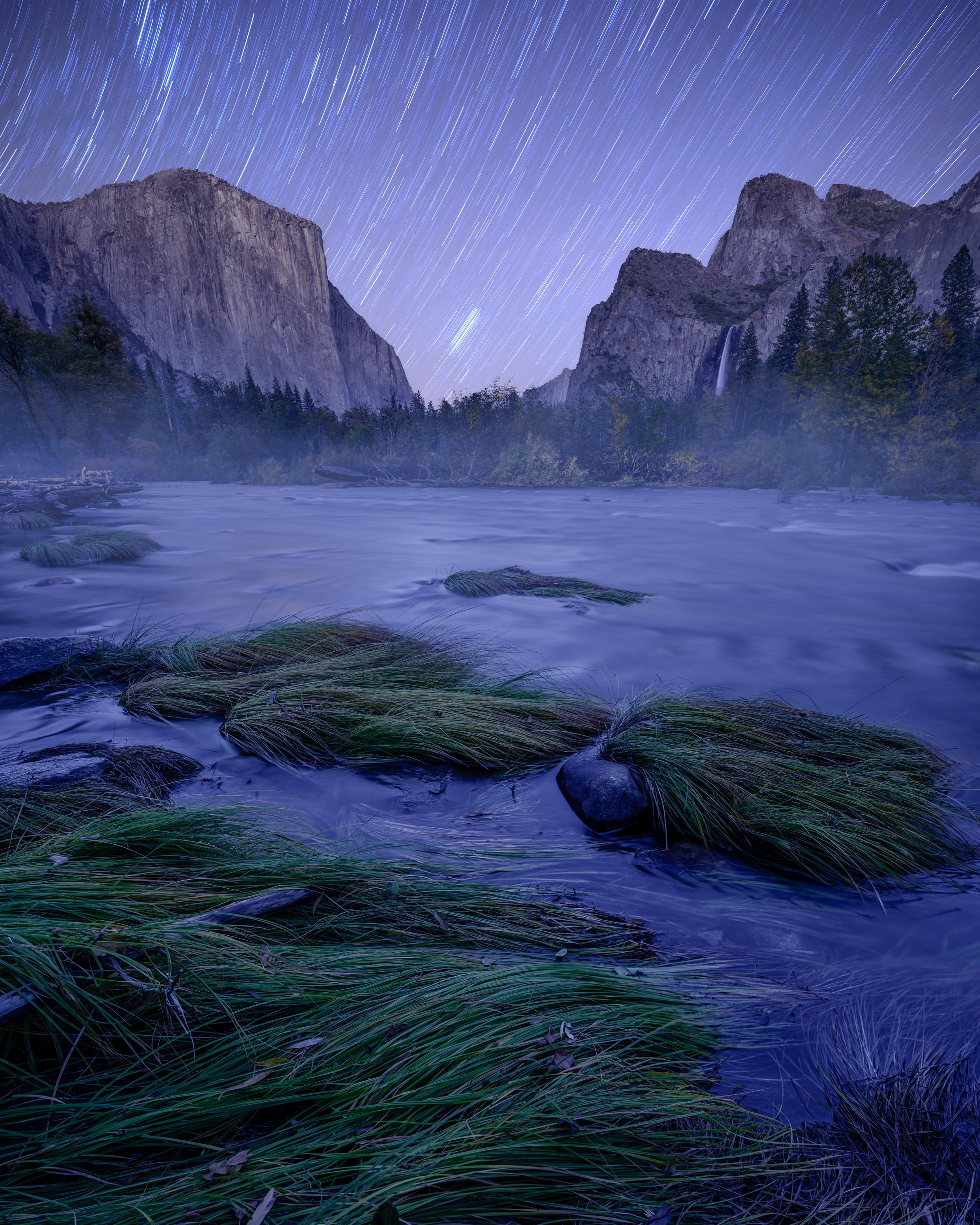
Star Trails, Valley View, Yosemite National Park

Nikon Z 6II with a Nikon Z 12-24mm f/2.8 lens at 14mm. Foreground: three focus-stacked blue-hour images shot at 15 seconds, f/5, ISO 100. Sky: three exposures shot at 5 minutes, f/3.5, ISO 500.

Of the millions of photographs made in Yosemite National Park, some of my favorites are from the Valley View pull-off. The ever-changing volume of the Merced River revealing, hiding and reshaping the river's edge directly below the parking area has been fodder for an abundance of magical photographs. I was determined to add to that collection, hoping for an image that captured this view with the stars of the night sky.

My chance finally came in October when Matt and I led a group of night photographers for a workshop in Yosemite Valley. During our initial scout I was disappointed to find that the river had become so low from California's ongoing drought that this particular vantage point left much to be desired.

As luck would have it, our group experienced the break in California’s dry spell to a tune of over 6 inches of rain in less than 2 days. The aftermath of the rainfall was truly magical as all of the waterfalls were rejuvenated and the rivers sprung back to life.

After shuffling the schedule around a bit due to the rain, we were able to venture to the Valley View pull-off to begin a night of shooting. The swollen river produced a far more interesting foreground as it created new channels and connected the recently dried grass tussocks with the flow of the water.

Setting up near several of the workshop participants, we worked through the blue hour exposures (with focus stacking to accommodate the extreme depth of the scene) and waited for astronomical twilight to end.

Simply waiting and watching as the glow faded from the mountains was worth the whole excursion. After the show of color ended and we counted the lights of the climbers making camp on the vertical cliffs, darkness finally fell and we began our sky exposures. I chose to create star trails via a stack of three 5-minute exposures in the hopes of creating motion in the sky that would echo that of the river and that implied a mirror of the motion of the foreground grasses.


Your Turn

What was your favorite night photograph of 2021? We’d love to see it! Share in the comments below, or on our Facebook page, or on Instagram (tag us @nationalparksatnight #nationalparksatnight #seizethenight). Be sure to tell a story tooβ€”the technical aspects, the challenge overcome, or a tale of the experience.

Then … have a Happy New Year!
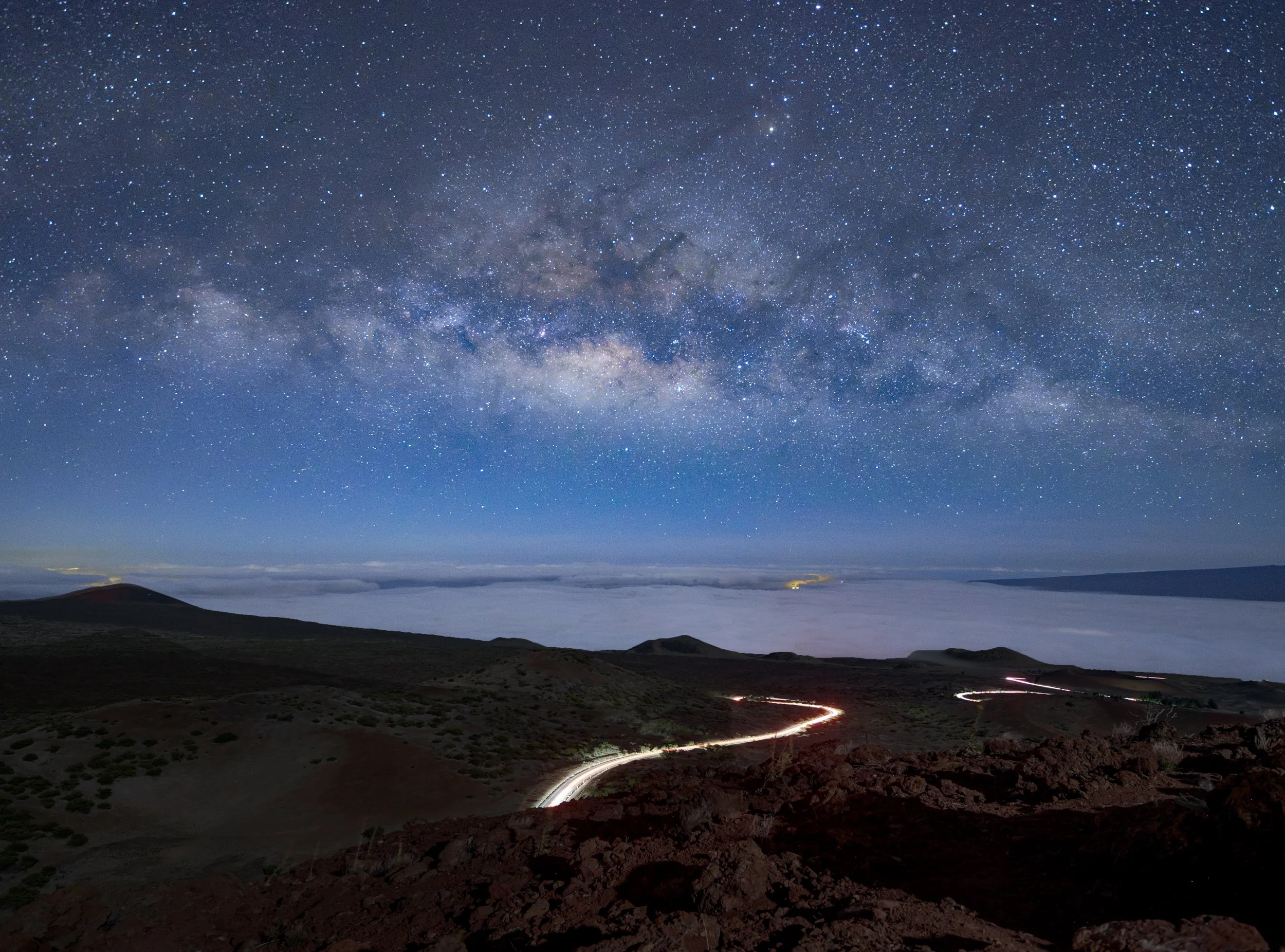
Gabriel Biderman is a partner and workshop leader with National Parks at Night. He is a Brooklyn-based fine art and travel photographer, and author of Night Photography: From Snapshots to Great Shots (Peachpit, 2014). During the daytime hours you'll often find Gabe at one of many photo events around the world working for B&H Photo’s road marketing team. See his portfolio and workshop lineup at www.ruinism.com.

UPCOMING WORKSHOPS FROM NATIONAL PARKS AT NIGHT

From Shadows of the Past: 5 Photos of Ghost Towns at Night

Fall has fallen upon the land, Halloween is upon us, and with it come ghosts from the shadows. Well, maybe. But in some shadows of the country we can certainly find ghost towns, which happen to be among night photographers’ favorite haunts.

Ghost towns certainly allure us, for many reasons: historical significance, yesteryear charm, their ethereal memories that linger in shadows. And of course, they just look really cool, especially when darkness falls.

Below, in celebration of Halloween week, we present five photographs of ghost towns and short stories about how we made them.

Bodie

by Lance Keimig

Bodie, California. Canon 5D with a Nikon 28mm f/3.5 PC lens, lit with a Surefire 9P flashlight. 159 seconds, f/8, ISO 160.

A former gold rush town nestled in the unforgiving hills near the California-Nevada border, at its peak Bodie was home to over 10,000 residents. It was the archetypal western boomtown, replete with brothels and saloons, and with men dreaming of making it big and others intent on exploiting them. A legendary young girl’s diary found in the town stated, β€œGoodbye God, I’m going to Bodie.” Or was it, β€œGood, by God I’m going to Bodie”? We’re not really sure, but either sentiment could apply, depending on her disposition.

This light-painted image of the undertaker’s shop from 2008 was made with the lens pressed against a dirty window, and was lit with a Surefire incandescent flashlight from the left and right by shining the light through a window on one end of the building and through a door at the other.

Sadly, the table supporting the white coffin collapsed in an earthquake in 2020, and the contents of the building were badly damaged. The caretakers at Bodie have a policy of preserving what they can but not restoring structures that deteriorate or are damaged by natural causes, so I’m glad that I made this image when I had the chance.

Mojave

by Matt Hill

Mojave National Preserve, California. Sony Alpha a7 III with a Zeiss Batis 18mm f/2.8 lens, lit with a Nanlite PavoTube 15C 2' LED tube. 13 seconds, f/2.8, ISO 3200.

I was lucky, and very grateful, to spend time with photographer and Night Photo Summit speaker Jess Santos in California’s Mojave National Preserve. In her Jeep, we visited some of her favorite off-map and abandoned places.

Mojave is a special, though not frequently visited, place. In fact, that it’s not more visited is surely part of what makes it so special. Mojave is also a light painter’s dream. It’s an old mining area, and still contains remnant machinery, abandoned houses, sandblasted cars and trucks and vans slowly disintegrating in the dry heat.

This well-preserved bus is jacked up level on the low end (pretty high in the air!), and it looks like it’s on a permanent adventure. I used a single light source to illuminate the bus during the 13-second exposure. I started farthest away from the camera, blasted the 2-foot LED tube light through the doors, then walked along the side with the light held high to illuminate the dark interior.

Combined with strong moonlight, the warm/cool blending of light sources created exactly the look I was going for.

Silver City

by Gabriel Biderman

Silver City, California. Nikon D700 with a Zeiss Milvus 21mm f/2.8 ZF.2 lens, lit with a Coast flashlight. 4 minutes, f/5.6, ISO 400.

A lot of the ghost towns we visit are part of national parks or just outside of them and fairly easy to access. But many more are long forgotten and hidden from the public.

The year was 2011. I was on an epic road trip with fellow night photographers Joe Reifer and Night Photo Summit speaker Troy Paiva. We were right outside the vibrant β€œghost town” of Virginia City, Nevada, when we found what looked to be the remains of an old silver mine in the satellite view of Google Maps. We drove over to investigate, but blocking the entrance was an impressive β€œNo Trespassing” gate. 

While pondering our next move, we noticed a Willie Nelson-looking fella in a sawed-off Jeep driving quickly down the road with a dog barking and running alongside. 

We explained that we were night photographers, and fortunately Troy had one of his books to show that we were passionate about photographing Americana ruins. Somehow we won over the caretaker named Irish, and he invited us to spend two nights shooting the mines of Silver City.

My favorite shot from this wonderful experience is this slice of a corrugated bridge that was connected to the hoist house.

Grafton

by Tim Cooper

Grafton, Utah. Nikon D700 with a Nikon 24mm f/2.8 lens, lit with a Coast HP5R flashlight. 1 minute, f/9, ISO 200.

Near Utah’s Zion National Park sits Grafton, one of the most photographed of the western ghost towns.

From an artistic standpoint, this image is kind of spooky. Exactly what I was going for.

From a technical standpoint, this image is about color unity. I wanted to create a cool color harmony, which would provoke that spooky feeling.

The landscape was being illuminated by a full moon. I set my white balance to 4000 K. Images made under a full moon can often look like they were shot in daylight, so lowering the white balance to 4000 K helps keep the impression of a night scene.

A setting of 4000 K renders my Coast HP5R only somewhat blue, but I wanted even more blue, to match the coolness of the ambient light. So I added a light blue gel to the front of the flashlight, which also helped to retain color harmony throughout the image.

Thurmond

by Chris Nicholson

Thurmond, New River Gorge National Park, West Virginia. Nikon D5 with a Nikon 14-24mm f/2.8 lens. Two stacked exposures at 1 and 4 seconds, f/5.6, ISO 400.

The newest national park in the United States, New River Gorge in West Virginia, has some of the country’s oldest stuff, from one of the oldest rivers in the world to some great abandoned places, such as the ghost town of Thurmond.

A hundred years ago Thurmond was a booming mining town situated aside the New River. The area mines were so productive that Thurmond was reputed to be one of the most prosperous stops on the railroad with the richest banks in the state.

Today the mines are closed and the town is all but abandoned. But the railroad still runs through and the bank still stands aside it, as do 20 other dusty buildings, including the post office, coaling tower and train depot.

In this photo, a streetlight illuminates the old National Bank of Thurmond, as well as the tracks and a little surprise (ghostly?) visitor who wafted into the scene. Two exposures were required: one to control the bright lamp, and a second to record the details of the bank and railroad bed.

Your Turn

What ghost towns have you photographed at night? We’d love to see! Feel free to post your take on this shadowy genre in the comments, on our Facebook page or on Instagram (tag us @nationalparksatnight and/or hashtag us #nationalparksatnight).

Chris Nicholson is a partner and workshop leader with National Parks at Night, and author of Photographing National Parks (Sidelight Books, 2015). Learn more about national parks as photography destinations, subscribe to Chris' free e-newsletter, and more at www.PhotographingNationalParks.com.

UPCOMING WORKSHOPS FROM NATIONAL PARKS AT NIGHT

10 Silver Linings: Our Favorite Night Photographs of 2020

If you were to wrap up everything that was 2020 into a single long-exposure frame, I’m confident it would be overexposed. (Too soon?)

But that’s not how we do it around here. We take our time. We are choosy. We are deliberate. We expose for the shadows, yet retain critical details in the highlights. We exercise the right to turn our tripod around 180 degrees and shoot the other way. Why? Because the next best shot is somewhere near the infinite focal point of our lives: night photography. 

Now we embark on the hardest quest of the year: to each choose only two frames to represent our favorite creative photographs from of 2020. Please enjoy the highlights from each of our agonizing selection processes. Keep in mind, we (mostly) love all of our photos. But these rose to the top.


Chris Nicholson

Comet Neowise, Monhegan Island

Comet Neowise, Monhegan Island, Maine. Nikon D5 with a Nikon 24-70mm f/2.8 lens. 5 seconds, f/2.8, ISO 25,600; 16 images stacked in Sequator.

One of the nice surprises of 2020 was Comet Neowise. It was a gift to anyone who had been longing to be outside under night skies again, especially photographers. It first appeared at night at the beginning of our July workshop in the Mid-Coast region of Maine, and it really started to shine during our subsequent workshop on Monhegan Island and in Acadia National Park.

It was on Monhegan that I made this image. Lance and I had been shooting on the island for two nights alone, then two nights with the group. On the last of those evenings, in the extra-late hours, I found myself alone on an extra-quiet trail along the rocky shore. I came upon this house and cottage, with the comet nestled quietly in between.

What I didn’t see through the dimly lit window was the perfectly framed head of someone sleeping on a pillow. That detail became apparent only when viewing the long exposure on my laptop display the next morning. Sometimes surprises make the image, and for me that was certainly the case here. Aesthetically I had liked the photograph before, but once I saw the sleeper, I loved it.

The open window and the sleeping would-be stargazer under the comet-adorned night sky all combine to tell the tale of what it felt like to be outside and at peace again.

Moon Over Mobius

Moon over Mobius Arch, Alabama Hills National Scenic Area, California. Nikon D5 with an Irix 11mm f/4 lens, light painted with a Luxli Viola. 20 seconds, f/8, ISO 3200.

In October I was finally able to visit and photograph Alabama Hillsβ€”a place I’d seen many photographs of, as Lance, Tim and Gabe have shot there plenty.

Night photographers are of course drawn to rock formations, and Alabama Hills offers a nearly infinite supply of them. Perhaps the most famous, especially for photographers, is Mobius Arch. The day I photographed it was (and still is) the only day I’ve been there, but I was able to shoot it in amazing late-afternoon light, and later in serene moonlight. Yet those two opportunities were hours and hours apart.

I’d spent most of the evening helping workshop participants in other spots, ranging from right next to the cars in the parking lot (where folks were shooting star-panos of the mountain range that flanks the boulder-strewn landscape) to locations far and off the trail (where others were shooting star circles over that same landscape). Only at the end of the night did I return to Mobius, with the last two participants alongside. The three of us worked quietly together, each honed on our own ideas of how to interpret the scene.

I worked on this particular take for about 20 minutes. I already knew the exposure and the light painting approach from previous takes. The trick, though, was following the moon as it set behind Mobius, inching the tripod along the ground, keeping la luna framed right at the edge of the arch from one exposure to the next, until I finally captured what I was hoping for.

Gabriel Biderman

Utakleiv Beach, Lofoten

Utakleiv Beach, Lofoten. Nikon Z 6 with a Nikon Z 14-30mm f/4 lens at 17mm. 8 seconds, f/4, ISO 12,800.

I feel very blessed to have gone to such a special place as Norway prior to the world turning upside down.

Lofoten was an epic experience, but our nights were tricky. Clouds and snow were our constant companions. We kept an eye on the weather and the Kp index to try to predict our best chance at capturing the northern lights.

Finally we saw a good report. The forecast for the elusive aurora opening was going to be from 8 to 9 p.m.β€”a narrow window before the clouds would roll back in.

We knew the perfect place to go: Uttakleiv Beach. We had spent a day at Uttakleiv earlier in the trip, so we were familiar with the terrain. It has seaside mountains to give scale and water to reflect the night sky.

I’ve never seen a weather forecast be so on point. When we arrived, the overcast skies made the situation seem like a bust. But at 8:00 on the dot, the skies cleared and the magical green lights started their dance. For most of our group, this was the first time witnessing auroras, but to be honest, even for the experienced, this night was pretty special.

For one hour we danced with the northern lights, aiming our cameras as the auroras moved along the purple skies. It was truly magical. And it lasted, as predicted, for one hour. For all of us who shared a night under the northern lights, we’ll carry the experience forever.

Summit Bridge, Red Hook

Summit Bridge, Red Hook. Mamiya 7 with a Mamiya 65mm f/4 lens. 30 seconds, f/8, ISO 100 (Fujifilm Acros II).

Upon returning from Norway, my β€œadventures” consisted of my apartment in Brooklyn and the surrounding areas. As frustrating as it was not to be under the stars of our national parks, I fell back in love with my β€œbackyard” and film.

I live in Carroll Gardens in Brooklyn. It is a quaint neighborhood where everyone is proud of their front garden. I battled my stir craziness during the pandemic by taking night walks in the neighborhood. I dusted off one of my favorite film camerasβ€”my medium format Mamiya 7β€”and got back to the basics of shooting film. Brighter urban lights make film exposures fairly easy to determine. 2020 also welcomed the return of Fujifilm’s Acros 100 (now II), which has the least reciprocity of any film on the market and makes long exposure film shots relatively easy.

My walks would often lead me to neighboring Red Hook, which features a mixture of industrial buildings, wharfs, cobblestone streets and old-school residential homes.

Summit Bridge, a small bridge that takes pedestrians up and over the Brooklyn Queens Expressway, unites our two neighborhoods. I’ve walked over it a thousand times, but this time all the elements of the scene clicked for me. I saw lines leading up to the beacon of light. Heck, there were lines galore! The lines of the steps connected with the lines of the rails, which intersected with the lines of the spear-headed fence, and the light reflecting on the brick building also leads the eye to the fence, which all leads back to the focal-point light.

I shot this just two weeks ago. The image is a perfect bookend for a year that started in a distant archipelago and ended very close to home.

Lance Keimig

Portland, Oregon

Portland, Oregon. Nikon D780 with a PC-E Nikkor 28mm f/3.5 lens. 8 seconds, f/8, ISO 100.

Probably like most people, 2020 was not my most productive year, photographically or otherwise. All in all, I count myself lucky though. We managed to hold a few workshops, stay healthy, and fill most of our 2021 workshops and tours. The at-home stress test with my partner Katherine only brought us closer together, despite both of us dealing with ongoing family crises. I’m coming out of this horrible year in better shape than a lot of people, and am grateful for it. Creatively, the year is a write-off, and that’s OK, all things considered.

Katherine and I went to Portland, Oregan, to help celebrate a friend’s birthday in late February, just as the COVID-19 scare was beginning. While there we got together with another old friend who took us out night-shooting in an industrial area that just happened to be near a brewery that Gabe said Katherine and I had to visit. (We did.)

One of the things I came to realize in this truncated year was that I really miss urban night photography. It’s where I started, and I plan to get back to it in a big way when COVID subsides.

This image might not have a lot of appeal to most people, but I love the simplicity of it. The repeating shapes, the backlighting, the shadows, the minimal colors. It’s the kind of image I used to make all of the time, and want to make again. I guess that I also like it because it represents the last moments of freedom before we were all overwhelmed by the pandemic.

Acadia National Park

Eagle Lake panorama, Acadia National Park, Maine. Nikon D750 with a Sigma 24mm f/1.4 Art lens. Five stitched images shot at 15 seconds, f/2, ISO 6400.

Chris and I were joking that I’d be submitting Comet Neowise images as obvious favorites, because that’s pretty much the last time I took a night photograph. I do have a couple of decent comet photos, but it was this pano of Eagle Lake in Acadia National Park (made during the comet’s peak) that I chose to share here. Many of you know that Acadia is one of Chris’ favorite parks, and I was very happy to have been able to spend some time with him there this summer as part of the two back-to-back workshops we somehow managed to pull off in Maine in July.

I’m generally not a landscape photographer, nor a big Milky Way shooter, but this was such a gorgeous scene, and such a peaceful place to be in such a calamitous time, that the memories of being there that this image brings back make it my second pick for my favorite images of the year.

I’m thinking now how snapshots to the non-photographer serve mainly as memory triggers to take one back to a time and place from the past. I guess the same can be true for professional photographers too, as that’s what this image does for me. It’s a bookmark in time, in this case for a brief reprieve from the nonstop barrage of bad news that was 2020. Butβ€”this year is coming to an end, and if we are diligent, and a bit lucky, as we round the corner into 2021, things will start to brighten, and new opportunities will await. I’m ready for them.

Matt Hill

Lance on the Racetrack

Lance Keimig on Racetrack Playa, Death Valley National Park. Nikon Z 6 with a Venus Optics Laowa 15mm f/2 FE Zero-D lens. 20 seconds, f/5.6, ISO 1600.

If I could sum up 2020 with one image, it would be this pensive portrait of Lance on Racetrack Playa in Death Valley National Park.

That workshop seemed to be foreshadowing the year ahead of us. We were plagued with adversities. From sand storms to power outages to a scarcity of fresh food, only tenacity on everyone’s part brought us to a successful end. This included our alumni, the workshop leaders and the surprise guests (Gabe and Tim).

My consideration of this image includes the crisp starry sky, the crusty playa and the soft memory of where Lance lingered, considering what occupied his attention at that moment. In the distance you can see other people forming their own relationship with the night sky. Plus, the sign of perhaps other strangers arriving or departing in the car trail on the far side.

2020 will hopefully fade into insubstantiality as this instance of Lance’s pondering did. But hopefully the tenacity and lessons we bring with us will have a more permanent home in our decision-making process.

It’s my wish that we will employ more empathy. Take a little more time to consider the perspective that distance from β€œnormal” offers. And to take the hope one can find in this and apply it to making the things we find important thrive.

Molly Diptych

Diptych of Molly on the Hudson River. Nikon Z 6 with a Venus Optics Laowa 15mm f/2 FE Zero-D lens, lit with a LumoPro LP180 speedlight and a Nanlite Pavotube II 6C. Left: 10 seconds, f/4, ISO 3200; right: 6 seconds, f/3.5, ISO 100.

If you could truly render your perception of another being into a descriptive portrait, how would you approach executing it? I ask myself this before many portrait shoots.

This particular diptych of night portraits was the culmination of something I hold very dear: the opportunity to collaborate with other creative people. Such as the subject of these portraits and the team around this shoot.

Molly, who posed for these, has layers upon layers of truths she finds crucial and things about the world she works tirelessly to improve. From social justice to art, her strength of character and determination were elements I wanted to preserve and to enhance.

Being a fellow artist and photographer, Molly was able to offer contributions that went beyond posing in front of the camera. Her willingness to collaborate, with clear ideas on how she wanted to pose, and her willingness to stand in the murky Hudson River on a warm July night all yielded a rich session with many images I love.

For a few years we were promising to make some art together. And this was really one of the first few chances. I’m happy. And I believe the diptych of Night Paper on the left and a light painting night portrait on the right speak to each other.

The best ideas really require getting other people involved to render the vision. The other people I want to thank are Kelly Mena for producing the video shoot preceding the Night Paper shoot, and my wife Mabel for being my stalwart creative support on the video and portrait shoots. And for that matter, practically everything else.

For me, 2020 will always be a time of exploring the realities and concepts behind isolation, safety and security. This portrait pair is one glimpse into a topic I want to explore even more.

Tim Cooper

Steam at Excelsior Geyser

Steam at Excelsior Geyser, Yellowstone National Park. Nikon Z 6 with a Nikon 14-24mm f/2.8 lens at 20mm. Two blended images shot at 6 seconds, f/2.8, ISO 1600 (foreground) and 15 seconds, f/2.8, ISO 6400 (background).

During our Yellowstone National Park workshop in September, Chris and I brought the group to one of the largest and best-known thermal features in the park: Grand Prismatic Springs. It’s known almost exclusively for the glowing oranges and yellows of the algae and bacteria mats that surround the deeper blues of the spring. But even there, there’s much more than just one shot. And sometimes that other take can be the hero image.

While walking the location, I noticed a car coming down the road backlighting the profuse steam generated by nearby Excelsior Geyser. The play of light and shadow through the steam was simply fantastic. I knew I had to somehow capture it by the end of the night.

By the time the group left, the shot was much more challenging to make. When I exposed for the steam and car lights, the sky rendered pitch black. On the other hand, exposing for the sky overexposed the steam. This situation called for two different exposures at different times.

For the image of the sky, I waited for a break in the steam and exposed to capture Jupiter and the stars. For the next image I had to wait for an oncoming car to backlight the steamβ€”which by that time of night took awhile. After several attempts I finally made the images I would use to create the final composite.

The backlit moving steam and the tree and mountain silhouette came together to create an ethereal image that, for me, perfectly captured the mood of the scene.

Colorado Silky Way

Silky Way over Last Dollar Road, Colorado. Nikon Z 6 with a Nikon 50mm f/1.8 lens. Two blended images shot at 2 minutes, f/2.8, ISO 320 (foreground) and 8 minutes, f/2.8 ISO 160 (background).

The San Juan Mountains of western Colorado is one of my favorite places in the world. I’ve been running workshops there every year since 1995, and I never tire of the area or the scenery. When I am there, I am inspired.

I made this image during our workshop in October, at the end of our traverse over Last Dollar Road, one of the lower mountain passes in the area. Chris and I had chosen this location as a spot where we could photograph both the sunset and, later, the Milky Way. After an awe-inspiring drive, we arrived just in time to time to frame up some shots of the sunset and then plan our blue hour compositions. Once these were made, we left our cameras set up and waited for the end of astronomical twilight. The skies were perfectly clear and every participant made great images of the galactic core.

Upon arrival, I had envisioned my final shot as a tack-sharp image of the core, but after experimenting with shutter speeds, I decided on an 8-minute exposure instead. Eight minutes of exposure is generally too short to create desirable trails when using a wide angle lens, but with the longer focal length of 50mm the trails are perfect. The narrow view of this lens also compressed the foreground and magnified the core to create the look that some call the β€œSilky Way.”

Your Turn

So there you goβ€”from Maine to California, and even to Norway, and from a plethora of places in betweenβ€”our favorite photographs from 2020.

Now we’d like to see yours! Please share your favorite night image from the past year, either in the comments below, on our Facebook page, or on Instagram (tag @nationalparksatnight). And then let’s all march forward together into 2021, when we’ll find new nights and new inspiration.

Matt Hill is a partner and workshop leader with National Parks at Night. See more about his photography, art, workshops and writing at MattHillArt.com. Follow Matt on Twitter Instagram Facebook.

UPCOMING WORKSHOPS FROM NATIONAL PARKS AT NIGHT

Loving Luna: A Photo Essay Celebration of the Halloween Blue Moon

Over 600 full moons have pulled at me during my lifetime. The moon has not only guided me, but has provided balance to our planet and instructed timekeepers since, well, the dawn of time. It is the second brightest celestial object after the sun, and is Earth’s own private and natural satellite.

Most night photographers object to the brightness of the moonβ€”a veritable star eater that streaks across the sky and blows out the details of the Milky Way. Many night photographers prefer to stay inside than to be out under soft moonlight.

But just as the moon brought wonder and awe to our ancient ancestors, it can bring just as much wonder to our photographsβ€”not to mention the superwonder that even modern humans have been gifted from supermoons, blood moons and eclipses.

Along those same lines, today we experience a blue moonβ€”on Halloween, no less!

Of course, any full moon that falls on Halloween would be a blue moon, but that doesn’t mean it’s common. The last time the two events coincided was 1944, and the next will be 2039.

To honor this event, all five National Parks at Night instructors got together to share images of when they lassoed the moon. We hope this inspires you to get out tonight (after trick-or-treating, of course) to bring back some inspired images!


Matt Hill

The Headless Horseman, Sleep Hollow Cemetery. Nikon Z 6 with a Venus Optics Laowa 15mm f/2 FE Zero-D lens. 4 seconds f/5.6, ISO 800.

Jim Logan invited me to photograph the Headless Horseman in Sleepy Hollow Cemetery in early October. This wasn’t the first timeβ€”it’s nearly an annual tradition that I enjoy very much. Each time I challenge myself to light it differently, and this year we were extra lucky to have clear skies (very unusual!) plus the conjunction of Mars and the moon (what luck!). 

After consulting PhotoPills, we set up where the moon would rise. I brought along five Nanlite PavoTubes and lit a scene that covered a large area, as the horse sometimes wanders. 

I used my wireless Phottix Aion remote intervalometer to trigger my camera, and walked around with a CTO-gelled speedlite to highlight the horse and rider. The final touch was inserting a Nanlite Pavotube 6C 10" tube light into the pumpkin to illuminate it from within. 

Fortune smiled upon us! The moon rose, the planets and satellite aligned, and this magic moment unfolded in front of my camera.

Lance Keimig

Mesquite Sand Dunes, Death Valley National Park. Nikon D750 with a Nikon 14-24mm f/2.8 lens. 30 seconds, f/8, ISO 400.

Experiencing sunset followed by the slow fade into darkness along with the full moonrise in the sand dunes of Death Valley is unforgettable. Death Valley is one of my favorite parks, and I think moonrise in the sand dunes is one of the very best parts of any visit to the park.

After walking about a mile from the road to get into the dunes and then cresting over the first ridge, it feels as if the dunes go on forever and that I am alone in the universe. That sensation can be at times both calming and exhilarating. The landscape is vast, but also intimate. It can be challenging to photograph––especially if one is trying to accurately record the essence of the experience.

On this particular night, I allowed myself to get lost in the experience, and hadn’t set up a shot for when the moon rose over the horizon. As a result, I wasn’t ready when it happened. The best light lasts only a few minutes, and it was rapidly slipping away from me. 

Full Stop. Breathe. Be present in the moment. Any pressure I feel is self-imposed. I stopped dead in my tracks, realizing that I had been hurrying to find β€œThe Shot” when the reality was there was no one image to be made. The images were all around me and I had to choose.

Backlighting by the moon with soft light scraping across the surface of the dunes was the common element to every image I saw. I composed, planning in the field to later crop to panoramic proportions. I decided to let the moon blow out, and exposed to keep some detail in the darkest areas in the sand. In the end, it was a straightforward shot, but captured the sensation of being there, alone, in the moonlight.

Tim Cooper

Moon over Trona Pinnacles National Natural Landmark. Nikon Z 6 with a Nikon 14-24mm f/2.8 lens, light painted with a Luxli Viola. 20 seconds, f/5.6, ISO 1600.

For many night enthusiasts, if the night doesn’t have a Milky Way, it isn’t a night to photograph. I love night photography. Any night. Any time of the month.  I enjoy the challenge of making images under various conditions. And one of my favorite challenges is shooting under the full moon.

Moonlit landscapes provide limitless possibilities. I can use the moonlight as the key (main) light, which renders the scene as a near duplicate of a daytime image, or I can use it to simply fill in the shadows of my favorite light painting scheme. I can draw out texture or emphasize shape in the foreground, or I can shoot directly into the moon and use it as backlight.

One of my favorite techniques mimics the popular sunburst technique used in daylight photography. On a clear moonlit night, I simply point my camera directly into the moon and stop down to f/5.6 or f/8. The smaller aperture renders the moon as a moonburst. Shutter speeds under these conditions can still be short enough to render star points, and a decent exposure can be made at lower ISOs, keeping high exposure noise to a minimum.

Chris Nicholson

Lathe Arch and Mount Whitney, Alabama Hills National Scenic Area. Nikon D5 with an Irix 11mm f/4 lens. 30 seconds, f/11, ISO 3200.

I love shooting the moon, so it’s hard to pick just one moon image. So rather than spending an inappropriate amount of time searching through my images (OK, I admitβ€”after spending an inappropriate amount of time searching through my images), I decided to show a photograph I made just this past week.

This actually started as a challenge from Lance. I was in Alabama Hills National Scenic Area in California with Tim and our workshop group, and Lance told me to see if I could get a photo of Lathe Arch with Mount Whitney in the background. He was setting me up, for sure. The arch is smallβ€”about two feet highβ€”and photographing it from said angle requires wedging yourself into a steep crevice in the rock.

I guess I kind of cheated. I used an Irix 11mm f/4β€”a superwide but rectilinear lens that allowed me to set up superclose to the arch, so that I could use horizontal rather than flat rock to balance my tripod. Still, it wasn’t easyβ€”the tripod legs were flat to the ground, two of them spreading precariously close to creeping into the frame, and the third extending precariously over the edge of the crevice.

Of course, there was light painting too, and that required some calisthenics to jump up and down and over rocks so that I could work in foreground light, as well as background light from two angles, in a short enough exposure to keep the moon from trailing into an oval. This is why I wear good trail shoes when shooting.

And hey, I got the shot! With the moon. Thanks to a challenge from a friend.

Gabe Biderman

Supermoon and bridges in New York City. Nikon D750 with a Tamron 150-600mm f/5-6.3 lens. 1/2 second, f/11, ISO 400.

I began my official supermoon chase in earnest in 2016. Everything aligned perfectly on November 14, which would feature the biggest supermoon since 1948. The moon would rise at 5:14 p.m., but as much as I love New York City, there isn’t much of a horizon line here. I used PhotoPills to find the best spot, which I determined to be on the southern shores of the East River, at Pier 17, where views of the Brooklyn, Manhattan and Williamsburg bridges align.

As the day of the moon event drew near, I chose to share the experience as a National Parks at Night photo walk with B&H Photo. Our friends from Tamron brought a couple of 150-600mm lenses in Nikon and Canon mounts, which we set up on Wimberley Gimbal heads so people could easily track the moon.

The biggest challenge was the cloudy sky. The moon rose, but we couldn’t make out anything against the cityscape. Then one hour later the moon found an opening in the clouds and peeked out for exactly two minutes.

I was able to make eight exposures during that time, ranging from 1/4 second to 6 seconds. The 1/2-second exposure ended up being my favorite, as it revealed detail in the moon as well as the surrounding clouds. The moon is as big as the arch of the Williamsburg Bridge, and I love the abstract layers of the beams of the Brooklyn and Manhattan bridges. 

It was a thrilling two minutes. I loved pre-visualizing and then waiting for that moment. I imagine this might be close to what wildlife photographers feel when they are hidden quietly in the brush and waiting for perfection to happen. I got my supermoon.

Wrapping Up

Have you shot the moon? We’d love to see your images. Feel free to share in the comments, on our Facebook page or by tagging @nationalparksatnight on Instagram!

Gabriel Biderman is a partner and workshop leader with National Parks at Night. He is a Brooklyn-based fine art and travel photographer, and author of Night Photography: From Snapshots to Great Shots (Peachpit, 2014). During the daytime hours you'll often find Gabe at one of many photo events around the world working for B&H Photo’s road marketing team. See his portfolio and workshop lineup at www.ruinism.com.

UPCOMING WORKSHOPS FROM NATIONAL PARKS AT NIGHT